
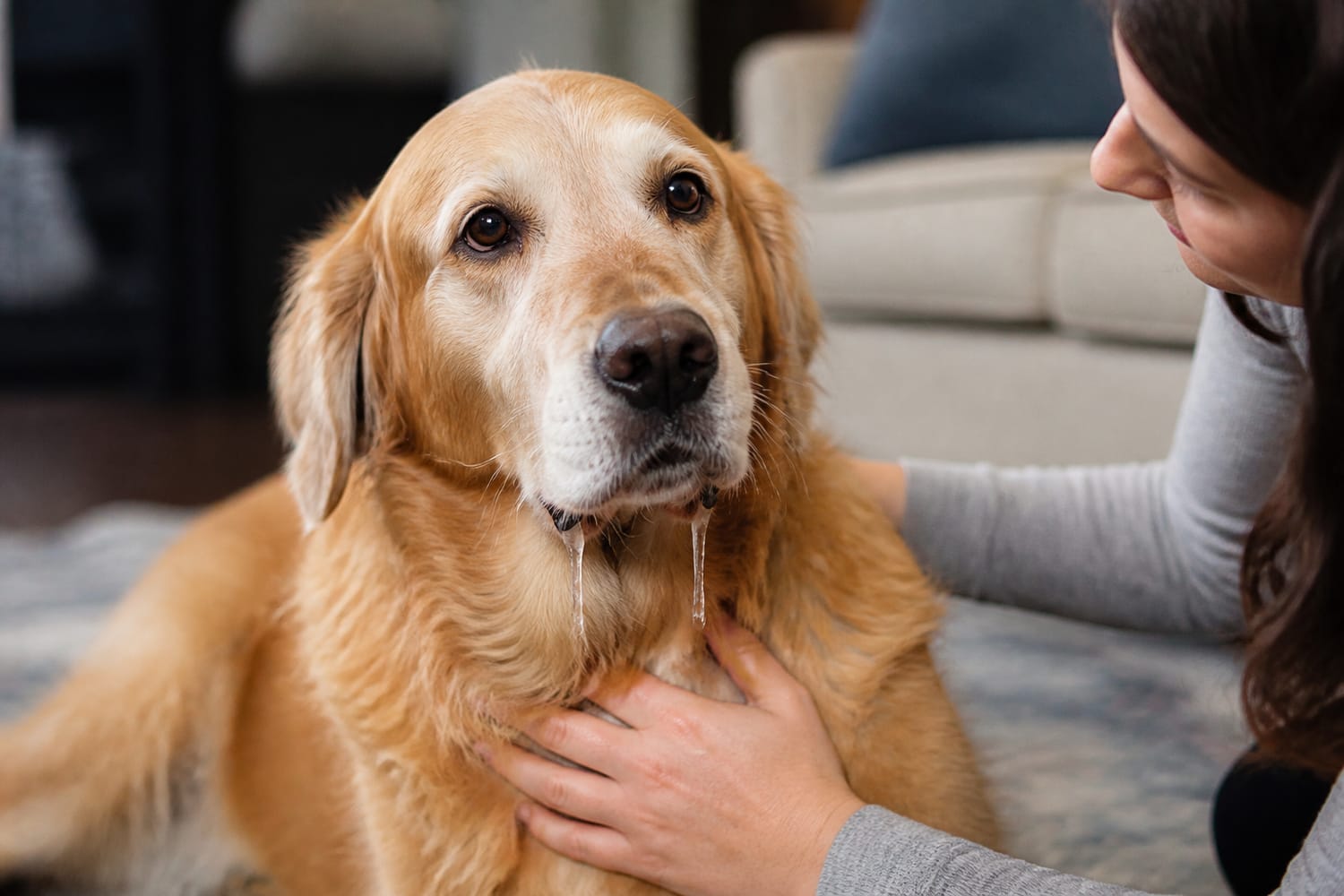
Why Is Your Pet Drooling More Than Usual?
A little drool can be perfectly ordinary—especially for a jowly dog waiting for dinner or a cat who has always dribbled while purring. A sudden increase is different. It may signal nausea, mouth pain, something stuck in the mouth, or exposure to a harmful substance. The most useful questions are: Is this new for my pet, and what else has changed?
You don’t need to identify the cause on your own. Noticing the pattern and knowing when to call can help your veterinarian work out what your companion needs.
First, Think About Your Pet’s Normal
Dogs and cats produce saliva to keep their mouths comfortable and help them eat. Some dogs naturally let more of it escape because of the shape of their lips. Others drool when they smell food, become excited, or feel queasy during a car ride. A few cats drool when they’re deeply relaxed.
That makes change more informative than the size of the puddle. Has your dog always left a damp spot beside the food bowl, or is their chest suddenly soaked at breakfast? Does your cat have a familiar purr-time dribble, or have you found wet patches where they were resting alone?
A brief episode with an obvious trigger, such as anticipation of a meal, may be less concerning if your pet otherwise seems well and the drooling stops. New, heavy, repeated, or continuous drooling deserves a call to your veterinarian—particularly in a cat, whose usual drooling habits may be quite subtle.
What Might Be Behind the Extra Saliva?
A sore mouth or tooth
Dental disease, a broken tooth, irritated gums, an ulcer, or another painful mouth problem can make swallowing uncomfortable. Look for bad breath, blood-tinged saliva, pawing at the face, food falling from the mouth, or a new reluctance to chew. A pet may still approach their bowl eagerly yet back away after the first bite. Mouth inflammation and drooling can occur together, and a thorough veterinary examination may be needed to find the cause.
Our guide to spotting dental problems in pets covers more changes worth watching for. Don’t assume a pet who is still eating cannot have a painful mouth.
Nausea or difficulty swallowing
Motion sickness and other causes of nausea may bring on drooling. You might also notice lip licking, repeated swallowing, a reduced appetite, or vomiting. Drool can build up when an animal has trouble swallowing normally, so pay attention to gagging, distress, or repeated attempts to swallow—not just the saliva itself.
Something irritating or stuck
A piece of plant material, a fragment of a chew, or another object in the mouth can trigger sudden drooling and pawing at the face. Plants, medications, and household products can also irritate the mouth or be toxic. Don’t wait for drooling to become dramatic if you suspect an exposure: the substance involved matters, and some harmful effects may not appear right away.
For everyday prevention, Petspiration’s article on household cleaner hazards for pets is a helpful place to start.
What to Notice Before You Call
If your pet is comfortable enough for a calm look, gather clues without forcing an examination. A quick check may answer questions your veterinary team is likely to ask:
- Timing: When did the drooling begin? Is it constant, or does it happen around food, travel, or a new medication?
- Amount and appearance: Is this a small dribble or enough to wet the bedding? Do you see blood?
- Eating and drinking: Is your pet chewing differently, dropping food, refusing meals, or struggling to swallow?
- Behavior: Are they playful as usual, or hiding, restless, unusually quiet, or pawing at their mouth?
- Possible access: Could they have reached a plant, cleaner, medicine, chew, string, or other unfamiliar item?
A photo of the drool or a short video of unusual swallowing can help show the vet what you saw, especially if the episode ends before an appointment. If you suspect poisoning, keep the packaging or label available when you call. The ASPCA recommends gathering information about what your pet may have encountered and contacting a veterinarian or poison-control service promptly.
Keep the check gentle. A painful or frightened pet may resist being touched, and a glimpse at the front of the mouth cannot rule out a problem farther back. If you see string caught in a cat’s mouth, do not pull it; contact a veterinarian.
When Should You Call—and When Is It an Emergency?
Call your regular vet promptly for drooling that is new, keeps returning, or continues without a clear reason. Make that call sooner if you notice bad breath, trouble eating, facial discomfort, vomiting, or a change in energy. Your vet can advise whether your pet needs an appointment that day or another plan based on the full picture.
Seek emergency veterinary help now if drooling comes with difficulty breathing, collapse, severe weakness, seizures, obvious distress, or suspected poisoning. If your pet may have encountered a toxin, call a veterinarian or ASPCA Animal Poison Control at (888) 426-4435 right away—even if they still seem normal. The ASPCA advises going directly to a veterinary clinic for signs such as breathing difficulty, seizures, or unconsciousness.
For dogs, one combination needs particular urgency: heavy drooling with repeated attempts to vomit that produce little or nothing, especially alongside a swollen belly, restlessness, pale gums, or weakness. These can be signs of gastric dilatation-volvulus, commonly called GDV or bloat. It requires immediate veterinary care, and you cannot confirm or rule it out by looking at your dog at home.
Likewise, drooling with weakness or collapse after time in the heat warrants emergency assessment. Don’t spend precious time trying to decide which single symptom matters most; tell the emergency team what you are seeing and follow their directions. Petspiration’s broader guide to red flags that warrant a vet call can help you prepare before a worrying moment arrives.
What Happens at the Vet—and How You Can Help
Your veterinarian may ask when the drooling started, what your pet could have encountered, and whether eating, drinking, or behavior has changed. They’ll examine your pet, paying attention to the mouth, and may recommend tests if the cause isn’t clear from the examination. Treatment depends on the underlying problem; drooling itself is a clue, not a diagnosis.
Once an urgent problem has been addressed, regular mouth care can help you stay familiar with what is normal for your companion. During relaxed moments, notice their breath, comfort while chewing, and willingness to have their face touched. Ask your vet when it is appropriate to resume brushing or introduce dental care—a sore mouth needs assessment, not a vigorous brushing session.
The reassuring truth is that you don’t have to solve every mystery to be a caring pet owner. By learning your pet’s usual habits, noticing when something changes, and reaching out for help when it does, you’re doing something powerful: giving them a voice when they can’t tell you what hurts.