
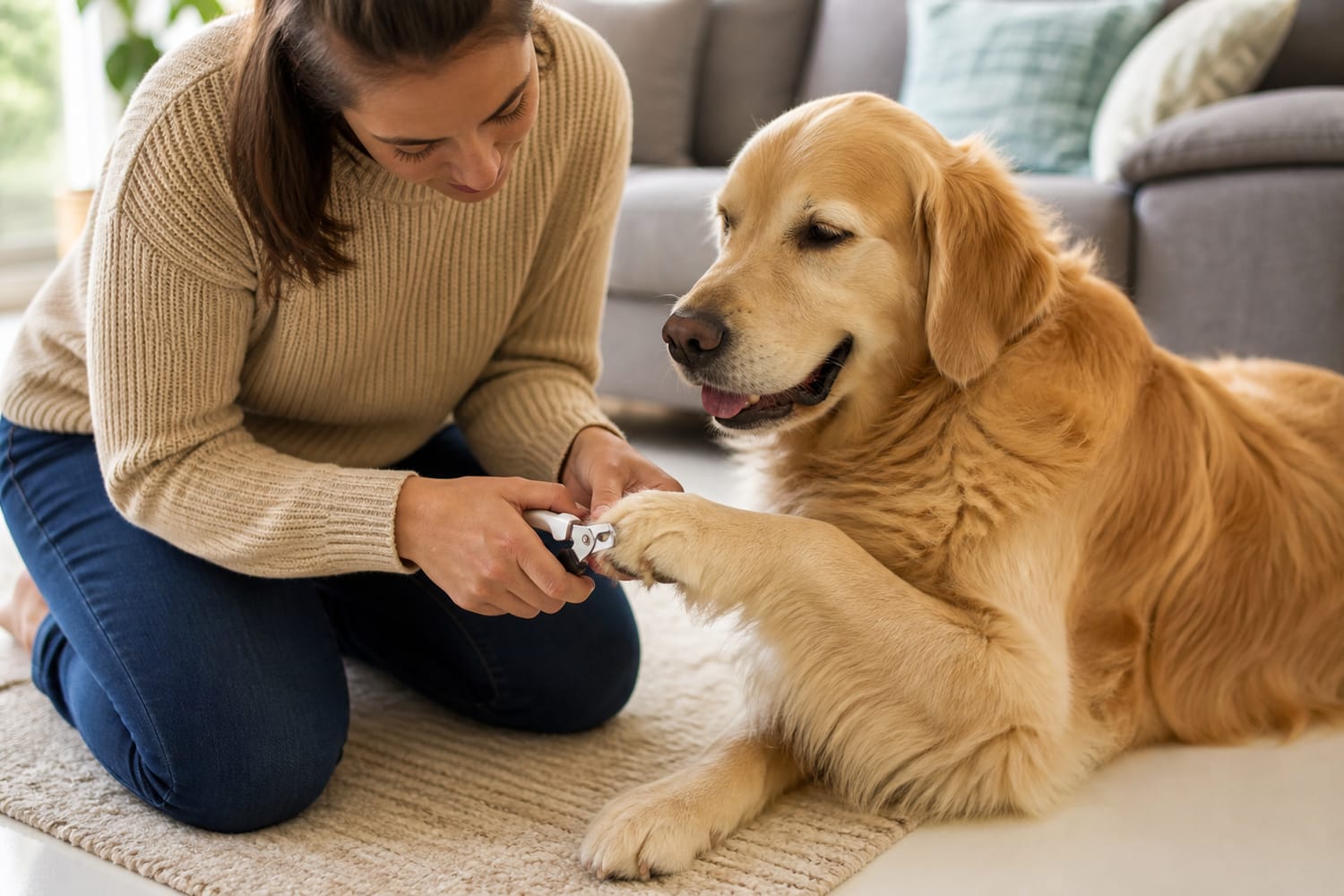
Overgrown Nails in Dogs and Cats: 7 Warning Signs and How to Trim Them Safely
Why Healthy Nails Matter
Overgrown nails can make walking, jumping, climbing, and playing uncomfortable for dogs and cats. Warning signs include clicking on floors, curled claws, limping, paw licking, and changes in posture. Regular inspection and careful trimming help prevent painful breaks, wounds, and infections—but severely overgrown or ingrown nails require veterinary attention.
Inside every nail is a sensitive area called the quick, which contains nerves and blood vessels. As a nail grows longer, the quick may also extend farther into it. This means a badly overgrown nail cannot necessarily be shortened to an ideal length in one session without causing pain and bleeding.
Nail care is especially important for indoor pets, senior animals, and pets with limited mobility. Their nails may receive less natural wear, while older cats may have difficulty removing old claw sheaths or maintaining their claws through normal scratching.
7 Warning Signs of Overgrown Nails
1. You Hear Clicking on Hard Floors
A dog’s nails should not make loud, constant clicking sounds during an ordinary walk across a hard floor. Clicking usually means the nails are contacting the ground before the paw is properly positioned.
This sign is less useful for cats because healthy feline claws are normally retracted while walking. Instead, inspect a cat’s paws directly for long, sharply hooked tips.
2. The Nails Touch the Ground While Standing
Look at your dog from the side while they are standing naturally. If several nails rest firmly against the floor or push the toes upward, they are probably too long. Long nails can interfere with normal foot placement and may contribute to an awkward stance.
For cats, gently press the top and bottom of each toe to extend the claw. A long, narrow hook extending beyond the thicker part of the claw is generally the portion that needs trimming.
3. A Nail Is Curling Toward the Paw Pad
This is one of the clearest and most urgent warning signs. Curved nails—particularly dewclaws in dogs and claws in older cats—can press against or puncture the paw pad. Once embedded, the nail may cause a painful wound and infection.
Do not attempt to pull or dig out a nail that has entered the skin. Arrange veterinary care so the nail and wound can be treated safely. Severe feline overgrowth can also cause claws to grow into the pads.
4. Your Pet’s Walk or Posture Has Changed
Watch for limping, shortened steps, splayed toes, stiffness, or an unusual paw angle. A dog might shift weight away from an uncomfortable foot, while a cat may hesitate before jumping or avoid putting pressure on one paw.
Because animals often hide discomfort, subtle movement changes matter. Petspiration’s guide to recognizing signs of pain in pets can help you identify other behaviors that deserve attention.
5. Your Pet Is Less Willing to Exercise
A dog with sore feet may resist walks, stop frequently, or avoid stairs. A cat may spend less time climbing, scratching, or leaping onto favorite furniture.
These changes should never be dismissed as stubbornness, particularly in a senior pet. Long nails may be part of the problem, but arthritis, paw injuries, and other medical conditions can produce similar signs.
6. There Is Frequent Paw Licking or Chewing
Repeated licking may mean a nail is pressing against the ground, splitting, or irritating nearby skin. Your pet may also pull the paw away, vocalize, or become defensive when you touch a particular toe.
Examine the paw gently in good light. Look between the toes as well as around each nail for redness, swelling, debris, or tenderness.
7. Nails Are Snagging, Splitting, or Bleeding
Long nails are easier to catch on carpets, blankets, upholstery, and outdoor surfaces. A snagged nail may crack or tear, exposing the sensitive tissue inside.
A small rough edge may only need careful smoothing, but a loose, deeply split, or actively bleeding nail should be assessed by a veterinarian. Redness, heat, swelling, discharge, or a bad odor may indicate infection.
How to Trim Dog and Cat Nails Safely
Gather the Right Supplies
Prepare everything before bringing your pet into the trimming area:
- Sharp, appropriately sized pet nail clippers
- A pet nail grinder, if your dog comfortably accepts one
- Bright lighting
- High-value treats
- A towel for a cat that enjoys gentle wrapping
- Pet-safe styptic powder
- A non-slip mat or stable surface
Styptic powder is a useful addition to your pet first aid kit, but preparation does not mean rushing. A relaxed one-nail session is more successful than a stressful attempt to finish every paw.
1. Begin With Calm Paw Handling
Before clipping anything, help your pet become comfortable with having their feet touched. Briefly hold a paw, touch a toe, offer a treat, and release. Repeat over several short sessions.
Let your pet investigate the clippers. For a grinder, introduce its sound from a comfortable distance before moving it near a paw. This gradual approach uses the same trust-building principles found in positive reinforcement training.
2. Choose a Comfortable Position
Pick a quiet, well-lit room and a time when your pet is relaxed. A small dog or cat may feel secure on your lap, while a larger dog may prefer lying on a mat.
Avoid forceful restraint. If your pet freezes, pants, trembles, growls, struggles, or tries to escape, stop and allow them to recover. Forcing the procedure can increase fear and raise the risk of injury.
3. Find the Quick
On clear or pale nails, the quick is usually visible as a pink area inside the nail. Leave a small safety margin in front of it.
The quick cannot be seen through dark nails. Remove only a tiny sliver at a time, checking the cut surface after every clip. If you are uncertain, trim only the narrow tip or ask a veterinary professional to demonstrate the technique. VCA’s dog nail-trimming guide recommends gradual 1–2 millimeter cuts for dark nails.
4. Trim Dogs and Cats According to Their Nail Shape
For dogs, hold one toe steadily and clip small amounts from the tip, following the nail’s natural shape. Do not make one large cut simply because the nail looks long.
For cats, gently press the toe to extend the claw. Trim only the translucent, hooked point and remain well away from the pink quick. The VCA guide to trimming a cat’s nails offers additional guidance for making the process comfortable.
5. Remember Every Toe
Count the nails as you work. Check front and back paws, remembering that cats commonly have five claws on each front paw and four on each back paw, although some cats have extra toes. Dogs may have front or rear dewclaws, and some breeds have more than one.
6. Reward and Finish Positively
Offer praise or a small treat after each successful step. End the session before your pet becomes overwhelmed—even if that means stopping after a single paw.
Short, positive sessions build cooperation. Punishment, scolding, and wrestling can make future trims harder and may cause your pet to associate paw handling with fear.
What to Do If You Cut the Quick
Stay calm. Cutting the quick can cause pain and surprisingly noticeable bleeding, but a minor nick can often be controlled by pressing styptic powder firmly against the nail tip.
Keep your pet quiet and prevent licking while the bleeding stops. Contact your veterinarian if bleeding is heavy, continues despite steady pressure and styptic powder, or the nail appears deeply damaged. Never give human pain medication unless a veterinarian specifically instructs you to do so.
When to Call a Veterinarian or Professional Groomer
Arrange professional help when:
- A nail has grown into the paw pad
- The paw is swollen, hot, bleeding, or producing discharge
- A nail is badly cracked, torn, or hanging loose
- Your pet is limping or showing significant pain
- The nails are severely overgrown and the quicks may be long
- Your pet becomes intensely frightened or defensive
- Arthritis or another condition makes positioning difficult
A groomer may be suitable for routine maintenance, but painful, infected, ingrown, or injured nails belong in veterinary hands. Some fearful pets also benefit from a veterinarian-designed handling or medication plan.
Make Paw Checks a Loving Routine
How often a pet needs nail trimming varies with age, activity, nail growth, and walking surfaces. Some dogs naturally wear their nails on firm ground, but pavement and scratching posts do not always keep every nail at a healthy length.
Add paw inspection to a regular nose-to-tail wellness check. Gently spread the toes, look at every nail, and notice how your companion stands and moves.
Nail care may seem like a small task, but it can make an enormous difference to everyday comfort. With patience, good tools, plenty of encouragement, and professional help when needed, you can keep every joyful step, playful pounce, and happy zoomie feeling its best.