
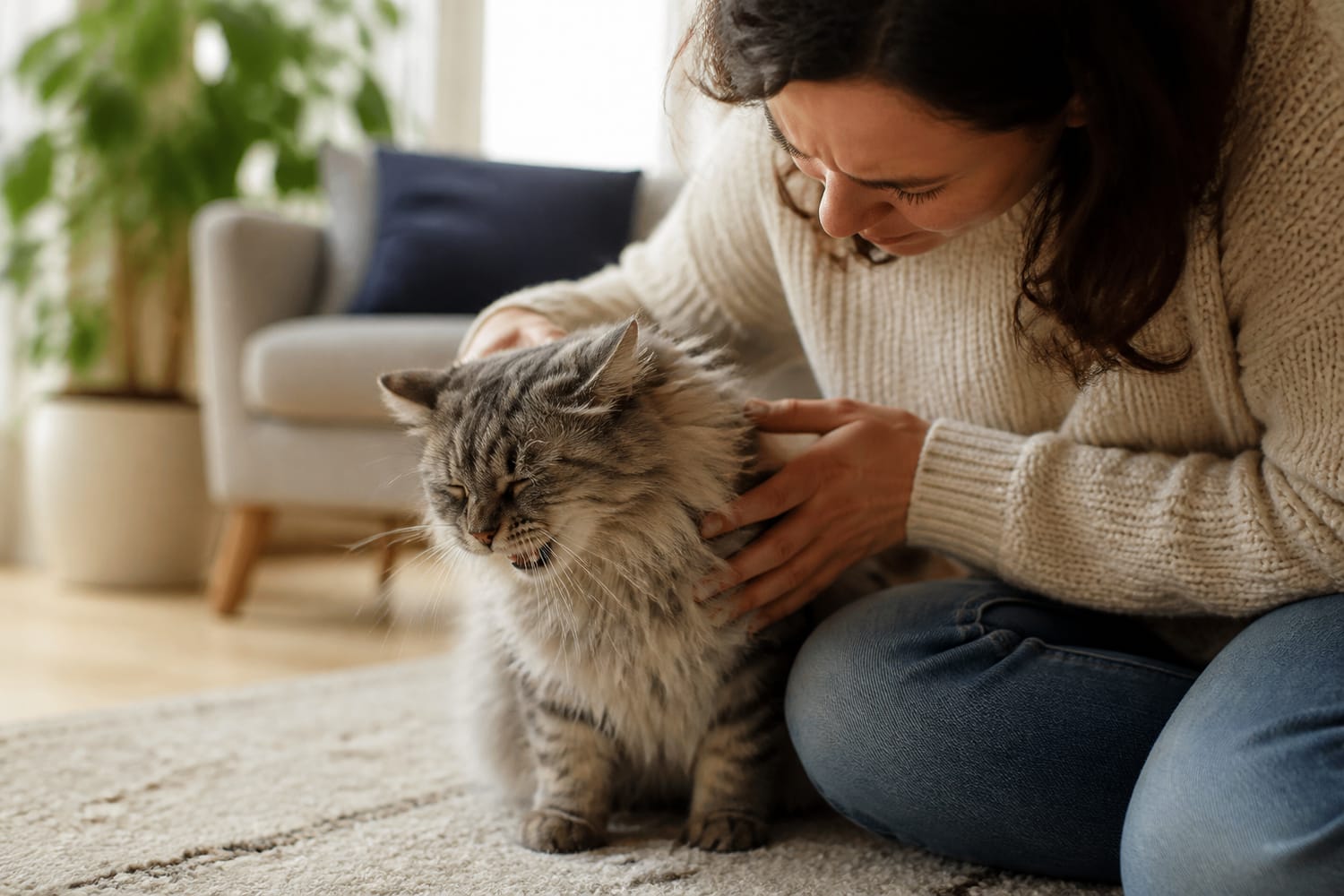
A cat hunched over and making a hacking noise may be trying to bring up a hairball—or may be coughing because something is irritating their airways. Watch what their body does, whether anything comes up, and how they breathe afterward. Trouble breathing is an emergency; repeated coughing or unproductive retching deserves a call to your vet.
It is an unsettling sound, especially when it interrupts an otherwise ordinary afternoon of naps and window-watching. The good news is that you do not have to diagnose the noise yourself. A few careful observations can help you describe it to your veterinary team and get your cat the right care.
Why the Two Sound So Similar
Despite the familiar phrase “coughing up a hairball,” a hairball comes from the digestive tract, not the lungs. Cats swallow loose fur while grooming. Much of that fur passes through normally, but some can collect and come back up through retching or vomiting. A true cough, by contrast, is an effort to clear the airways.
The confusion is understandable: both can involve a crouched posture, a stretched neck, and a startling series of noises. A coughing spell may even end with a gag or retch. That is why the sound alone—or the fact that nothing appeared on the floor—cannot settle the question.
Watch the Whole Episode, Not Just the Noise
If you can observe without disturbing your cat, look for these clues:
- Body movement: Retching or vomiting usually involves noticeable abdominal contractions. During a cough, a cat often crouches, extends their neck, and makes repeated forceful bursts of sound. Posture is a clue, not a diagnosis.
- What comes up: A hairball often looks like a damp, narrow tube of matted fur, sometimes mixed with fluid or food. A coughing cat usually produces no hairball.
- What happens afterward: A cat that brings up a hairball may quickly return to their usual behavior. Ongoing coughing, wheezing, nausea, low energy, or another episode suggests it is time to ask for veterinary advice.
Imagine two cats who both make a hacking noise. One has several visible belly contractions, brings up a small clump of fur, and soon goes back to playing. The other makes short bursts of sound, produces nothing, and repeats the performance later that evening. Their veterinarian would want to hear about those differences.
When Is It an Emergency?
Seek emergency veterinary care immediately if your cat is struggling to breathe. Warning signs include open-mouth breathing, obvious effort to draw breath, or blue-gray gums or tongue. A cat who collapses or becomes severely weak also needs immediate attention. Keep them as calm as possible and contact an emergency clinic while arranging transport. Do not wait to see whether a hairball appears.
A guide to breathing problems in dogs and cats can help you recognize broader warning signs, but when breathing looks difficult, the next step is emergency care—not more observation.
Repeated attempts to retch with nothing coming up should not be dismissed, either, particularly if your cat is vomiting, lethargic, or refusing food. A hairball can occasionally become lodged, and what looks like a hairball attempt may be another digestive or respiratory problem. Contact a veterinarian promptly rather than trying to resolve repeated unproductive episodes at home.
When Should You Book a Regular Vet Visit?
Not every isolated noise means an emergency. A cat who gives a brief cough once, then breathes comfortably, eats, plays, and behaves normally may not need immediate treatment. Still, a cough that recurs, lasts more than a few days, sounds severe, or comes with weight loss or signs of illness warrants a veterinary appointment. If you are unsure what you witnessed, calling your clinic is a sensible first step.
Likewise, an occasional hairball does not automatically signal a serious problem. But frequent hairballs, repeated vomiting, a reduced appetite, weight loss, diarrhea, or constipation deserve investigation. These signs may point to more than swallowed fur. Notice what is normal for your cat; a new pattern is worth mentioning even if they seem cheerful between episodes.
If a visit is needed, Petspiration’s advice on creating a less stressful vet visit for your dog or cat can help you prepare.
What Might Cause a Cough?
Coughing is a symptom, not a diagnosis. One possible cause is feline asthma, which can involve coughing, wheezing, or breathing difficulty. Respiratory infections and other airway problems can also cause a cough. Because these conditions call for different care, it is better to describe what you see than to assume every hacking sound is asthma—or a hairball.
The Cornell Feline Health Center’s explanation of feline asthma shows why an examination matters: there is no single test that identifies every case. A veterinarian considers your cat’s history and may recommend tests, such as chest X-rays, to investigate the cause and rule out other possibilities.
What to Do While You Arrange Care
Your most useful job is to observe, not to guess at a treatment. Write down when the episode happened, how long it lasted, whether anything came up, and how your cat behaved afterward. Mention changes in appetite, energy, litter-box habits, or weight, along with any recent changes in the home. A brief video, if safely available, gives the veterinarian another piece of the picture.
Let your cat rest somewhere quiet, and avoid chasing or handling them unnecessarily during an episode. Do not give a human cough medicine, an inhaler, or a hairball product as a substitute for veterinary advice. The right response depends on whether the problem involves the airways, the digestive tract, or something else entirely.
For cats prone to hairballs, regular brushing can remove some loose fur before it is swallowed. It is a gentle way to care for their coat, but it cannot prevent every hairball—and it will not treat a cough. For more everyday coat-care ideas, see Petspiration’s guide to grooming and bathing dogs and cats. If hairballs are becoming frequent, ask your vet what might be behind the change.
The Most Loving Answer Is to Pay Attention
You do not need perfect hearing or a medical degree to help your cat. Watch their breathing first, notice what their body is doing, and pay attention to whether the episode ends with fur on the floor—or happens again with nothing produced. If breathing is difficult, seek emergency help. If the hacking keeps returning, or your cat seems unwell, call your veterinarian.
Those small observations are an act of love. They turn a frightening, confusing sound into useful information—and help your feline friend get back to the comfortable, curious life you share.