
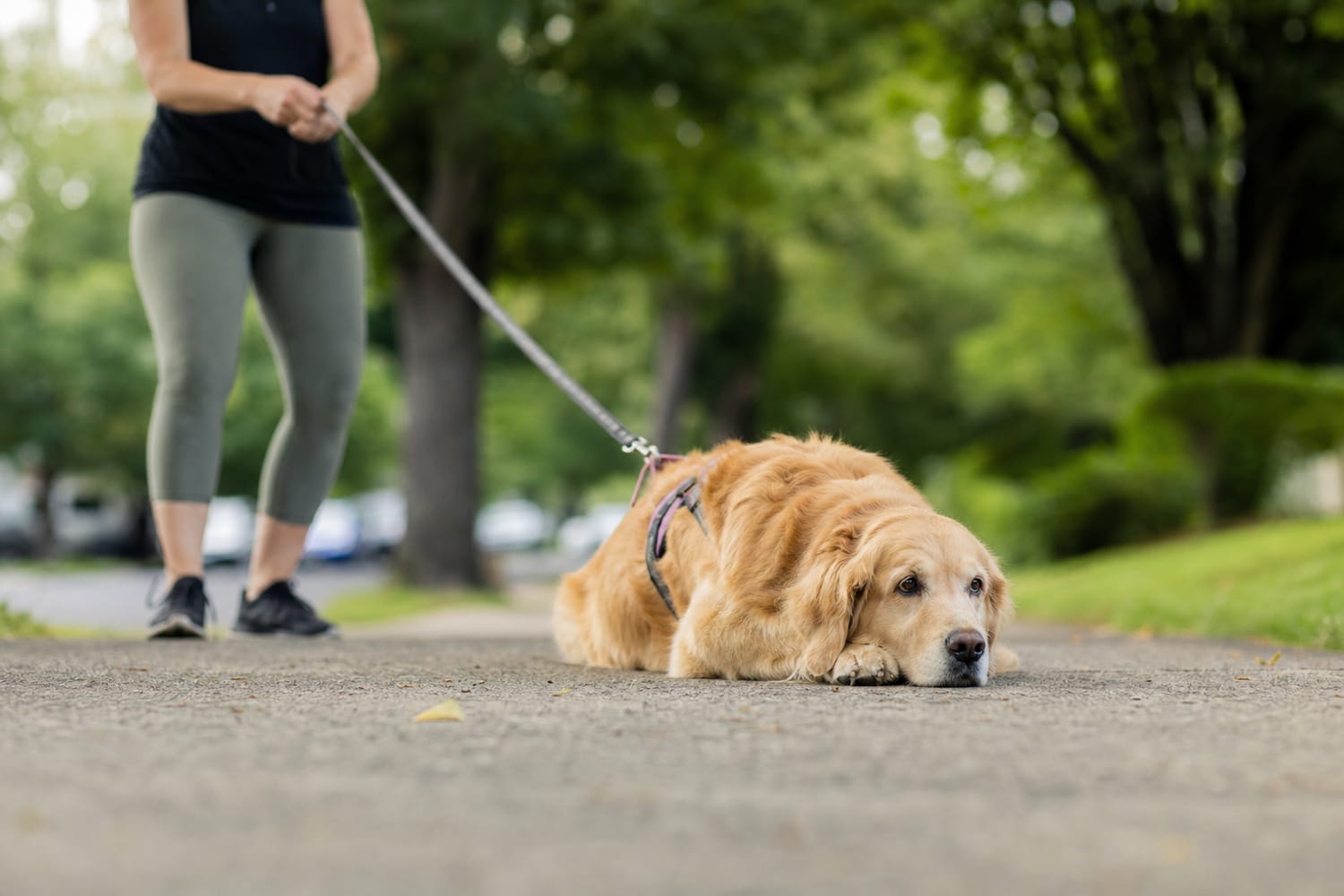
When a Dog Stops, They’re Communicating
When your dog freezes or refuses to move on a walk, pulling harder is rarely the answer. They may be frightened, overwhelmed, uncomfortable, tired, in pain, or unsure about what lies ahead. The most helpful response is to pause, observe their body language, reduce pressure, and determine what they need before asking them to continue.
It can be frustrating when a cheerful walk suddenly becomes a standoff. Your dog plants all four paws, leans backward, sits down, or stares at something you cannot see. Yet this behavior usually is not an attempt to be difficult or “win” an argument.
Think of freezing as information. Your dog is telling you that, for some reason, moving forward does not feel safe, comfortable, or worthwhile at that moment. Listening to that message can protect their health and deepen the trust between you.
Why Dogs Freeze or Refuse to Walk
There is no single explanation for a dog who stops walking. Look at what happened immediately before the freeze, where it occurs, how often it happens, and what the rest of your dog’s body is doing.
Fear and sensory overload
Cars, barking dogs, construction equipment, bicycles, unfamiliar people, flapping signs, or even a trash can that appeared overnight can feel threatening. Dogs also hear and smell things we may never notice.
A frightened dog may lower their body, tuck their tail, flatten their ears, tremble, pant, lick their lips, yawn, scan the surroundings, or try to retreat. Some dogs bark or lunge when afraid, while others become completely still. The American Kennel Club’s guide to walk-related anxiety in dogs explains that stressors and comfortable distances vary considerably between individual dogs.
Newly adopted dogs and puppies may be particularly likely to feel overwhelmed. A quiet country road, busy city block, apartment hallway, or slippery lobby can be an entirely new world to them.
Pain or physical discomfort
A dog who suddenly refuses to walk should be checked for a physical cause. Possible problems include an injured paw pad, broken nail, thorn, insect sting, sore muscle, arthritis, back or neck discomfort, illness, or overheating.
Pain is not always accompanied by obvious limping. Walking more slowly, falling behind, changing posture, hesitating on stairs, or refusing a familiar route can also be meaningful changes. PetMD’s veterinarian-reviewed overview of pain signs in dogs includes reduced activity and refusal to walk among the mobility changes owners should discuss with a veterinarian.
The walking equipment itself can also cause trouble. Check that a collar or harness is not pinching, chafing, restricting movement, or pressing against a tender area.
Weather and uncomfortable surfaces
Hot pavement, ice, snow, rain, strong wind, or freezing temperatures can make walking unpleasant or unsafe. Some dogs are also uncertain about metal grates, reflective floors, bridges, puddles, deep grass, or surfaces that shift beneath their feet.
Touch pavement with the back of your hand before walking in hot weather, choose shaded routes, and keep weather-appropriate outings shorter. If your dog dislikes a surface, avoid dragging them across it. Give them time to investigate from a comfortable distance or use another route.
Fatigue, age, and fitness
A puppy may become mentally exhausted before appearing physically tired. Senior dogs may need slower walks, more rest stops, and shorter routes. Dogs recovering from illness, carrying excess weight, or beginning a new exercise routine can also tire sooner than expected.
A walk does not have to cover a particular distance to be valuable. Ten peaceful minutes of sniffing can be more satisfying than a long, stressful march.
Conflicting goals
Not every stop is caused by fear. Your dog may want to sniff, greet another dog, visit a favorite tree, or continue away from home rather than turn back. They may also have learned that stopping leads to attention, treats, or a change of direction.
Even then, pulling is unnecessary. With the principles of positive reinforcement, you can teach your dog that checking in and moving with you bring rewarding outcomes.
Why Pulling Can Make the Problem Worse
A tight leash adds pressure at the exact moment your dog may already feel trapped. Pulling can make a frightened dog panic, worsen discomfort from an injury, or create a negative association with the location, leash, or approaching trigger.
It can also become a battle of reflexes: you pull forward, your dog braces backward, and both sides become more frustrated. If the leash is attached to a collar, sustained pressure may be uncomfortable around the neck. Petspiration’s guide to handling leash pulling with positive techniques offers kinder ways to build cooperative leash skills.
Reward-based training is not simply about handing out snacks. It involves arranging the environment so your dog can succeed, rewarding useful choices, and avoiding unnecessary fear or force. The American Veterinary Society of Animal Behavior recommends reward-based methods for dog training and behavior modification.
What to Do in the Moment
When your dog freezes, use this simple response:
- Stop adding leash pressure. Relax your arm and give the leash some slack when it is safe.
- Scan the environment. Look for traffic, dogs, people, noises, unusual objects, difficult surfaces, or extreme weather.
- Read your dog’s body. A loose body and curious expression suggest something different from trembling, crouching, panting, or a tightly tucked tail.
- Check for discomfort. Examine the paws and equipment, and watch for limping, weakness, stiffness, or tenderness.
- Create distance from possible triggers. Cross the street, turn around, step behind a parked car, or move to a quiet area.
- Offer an easy choice. Cheerfully invite your dog to follow you in another direction rather than insisting on moving toward the concern.
- Reward voluntary movement. Mark and reward a glance toward you, one step, or a relaxed turn away.
- End the walk if necessary. Going home is sometimes the wisest and kindest decision.
You can try tossing a few treats on clean ground and saying “find it.” Sniffing for food may help a mildly concerned dog relax. However, do not use food to lure a frightened dog closer to something they are desperately trying to avoid.
If you are in a dangerous location, such as a road, safety comes first. Calmly guide your dog to safety without jerking the leash. If the dog is small enough to carry safely and is comfortable being lifted, carrying may be appropriate—but take extra care if pain or injury is possible.
Help Your Dog Feel Safer on Future Walks
Keep a simple walk journal for several days. Record the location, time, weather, distance traveled, nearby triggers, body language, and what helped. Patterns may soon emerge.
For fearful dogs, begin with quiet routes and short, predictable outings. Stay far enough from triggers that your dog can notice them without freezing, fleeing, barking, or lunging. Pair calm observation with excellent treats, then leave before stress builds.
This gradual process is known as desensitization and counterconditioning. It should start at an intensity that does not frighten the dog, with exposure increasing only while the dog remains comfortable. VCA Animal Hospitals provides a useful explanation of reducing fear through desensitization and counterconditioning.
At home, practice cheerful cues such as:
- “This way” for turning around
- “Let’s go” for moving with you
- “Find it” for a treat scatter
- A hand target your dog can follow
- Looking at you when their name is called
Teach these skills in a quiet room first, then in the yard or hallway, and finally on easy walks. A cue learned in the kitchen may not work beside a rumbling truck without gradual practice.
Also remember that exercise does not have to mean walking around the neighborhood. Food puzzles, scent games, gentle play, training sessions, and safe yard exploration can provide enrichment while your dog’s health or fears are being addressed.
When to Call a Veterinarian or Behavior Professional
Arrange a veterinary examination if the refusal begins suddenly, continues repeatedly, or occurs alongside limping, stiffness, sensitivity to touch, unusual posture, reduced appetite, lethargy, or another behavior change.
Seek urgent veterinary care if your dog collapses, cannot stand or walk, drags a limb, has breathing difficulty, experiences known trauma, appears severely distressed, or shows signs of dangerous overheating.
Once medical causes have been ruled out, a qualified reward-based trainer or veterinary behaviorist can help identify triggers and create a personalized plan. Professional guidance is especially valuable when a dog panics, attempts to escape, redirects aggression, or cannot complete necessary bathroom trips.
Let the Walk Become a Conversation
A successful walk is not measured only in miles. It is measured in safety, curiosity, connection, and the confidence your dog carries home.
When your dog stops, take a breath and listen. By replacing pulling with observation, patience, and positive guidance, you show your companion that their communication matters. That sense of security can transform a frozen moment from a frustrating obstacle into an opportunity to build lifelong trust.