
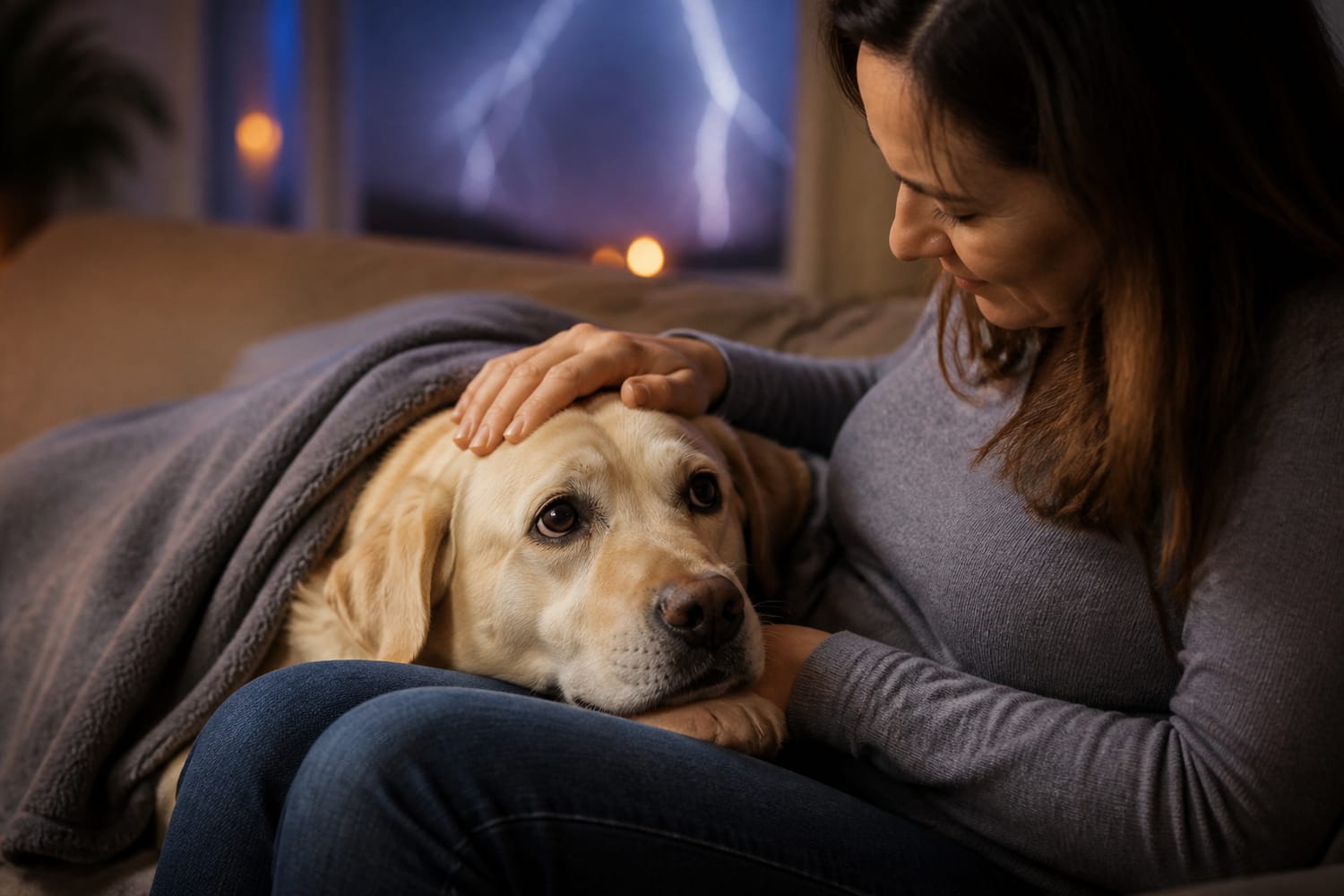
Help a dog scared of thunder or fireworks by bringing them indoors, offering a familiar quiet retreat, reducing noise and flashes, and providing calm companionship. Between noisy events, gentle, reward-based training can build confidence. Dogs with intense or worsening fear need veterinary support, sometimes including medication alongside behavior modification.
A thunderclap interrupts a cozy evening. Suddenly, your dog is trembling beside the sofa or searching for somewhere to hide. It can feel heartbreaking to watch—and difficult to know what to do.
The goal isn’t to make your dog “be brave.” It’s to help them feel protected, understood, and better equipped for the next noisy moment.
Why Loud Noises Can Feel So Frightening
Thunder and fireworks are sudden, unpredictable, and impossible for a dog to control. Some dogs develop fear after a frightening experience; others have a broader sensitivity to noise. Health problems and age-related changes can also contribute. The American Animal Hospital Association’s guide to noise aversion explains why early support matters: these fears can worsen without intervention.
Storms bring more than sound. Wind, rain, lightning, and changes in air pressure can become signals that something frightening is coming. That helps explain why a dog might become uneasy before you hear the first rumble—and why thunder recordings alone may not solve storm anxiety.
Fear is not disobedience. Your dog isn’t choosing to spoil the celebration or ignore their training.
Recognize the Signs Before Panic Builds
Not every frightened dog barks or shakes. Some become unusually clingy; others retreat quietly. Look for changes such as:
- Trembling, crouching, or hiding.
- Panting when they aren’t hot or exercising.
- Pacing or struggling to settle.
- Barking, whining, or attempting to escape.
- Refusing food they would usually enjoy.
- Toileting indoors despite being housetrained.
Notice the whole dog, not just one signal. A tucked tail, flattened ears, and tense posture together tell you more than a single movement. Petspiration’s guide to understanding pet body language offers a useful starting point.
Build a Safe Retreat Before You Need It
Choose a quiet, familiar place where your dog already likes resting. An interior bedroom, comfortable basement room, or sheltered corner away from windows may work. Add familiar bedding and make the space pleasant on ordinary days—not just when the sky turns dark. Cornell’s advice on fireworks and thunderstorm fear emphasizes preparing this refuge in advance.
Let your dog explore voluntarily. Offer a few treats, spend quiet time nearby, and allow them to leave. Think “favorite reading nook,” not “emergency holding area.”
A crate is suitable only if your dog already finds it comforting. Petspiration’s introduction to building positive crate associations covers gradual introductions. Do not lock a panicking dog in a crate: frightened dogs may injure themselves trying to escape.
Have a Simple Plan for Noisy Days
When fireworks are expected or storms are forecast, preparation is kinder than improvisation.
- Plan outdoor time early. Offer an appropriate walk, playtime, and bathroom break before the noise begins.
- Check identification. Keep collar tags readable and microchip registration details current.
- Secure escape routes. Check doors and gates, and ask visitors to be careful when entering.
- Bring your dog indoors. If a bathroom trip becomes necessary, use a leash—even in a fenced yard. Avoid outdoor trips during dangerous storm conditions.
- Arrange company. Stay home when possible, or ask a familiar, trusted sitter to help.
Close curtains and windows to soften flashes and sound. Familiar television, gentle music, or white noise may help mask outside noise, but keep the volume comfortable. Don’t try to overpower fireworks with an equally loud soundtrack. Dogs should not accompany you to a fireworks display, even as an attempted training exercise.
When the Noise Starts, Offer Comfort and Choice
You can comfort a frightened dog. Calm reassurance does not reinforce the emotion of fear. If your dog seeks contact, sit nearby, speak softly, or offer gentle petting they enjoy. There is no need to withhold affection to teach independence during a frightening event.
If they prefer hiding, respect that choice. Avoid pulling them out, crowding their retreat, or insisting they interact. Your presence can be available without becoming another demand. Never punish shaking, barking, accidents, or other fear-related behavior.
For a dog who remains interested, offer a familiar toy, small treats, or an appropriate food-filled toy. If they turn away, don’t push. Refusing a normally irresistible snack can indicate that the situation is too stressful; focus on reducing exposure instead.
Build Confidence Between Storms and Celebrations
The middle of a frightening event is not the time for deliberate exposure training. Practice when your dog is comfortable and you can control the sound.
Two approaches often work together: desensitization, which introduces a trigger at an intensity that does not cause fear, and counterconditioning, which pairs it with something enjoyable. The Merck Veterinary Manual’s guidance on fear treatment stresses that your dog should remain relaxed throughout controlled exposure.
Start With an Easy Version
Begin by rewarding comfortable settling on a mat in a quiet room. Once that is familiar, a carefully planned sound session might look like this:
- Play a recording at a barely audible level that causes no distress.
- Pair the sound with tiny favorite treats or enjoyable, gentle play.
- Keep practice brief and watch your dog’s posture and behavior.
- Make sound changes gradually across sessions, only while your dog remains comfortable.
If your dog tenses, hides, stops engaging, or tries to leave, stop. Allow them to recover, and make the next session easier. A veterinarian or qualified reward-based behavior professional can help you choose an appropriate starting point.
Never turn up the volume to make your dog “get used to it.” Forced exposure can intensify fear. Recordings also cannot reproduce every feature of a real storm or fireworks display, so comfortable practice does not guarantee comfort during the real thing.
Know When Extra Help Is the Kindest Choice
Contact your veterinarian if your dog panics, repeatedly attempts escape, cannot settle, or becomes increasingly sensitive to noise. A sudden new fear also deserves a checkup: pain and other medical changes may contribute, particularly in older dogs. You don’t need to wait for an injury before asking for help.
Treatment may include behavior modification, environmental changes, and prescription anxiety medication. Medication is not a failure of training; it can reduce suffering and help a dog become more able to learn. Your veterinarian can explain whether event-based or ongoing treatment fits your dog’s needs.
Some dogs also benefit from a comfortably fitted compression wrap or other calming aids, but these are additions—not substitutes for an effective treatment plan. Introduce wearable products on a quiet day, and stop if they cause distress. Check with your veterinarian before using supplements or medications; never improvise with human medicines or another pet’s prescription.
Aim for Safety, Not Perfection
Your dog does not have to sleep through a fireworks finale for your care to matter. A safe retreat, a thoughtful plan, and timely professional support are worthwhile goals.
Celebrate the small steps without setting a deadline for confidence. You cannot promise your dog a world without thunder—but you can keep showing them that they do not have to face it alone.