
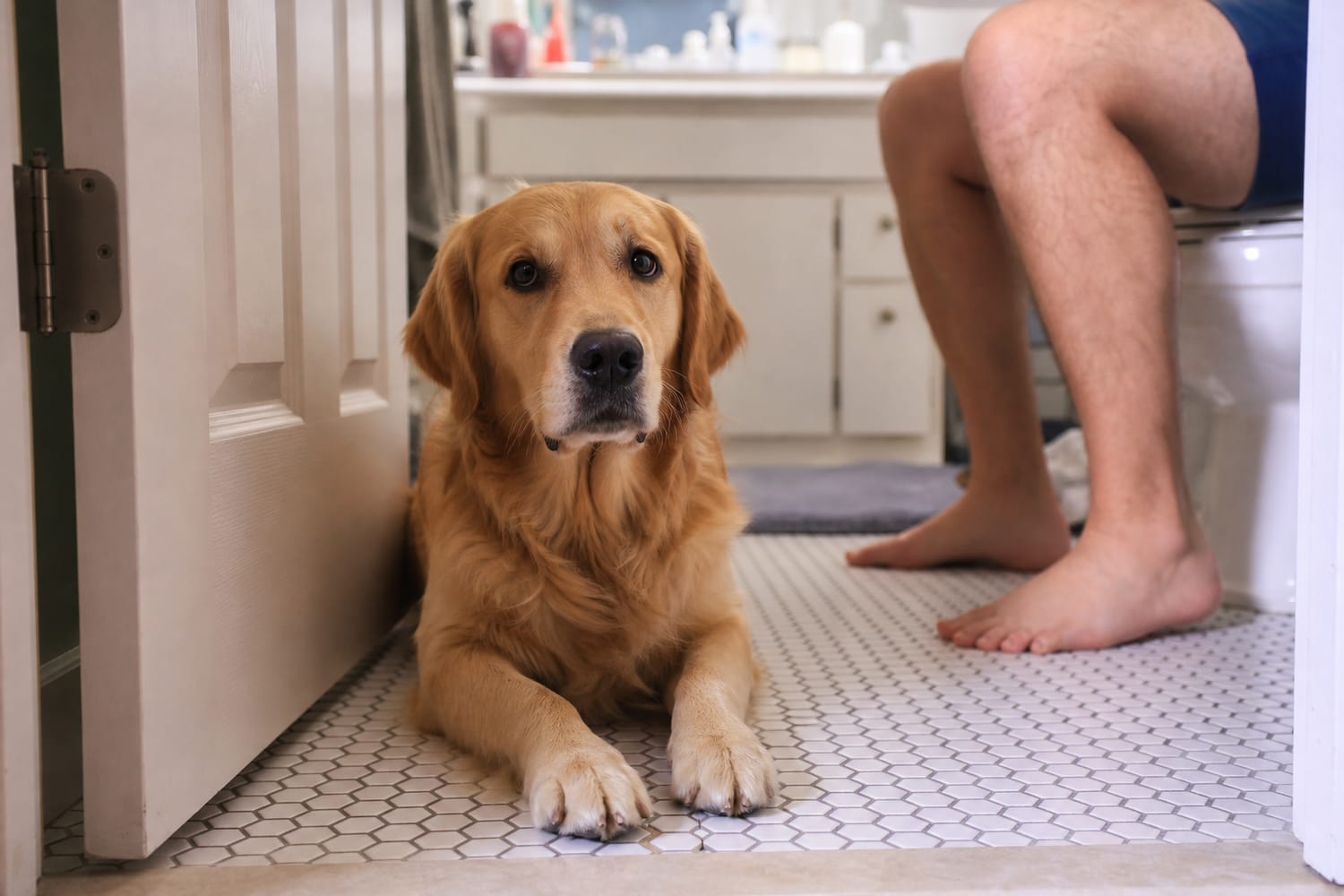
The Little Shadow With a Wagging Tail
If you share your home with a pet, you may already know the feeling: you stand up, and suddenly your dog is awake. You walk down the hall, and your cat appears like a tiny, silent detective. You close the bathroom door, and a paw slides underneath as if to say, Excuse me, we had plans.
Pets following their people everywhere—yes, even to the bathroom—is one of the most familiar and funny parts of pet ownership. It can feel sweet, silly, surprising, or occasionally inconvenient. But beneath the humor is a fascinating mix of instinct, affection, curiosity, routine, and communication.
To our pets, we are not just “the person who fills the food bowl.” We are family, safety, entertainment, comfort, and sometimes the most interesting thing in the entire house. When they follow us, they are often expressing something deeply natural: I want to be near you.
Your Pet Sees You as Their Safe Place
One of the biggest reasons pets follow us is simple: they feel secure with us.
Dogs, in particular, are social animals with a long history of living and working alongside humans. Over thousands of years, they have evolved to pay close attention to our movements, voices, moods, and habits. Many dogs look to their humans for guidance and reassurance. If you leave the room, they may follow because being near you makes the world feel more predictable.
Cats are often described as independent, but any cat lover knows they can form strong attachments too. Research has shown that cats can develop secure bonds with their owners, similar in some ways to the bonds babies form with caregivers. A cat who follows you from room to room may not be “needy”—they may simply feel most relaxed when their favorite person is nearby.
Other pets can do this as well. Rabbits may hop after trusted humans. Parrots may call out when their person leaves the room. Even guinea pigs can learn routines and respond excitedly to familiar footsteps. Across many species, companionship matters.
The Bathroom Mystery: Why That Room?
The bathroom seems like a strange place for a pet to insist on visiting. To us, it is private. To them, it is just another room—and maybe a very interesting one.
For dogs, bathroom following can be linked to pack behavior. In a canine social group, members often move together, rest together, and keep track of one another. Your dog does not understand privacy in the human sense. If you leave, especially behind a closed door, they may wonder why they cannot come along.
For cats, the bathroom can be a wonderland. There are dripping faucets, cool sinks, soft bath mats, laundry baskets, interesting smells, and sometimes a captive audience. Many cats quickly learn that when you are in the bathroom, you are sitting still. That makes it a perfect time to request attention, leap into your lap, or perform dramatic door-scratching.
There is also the closed-door factor. Many pets dislike barriers between themselves and their humans. A closed bathroom door can create a sudden mystery: Where did you go? Why am I not invited? What are you doing in there? For a curious animal, that is almost impossible to ignore.
Curiosity Is a Powerful Pet Superpower
Pets are natural investigators. Their senses tell them stories we cannot fully imagine.
A dog’s nose is extraordinarily sensitive. Depending on the breed and individual dog, their sense of smell is estimated to be thousands to tens of thousands of times more sensitive than ours. Every room contains information: where people have been, what they touched, what they ate, what changed since yesterday. When you move through the house, you are creating an evolving scent trail and activity pattern that your dog may want to follow.
Cats rely heavily on scent, sound, and observation too. They may follow you because they are monitoring their territory. In a cat’s mind, the home is not just a house—it is a carefully mapped kingdom. If the most important resident is moving around, the cat may decide supervision is necessary.
Curiosity also comes from enrichment. Pets that are bored may become more interested in following humans simply because humans are the most exciting thing available. If your pet trails you constantly, it may be partly affection and partly a request for more play, mental stimulation, or variety.
Love, Bonding, and the Joy of Being Together
Sometimes the explanation is wonderfully simple: your pet loves your company.
Many pets show affection by staying close. A dog leaning against your leg, a cat curling up beside your keyboard, a rabbit nudging your ankle, or a bird perching nearby may all be saying, in their own species-specific way, “You are part of my flock, family, or trusted circle.”
Following can also be a form of social bonding. Your pet may not need anything in particular. They may not be hungry, thirsty, or worried. They may just prefer being with you over being alone. That is one of the beautiful things about living with animals: their affection is often expressed through presence.
Of course, every pet has a different personality. Some are natural “velcro pets” who want constant closeness. Others are more independent and prefer occasional check-ins. Neither style is better. A pet who follows you everywhere is not necessarily more loving than one who naps in another room. Animals, like people, have different comfort levels and social habits.
Routine: The Secret Language of the Household
Pets are masters of routine. They learn the meaning of small signals we barely notice ourselves.
Picking up keys may mean you are leaving. Opening a certain cabinet may mean treats. Sitting at a desk may mean a long quiet stretch. Walking toward the bathroom in the morning may be part of the chain of events before breakfast or a walk. Your pet may follow not only because of where you are going, but because of what usually happens next.
Dogs are especially good at connecting routines. If your morning bathroom trip is followed by feeding time, your dog may believe the bathroom is an important step in the breakfast ritual. Cats also notice patterns and may become highly punctual about meals, play sessions, or bedtime routines.
This is one reason pets sometimes seem psychic. They are not reading our minds—they are reading our habits.
When Following Is Normal—and When It Might Signal Stress
In most cases, a pet following you around is completely normal. It is usually a sign of attachment, curiosity, or learned routine. However, there are times when constant following may point to anxiety or discomfort.
For dogs, excessive clinginess can be connected to separation anxiety, especially if it comes with signs such as barking, destructive behavior, house soiling, pacing, drooling, or panic when left alone. A dog with separation anxiety is not being “bad.” They are experiencing distress and need patient support, training, and sometimes guidance from a veterinarian or qualified behavior professional.
Cats can experience stress-related clinginess too. A cat who suddenly becomes unusually attached, vocal, or restless may be responding to a change in the home, a new animal, illness, pain, or anxiety. Any sudden change in behavior—especially changes in appetite, litter box habits, energy, grooming, or social behavior—should be discussed with a veterinarian.
Senior pets may also follow more due to changes in vision, hearing, cognition, or confidence. An older dog or cat may stay close because they feel safer navigating the home near you. Gentle accommodations, such as night lights, clear pathways, and predictable routines, can help them feel secure.
How to Support a Pet Who Wants Constant Company
If your pet’s shadow-like behavior is sweet and harmless, enjoy it. These small daily moments are part of the magic of pet companionship. But if you need a bit more personal space—or if your pet struggles when separated—there are kind ways to help.
Start by creating cozy, positive resting spots in different areas of the home. A dog bed near your workspace, a cat tree by a window, or a soft blanket in a quiet corner can encourage independence while still keeping your pet comfortable.
Use enrichment to make alone time more rewarding. Puzzle feeders, safe chew toys, treat-dispensing toys, snuffle mats, scratching posts, climbing spaces, and interactive play can all help pets feel engaged. For cats, short play sessions that mimic hunting—chasing, pouncing, catching—can be especially satisfying. For dogs, sniff walks and training games provide both exercise and mental stimulation.
Practice brief separations in a calm, positive way. Step into another room for a few seconds, return before your pet becomes upset, and gradually build from there. The goal is to teach them that your leaving is temporary and safe. If your pet shows strong panic, do not force long separations suddenly; seek professional advice.
Most importantly, avoid punishing a pet for following you. They are not trying to annoy you. They are communicating through the tools they have: movement, closeness, sound, and expression.
What Your Pet Might Be Trying to Say
When your pet follows you, they may be expressing several things at once:
- “I feel safe with you.”
- “I’m curious about what you’re doing.”
- “Is it time for food, play, or a walk?”
- “I don’t like being separated by this door.”
- “You’re my favorite person.”
- “Something feels different, and I need reassurance.”
Learning to read the context can help you respond well. A relaxed pet with a loose body, soft eyes, and calm behavior is probably just enjoying your company. A tense, panting, pacing, whining, hiding, or overly vocal pet may need extra support. Body language is one of the best windows into how our pets are feeling.
The Beautiful Truth About Being Followed
There is something deeply touching about a pet who chooses to be near you. In a busy world full of distractions, our animals often remind us of a simple truth: presence matters.
They do not care if the laundry is folded, if the email is answered, or if the bathroom door is closed for “just two minutes.” They care that you are there. You are part of their daily joy, their sense of safety, and their understanding of home.
So the next time a paw reaches under the bathroom door, a dog nose nudges it open, or a cat settles dramatically on the bath mat, try to see it through their eyes. To them, following you is not strange. It is loyal, curious, loving, and completely natural.
Being followed everywhere may not always be convenient—but it is one of the sweetest reminders that, in your pet’s world, you are wonderfully important.