
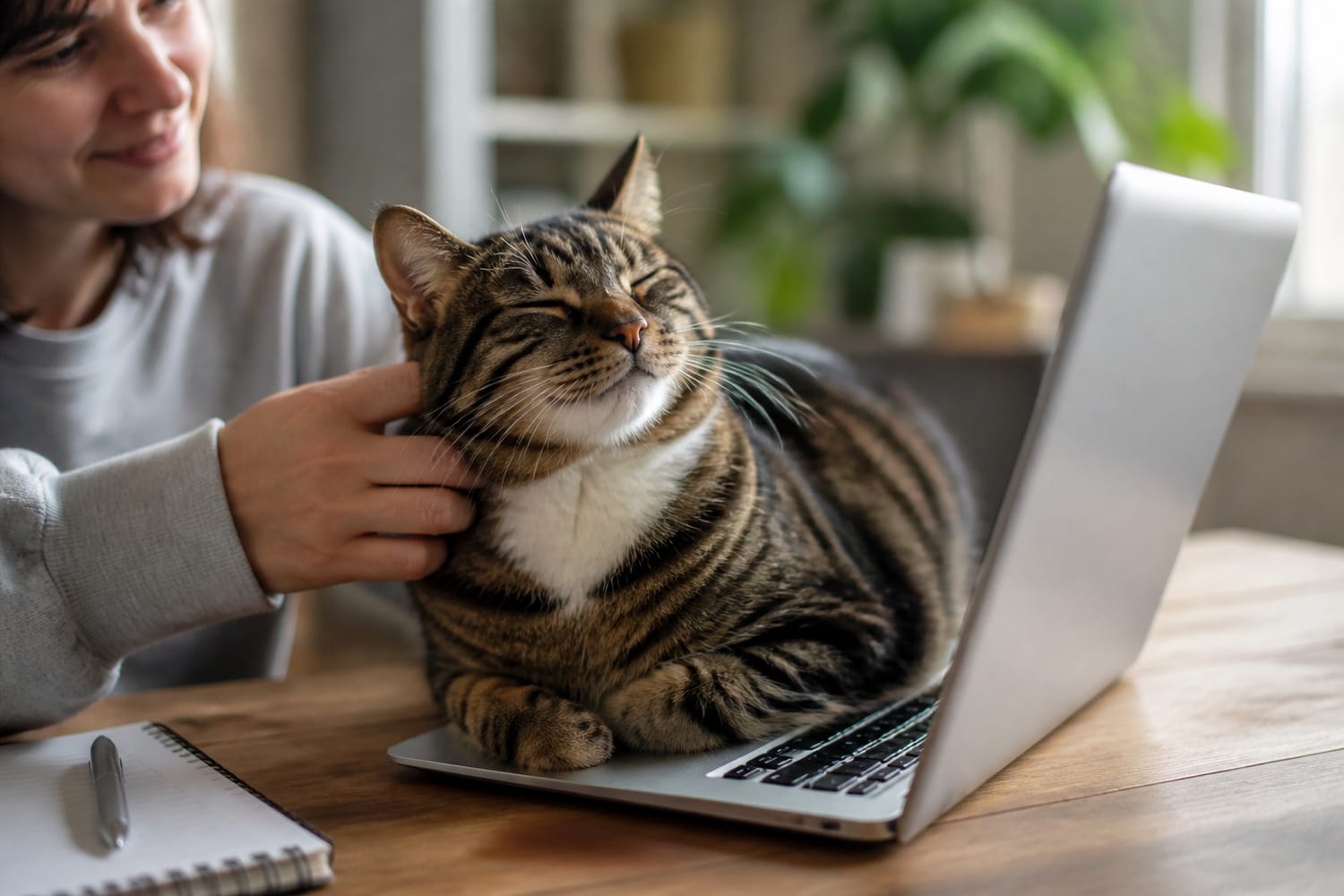
Why Cats Sit on Your Laptop
Your cat probably isn’t trying to delete your document. A laptop offers several things a cat may enjoy at once: warmth, a place close to you, familiar scents, and an excellent view of whatever has captured your attention. Which attraction matters most depends on the cat—and sometimes on whether the computer is even switched on.
You sit down to answer one email. A paw appears beside the trackpad. Moments later, your cat has settled across the keys as though your workday was scheduled around their nap. It’s funny, occasionally inconvenient, and easier to understand when you look at the desk from your cat’s point of view.
The Warmest Seat at the Desk
A running laptop can give off gentle heat, making it an appealing resting spot. Warmth helps explain why some cats choose the keyboard over an empty stretch of desk—or curl up on the computer after you have stepped away. As VCA Animal Hospitals notes, though, there is no single proven explanation for every keyboard-loving cat.
Try a small experiment: notice whether your cat approaches only when the laptop is warm, or whether they also occupy an unpowered keyboard. If they choose it either way, heat is unlikely to be the whole story. Your hands, your routine, and the location of the computer may matter just as much.
A nearby bed can offer a more comfortable alternative. Place it on a stable surface at a distance where your cat can see you without blocking your screen. A familiar blanket may make the new spot more inviting, while leaving your cat free to move away whenever they want.
Your Attention Is Right There
From your cat’s perspective, your desk is where you become unusually still and focused. Your hands move over the keys, your eyes stay on the screen, and sitting between the two brings your cat directly into the activity. Some cats may simply want to be near you; others may learn that stepping onto the keyboard reliably gets a response.
That response does not have to be a cuddle. Talking, laughing, lifting your cat, or stopping work to find a toy can all make a keyboard visit interesting. This does not mean your cat is plotting interruptions. It means cats can learn from what happens after they do something.
Watch the timing. Does your cat arrive as soon as you open the laptop, or only after you have been working for a while? Do they settle nearby if you pause to greet them? Those little clues are more useful than assuming every keyboard takeover means exactly the same thing.
A short play session before you start work may help meet a cat’s desire for interaction. Petspiration’s five-minute pet rituals offer simple ways to turn a small break into quality time.
Your Keyboard Smells Familiar
Cats explore a world rich in scent. You touch your keyboard often, and a cat may find your smell there reassuring or interesting. Cats also rub their faces and bodies on objects, leaving their own scent behind. That makes a well-used desk a particularly familiar part of the home—not necessarily a throne they are trying to claim.
You might notice your cat brush a cheek against the screen before settling down, or investigate the laptop bag when you bring it home. These are ordinary ways of exploring familiar and changed surroundings. They are not reliable evidence that your cat feels possessive of your computer—or that they understand what an urgent email is.
A blanket your cat already likes can bring some of that familiarity to a desk-side perch. Keep it clear of computer vents, chargers, drinks, and anything your cat might knock over.
The Desk Is an Interesting Place to Be
Laptops are part of a larger scene. Fingers tap, a cursor moves, papers rustle, and you spend time there every day. A curious cat may investigate simply because the desk is an active part of the household.
Some cats seem less interested in the keys than in the position they offer: close enough to watch you, high enough to survey the room, and central to whatever is going on. A cat tree or sturdy shelf near your workspace may satisfy that preference better than a bed hidden across the room. Feline veterinary guidance emphasizes safe resting places, opportunities for play, and positive, predictable interaction with people.
This is also why a “perfect” new cat bed does not always win immediately. Your cat may value proximity over softness, or a view over privacy. Rather than deciding they have rejected the bed forever, try another location and let their choices guide you. For more ideas about making room for pets throughout the house, explore Petspiration’s guide to designing a pet-friendly home.
How to Reclaim the Keyboard Kindly
You do not have to choose between finishing your work and enjoying your cat’s company. The aim is to make an appropriate nearby spot more rewarding than the keys.
- Set up a cat-sized workspace. Put a bed, folded blanket, or secure perch beside you, away from hot equipment and trailing cords. Choose somewhere your cat can comfortably turn around and rest.
- Invite, don’t force. When your cat approaches, guide them toward the new spot with a toy or treat. Reward them when they step onto it, then again when they settle.
- Keep it worthwhile. Offer occasional gentle attention if your cat enjoys it, or place a suitable toy nearby. Brief, regular play breaks may be more satisfying than waiting until your cat climbs across the screen.
- Respond calmly to keyboard visits. Move your cat gently to a safe place if you need the keys. Avoid scolding or startling them; instead, continue rewarding the place where you would like them to rest.
Positive-reinforcement guidance from the Feline Veterinary Medical Association supports meeting a cat’s environmental needs and rewarding desired behavior rather than relying on punishment. If the alternative spot is not working, change something about it: its height, softness, position, or distance from you.
If your cat also enjoys sending pens and papers flying, Petspiration has a separate look at why cats knock things over. Curiosity and play can show up in more than one part of a busy desk.
Keep the Cozy Setup Safe
A shared workspace works best with a few sensible boundaries. Do not let your cat block a laptop’s ventilation openings, and move them away if a surface feels too hot. Keep drinks beyond paw’s reach, secure loose cords, and shut the laptop or protect your work when you step away.
Pay attention to your cat’s comfort, too. A cat who is panting, drooling, unusually weak, or struggling to settle needs more than a different desk arrangement. Cornell’s feline heat-safety guidance recommends contacting a veterinarian promptly if you suspect overheating.
Keyboard sitting on its own is usually an everyday behavior. If it appears alongside a sudden change in vocalizing, clinginess, appetite, activity, or other habits, check in with your veterinarian rather than assuming your cat simply wants more screen time.
A Little Less Keyboard, Just as Much Togetherness
Your cat may never care about your deadline, but they do notice where you spend your time. A warm surface, familiar smells, an interesting view, and the chance to be near you make the laptop a surprisingly attractive destination.
The kindest solution is not to win a battle over the keyboard. It is to offer your cat a place that meets the same needs while letting you type. With a welcoming perch and a little practice, your favorite desk companion can remain close enough to supervise—without editing your sentences.