
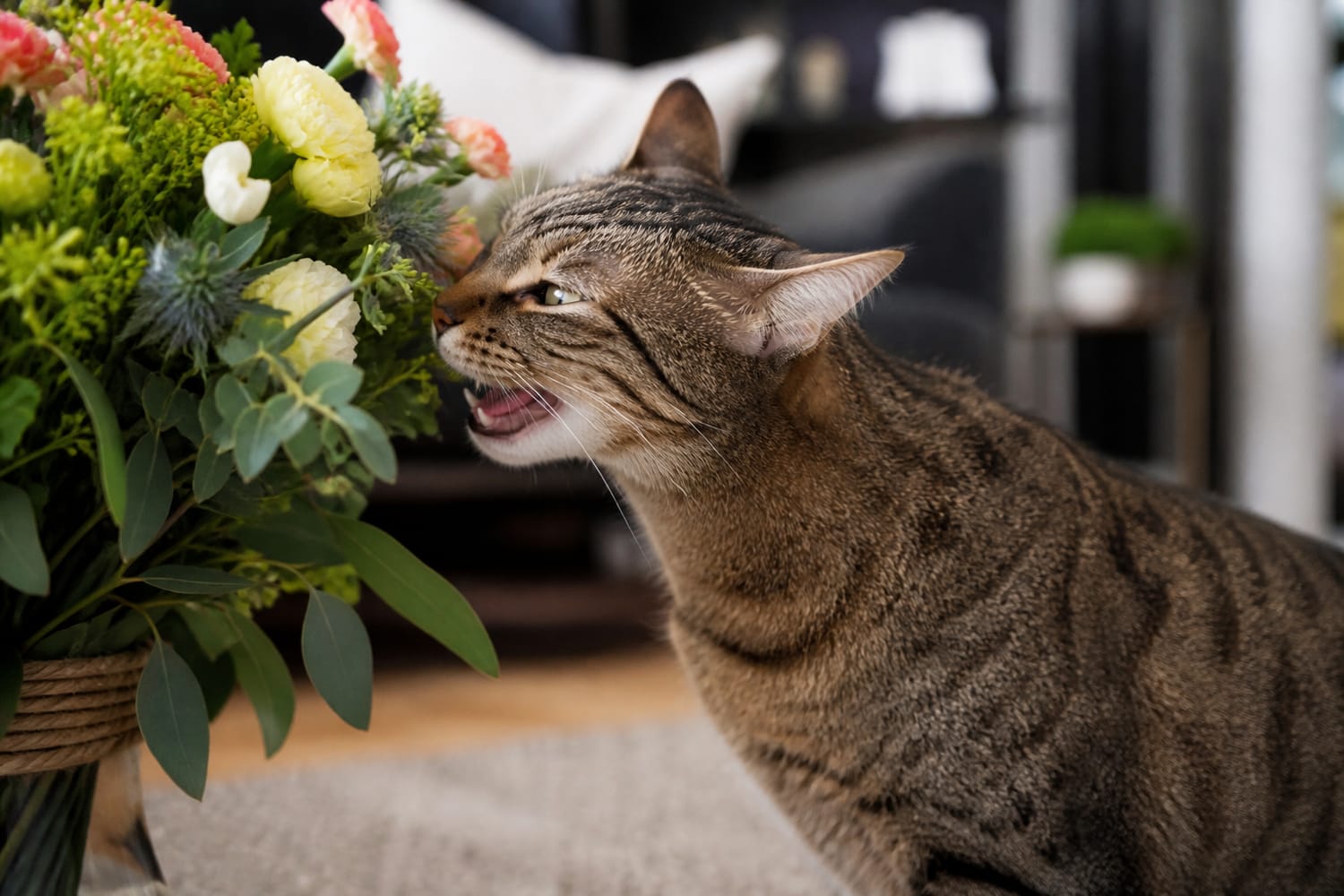
Your cat sniffs a shoe, pauses, and stares into the distance with their mouth slightly open. It looks like a dramatic review of your footwear, but they probably aren’t offended. This expression is called the flehmen response. It helps cats investigate scent chemicals using a sensory organ connected to the roof of the mouth.
That funny little face is a glimpse into a world we can’t experience quite the way cats do. To us, a shoe is a shoe. To a curious cat, it may be a collection of clues worth examining twice.
What Is the Flehmen Response?
The flehmen response is a brief, deliberate-looking expression that often follows a close sniff. A cat may lift their head, part their jaws, draw back their upper lip, and hold still for a few seconds. Sometimes the tip of the tongue moves toward the front of the mouth. Then the moment passes, and your cat goes about their day.
Its nickname, “stinky face,” is irresistible—but misleading. The expression doesn’t necessarily mean a smell is unpleasant. Your cat may be especially interested in what they’ve found. A visitor’s bag, another cat’s favorite corner, or your just-worn socks can all invite further investigation.
Meet the Cat’s Extra Scent-Detecting Organ
The star behind the expression is the vomeronasal organ, also called Jacobson’s organ. It is an accessory sensory organ associated with the nasal cavity, with small openings in the roof of the mouth just behind the upper front teeth. The flehmen posture helps bring scent-related chemical signals toward this system for further processing.
Think of it as a different way to examine a scent, rather than simply taking a bigger sniff. Your cat’s nose detects odors in the familiar way; the vomeronasal system is particularly important for detecting pheromones, chemicals animals release that can convey information to others of their species. It’s tempting to say cats are “tasting the air,” but that’s a comparison, not a literal description of what they experience.
You don’t need to spot those tiny openings to appreciate what’s happening. The visible clue is the pause: sniff, open mouth, thoughtful-looking stare. What seems like a comical frozen expression is part of an impressive sensory process.
What Are Cats Learning From a Smell?
For cats, scent helps make sense of their surroundings and social world. They leave chemical traces through behaviors such as rubbing, scratching, and urine marking. Pheromones can carry information relevant to other cats, and the flehmen response helps a cat investigate certain signals more closely.
Imagine a cat discovering a spot where another cat has rubbed its cheek. We might see nothing at all. The investigating cat, however, has found a reason to stop and gather more information. Urine and other animal scents can prompt the same behavior. And while reproductive cues are one reason cats use this ability, the response isn’t limited to mating: cats of any sex may make the face after encountering an intriguing scent.
This makes the “stinky face” a companion to another familiar feline habit. When cats rub their cheeks against furniture or people, they can leave scent behind; when they investigate a scent, they may use flehmen to learn more about it. Petspiration’s guide to why cats rub their faces on everything explores the other side of that exchange.
Why Shoes, Laundry, and Other Everyday Objects?
An object doesn’t have to smell strong to you to catch your cat’s attention. Shoes and worn clothing travel with us through different places and come into contact with people, animals, and surfaces. Your cat may pause over one because it carries something new or interesting—not because they have decided it smells bad.
The same goes for a blanket used by another pet or a bag brought in from outside. Watch what your cat chooses to investigate, and you may notice how much of their day is spent checking their surroundings. A familiar room can still offer a new scent puzzle.
There’s no need to stage a “stinky face” for entertainment. Let your cat sniff harmless items at their own pace, and give them room to move away when they’re finished. If an object has something on it that you wouldn’t want your cat to lick or contact, keep it out of reach. Curiosity is wonderful; a safe environment lets it flourish.
Does the Face Tell You How Your Cat Feels?
Not by itself. Flehmen tells you that your cat is investigating a scent; it doesn’t reveal whether they’re happy, disgusted, worried, or fond of the object. We humans are quick to read emotions into a facial expression, especially one this memorable. But with cats, context matters more than a single snapshot.
Look at the whole cat. Were they calmly exploring and breathing normally before and after the expression? Or did they seem tense, try to retreat, or behave unusually? Noticing posture and the situation around a behavior is a more useful habit than assigning one meaning to one face. For more on reading those signals, see Petspiration’s guide to understanding pet body language.
And if your cat makes the face after sniffing you, don’t take it personally. A new scent on your hands or clothes may simply deserve closer study. To a pet who knows your everyday smell, you can occasionally bring home a surprise.
When Is an Open Mouth a Reason to Worry?
A typical flehmen response is brief and linked to sniffing. Your cat holds their mouth slightly open, then returns to normal activity and breathing. Open-mouth breathing is different—and it deserves serious attention.
If your cat is panting, breathing rapidly or with effort, stretching their neck to breathe, or keeping their mouth open while trying to get air, seek veterinary care immediately. Don’t assume it is flehmen simply because your cat has made a similar-looking face before. Cornell’s guide to breathing difficulty in cats explains why respiratory distress needs prompt treatment.
A useful question is: Was my cat examining a smell, or are they struggling to breathe? If the answer isn’t clear and your cat appears distressed, choose the safer path and contact a veterinarian right away. Being able to enjoy a normal feline quirk also means knowing when a similar-looking sign is not normal.
A Small Face With a Fascinating Story
The next time your cat sniffs a shoe and makes that unforgettable expression, you can smile at the sight—and appreciate the science behind it. The flehmen response is one way cats explore chemical clues that are invisible to us. It doesn’t mean your home has failed a feline smell test; it means your companion is gathering information.
That’s part of the joy of sharing life with a cat. Even in an ordinary hallway, surrounded by ordinary things, they can remind us that there is always more to discover.