
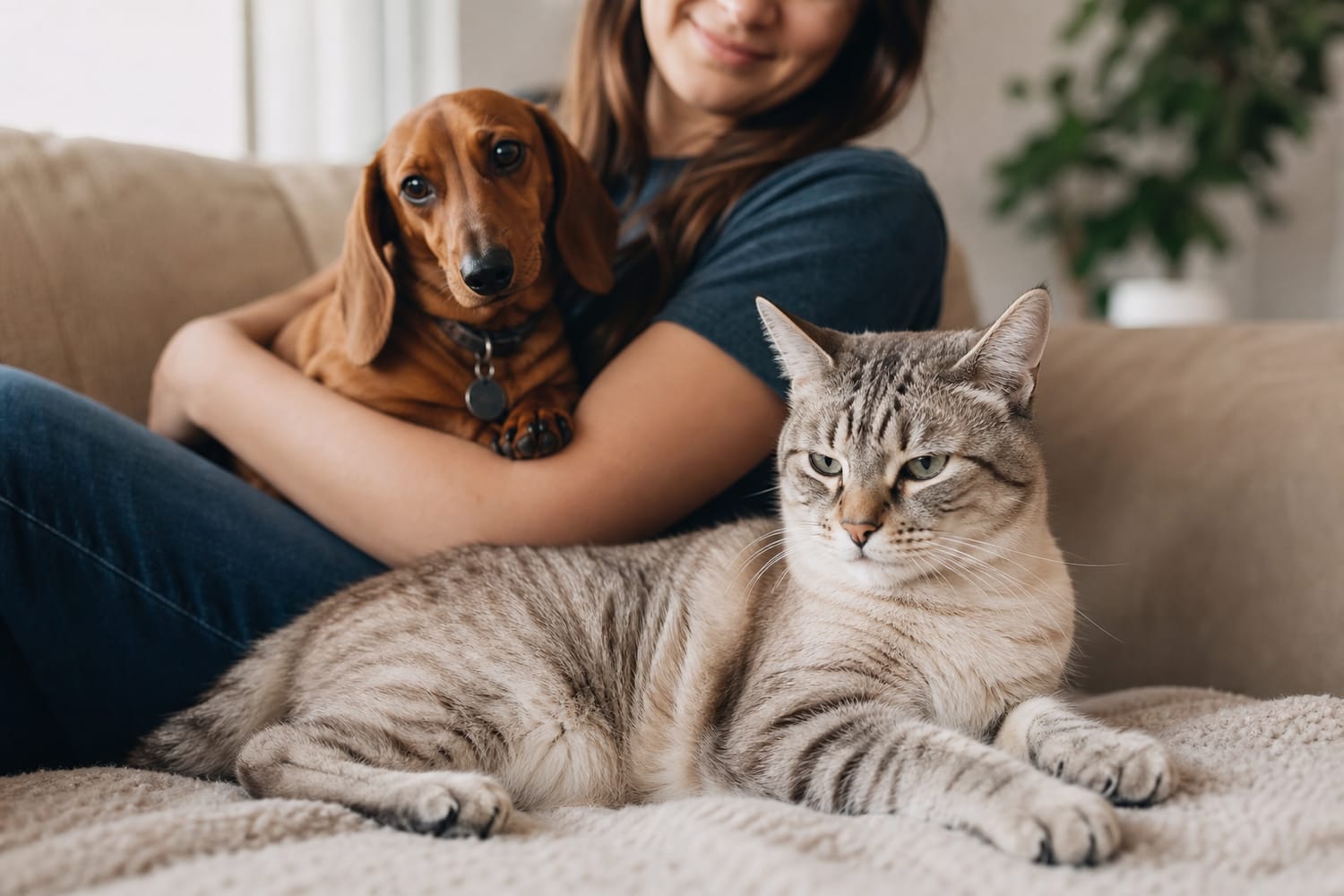
The Green-Eyed Monster With Fur
If you’ve ever scratched one dog behind the ears only to have another wedge themselves between you, or watched your cat stare dramatically from across the room while you cuddle a new kitten, you may have wondered: Do pets get jealous?
The short answer is: many pets can show jealousy-like behavior. The longer, more fascinating answer is that scientists are still exploring exactly what animals feel, how they understand social relationships, and whether their emotions match what humans call “jealousy.” What we do know is that pets are social, emotionally responsive creatures. They notice when our attention shifts. They care about access to favorite people, places, toys, food, and routines. And sometimes, when something—or someone—seems to threaten that bond, they react.
For pet lovers, this can be both funny and confusing. A dog may nudge your hand away from another dog. A cat may sit on your laptop when you’re working. A parrot may squawk when you talk on the phone. A rabbit may thump after being ignored. Are they being “naughty,” or are they communicating something deeper?
In many cases, jealousy-like behavior is a pet’s way of saying: “Hey, don’t forget about me. I matter too.”
What Is Jealousy, Really?
In humans, jealousy is often described as an emotional response to a perceived threat to an important relationship. It usually involves three parties: the jealous individual, someone they are attached to, and a rival. For example, a child may feel jealous when a parent gives attention to a new baby.
When we talk about pets getting jealous, we have to be careful. Animals cannot tell us, “I feel jealous because I believe my bond with you is threatened.” Instead, scientists look at behavior. Does the animal try to interrupt attention given to a rival? Do they show stress? Do they push in, vocalize, paw, nip, or display other attention-seeking actions?
The evidence suggests that some animals, especially dogs, behave in ways that look very similar to jealousy. Whether their inner experience is exactly like ours is harder to prove. But for everyday pet owners, the important takeaway is practical: pets can feel unsettled when they perceive competition for attention or resources, and they may need reassurance, structure, and kindness.
The Science Behind Jealous Dogs
Dogs are the most studied pets when it comes to jealousy, and the research is compelling. A well-known 2014 study published in PLOS ONE explored jealousy-like behaviors in domestic dogs. In the experiment, owners interacted with three different objects: a realistic-looking stuffed dog that barked and wagged its tail, a jack-o’-lantern pail, and a children’s book. The researchers found that dogs were more likely to show behaviors such as pushing or touching their owner, getting between the owner and object, and snapping at the stuffed dog when their owner showed affection toward the fake dog.
This suggested that dogs may react specifically when they perceive a social rival, not merely when their owner’s attention is elsewhere. In other words, the dogs weren’t just bored because their person was reading a book. They seemed especially bothered by the possibility of another “dog” receiving affection.
More recent research has continued to support the idea that dogs can show jealousy-like responses. Dogs are highly social animals. They evolved alongside humans for thousands of years and are excellent readers of our body language, tone, and attention. Many dogs form strong attachment bonds with their people, similar in some ways to the bonds children form with caregivers.
So when another pet, person, or even object appears to interrupt that bond, a dog may respond. This doesn’t mean the dog is bad, spoiled, or trying to dominate the household. It means they are emotionally invested.
Do Cats Get Jealous Too?
Cats have a reputation for being independent, but cat lovers know the truth: many cats are deeply attached to their people. They may follow us from room to room, sleep beside us, greet us at the door, and have very strong opinions about our daily schedule.
Scientific research on jealousy in cats is more limited than research on dogs, but many feline behaviors can resemble jealousy or social frustration. A cat may push between you and another pet, swat at a newcomer, block access to your lap, vocalize, or suddenly demand attention when you are focused elsewhere. Some cats may act aloof or retreat, while others become unusually clingy.
Cats are territorial animals, and their sense of security is tied not only to people but also to space and routine. A new kitten, puppy, baby, partner, or houseguest can change the emotional “map” of their world. Even moving a litter box or feeding station can add stress. What looks like jealousy may be a combination of attachment, territorial concern, resource guarding, and anxiety about change.
The good news is that cats often adjust beautifully when introductions are slow and respectful. Giving each cat their own safe spaces, food bowls, litter boxes, scratching areas, and vertical territory can reduce conflict. Cats like choice. When they feel they can retreat, observe, and participate on their own terms, they are more likely to feel secure.
Other Pets Can Feel Rivalry Too
Dogs and cats may get most of the attention, but many other pets are socially aware and emotionally sensitive.
Parrots, for example, are intelligent flock animals. In the wild, social bonds are essential to survival. A companion parrot may become upset when their favorite person gives attention to someone else, especially if the bird is strongly bonded to one individual. This can lead to loud vocalizations, feather stress, lunging, or attempts to interrupt interactions.
Rabbits can also show social preferences and may react when attention or treats are given to another rabbit. Bonded rabbits may experience tension if resources are limited or introductions are rushed. Guinea pigs, rats, and other social mammals can also compete over food, hiding spots, and human attention.
Even animals that don’t experience jealousy exactly as humans do can experience stress around competition. The key is to understand each species’ natural behavior. A jealous-looking dog may need training and reassurance. A jealous-looking parrot may need enrichment and healthy social boundaries. A jealous-looking rabbit may need a carefully managed bonding process and plenty of space.
Signs Your Pet May Be Feeling Jealous
Jealousy-like behavior can look different depending on the pet, personality, and situation. Some common signs include:
- Pushing between you and another person or animal
- Pawing, nudging, jumping, or climbing onto you
- Vocalizing, such as barking, whining, meowing, or squawking
- Guarding your lap, bed, toys, food, or favorite resting spots
- Staring, following, or hovering when attention is given elsewhere
- Swatting, growling, hissing, snapping, or lunging
- Acting withdrawn or hiding after a change in the household
- Urinating outside the litter box or having accidents, especially when stressed
- Destructive behavior when routines change
It’s important not to assume every behavior is jealousy. Pain, illness, fear, lack of exercise, boredom, poor socialization, and environmental stress can cause similar signs. For example, a cat who suddenly urinates outside the litter box should be checked by a veterinarian to rule out medical issues. A dog who growls when another pet approaches may be guarding resources or may be in pain.
Understanding the “why” behind behavior helps us respond with compassion instead of frustration.
Why Pets Compete for Our Attention
To us, petting one animal while another waits nearby may seem simple. To a pet, it can involve valuable resources: affection, safety, treats, play, space, and belonging.
Pets thrive on predictability. They learn patterns: who feeds them, who plays with them, who gives the best belly rubs, which chair is warmest, and when bedtime happens. When a new animal or person enters the picture, those patterns can shift. A dog may worry that walks will change. A cat may worry that their favorite windowsill now belongs to the kitten. A parrot may feel left out when the household energy focuses on a new baby.
Some pets are naturally more sensitive than others. Past experiences matter too. A rescue dog who has experienced neglect may be especially concerned about losing attention. A cat who previously had to compete for food may guard resources. A young pet may lack the emotional maturity to wait calmly.
The goal is not to shame pets for these feelings. The goal is to guide them. Just as children learn to share attention, pets can learn that love is not a limited resource.
Helping Pets Feel Secure
The best way to reduce jealousy-like behavior is to build confidence and fairness into everyday life.
First, protect routines. Feed pets at consistent times, keep walks predictable, and maintain familiar rituals. If you always greet your dog after work or brush your cat before bed, try to keep that tradition even after a new pet or baby arrives.
Second, provide individual attention. Each pet should have moments when they are the star. This doesn’t have to be complicated. Five minutes of focused play, a short training session, gentle grooming, or quiet cuddle time can make a big difference.
Third, reward calm behavior around “rivals.” If your dog relaxes while you hold the baby, praise them. If your cat calmly watches the new kitten from a perch, offer a treat. If your parrot plays independently while you talk to someone else, reinforce that success. You are teaching your pet: Good things happen when others receive attention too.
Fourth, avoid forcing interactions. Pets need time to adjust. Let introductions happen gradually, with supervision and escape routes. This is especially important with cats, rabbits, birds, and small animals, who may feel threatened by sudden contact.
Finally, make sure resources are plentiful. Multiple pets should have enough bowls, beds, toys, litter boxes, hiding places, and resting areas. Competition increases when resources feel scarce.
A helpful rule for cats is “one litter box per cat, plus one extra.” For dogs, separate feeding areas can prevent tension. For small pets, spacious enclosures and multiple hideouts can reduce squabbles.
When Jealousy Turns Into a Problem
A little attention-seeking is normal. Many pets will occasionally nudge, meow, bark, or wiggle their way into a cuddle. But jealousy-like behavior becomes a concern when it leads to aggression, chronic stress, injury, or major household disruption.
Seek help from a veterinarian, certified trainer, veterinary behaviorist, or qualified behavior consultant if your pet:
- Growls, bites, lunges, or attacks
- Guards people, food, toys, or sleeping areas intensely
- Seems constantly anxious around another pet or family member
- Stops eating, hides often, or shows signs of depression
- Has repeated accidents or destructive episodes
- Cannot safely be near a new baby, pet, or visitor
Professional support can be life-changing. Behavior experts can help identify triggers, design safe training plans, and reduce stress for everyone. Positive reinforcement methods are especially important because punishment can increase fear and worsen rivalry.
Love Is Not a Limited Resource
So, do pets get jealous? Many certainly act as though they do. Dogs have shown jealousy-like behavior in scientific studies, cats and other animals can display similar social tension, and countless pet owners have witnessed furry rivalry firsthand.
But underneath the pawing, nudging, meowing, barking, or dramatic staring is often a simple emotional message: I want to feel safe. I want to belong. I want to know I still have a place in your heart.
That is something every pet lover can understand.
The beautiful part is that jealousy-like behavior is not a sign that a pet is “bad.” It’s an invitation to strengthen trust. With patience, routine, fair attention, and thoughtful introductions, pets can learn that another animal, person, or life change does not mean less love for them.
In fact, many pets who begin as rivals eventually become companions. The dog who once squeezed between you and the puppy may later nap beside them. The cat who hissed at the newcomer may one day share a sunbeam. The parrot who protested your phone calls may learn to enjoy independent play while staying part of the flock.
Our pets may not understand love exactly the way we do, but they feel connection deeply. And when we respond to their worries with kindness, we teach them one of the warmest lessons of family life: there is enough love to go around.