
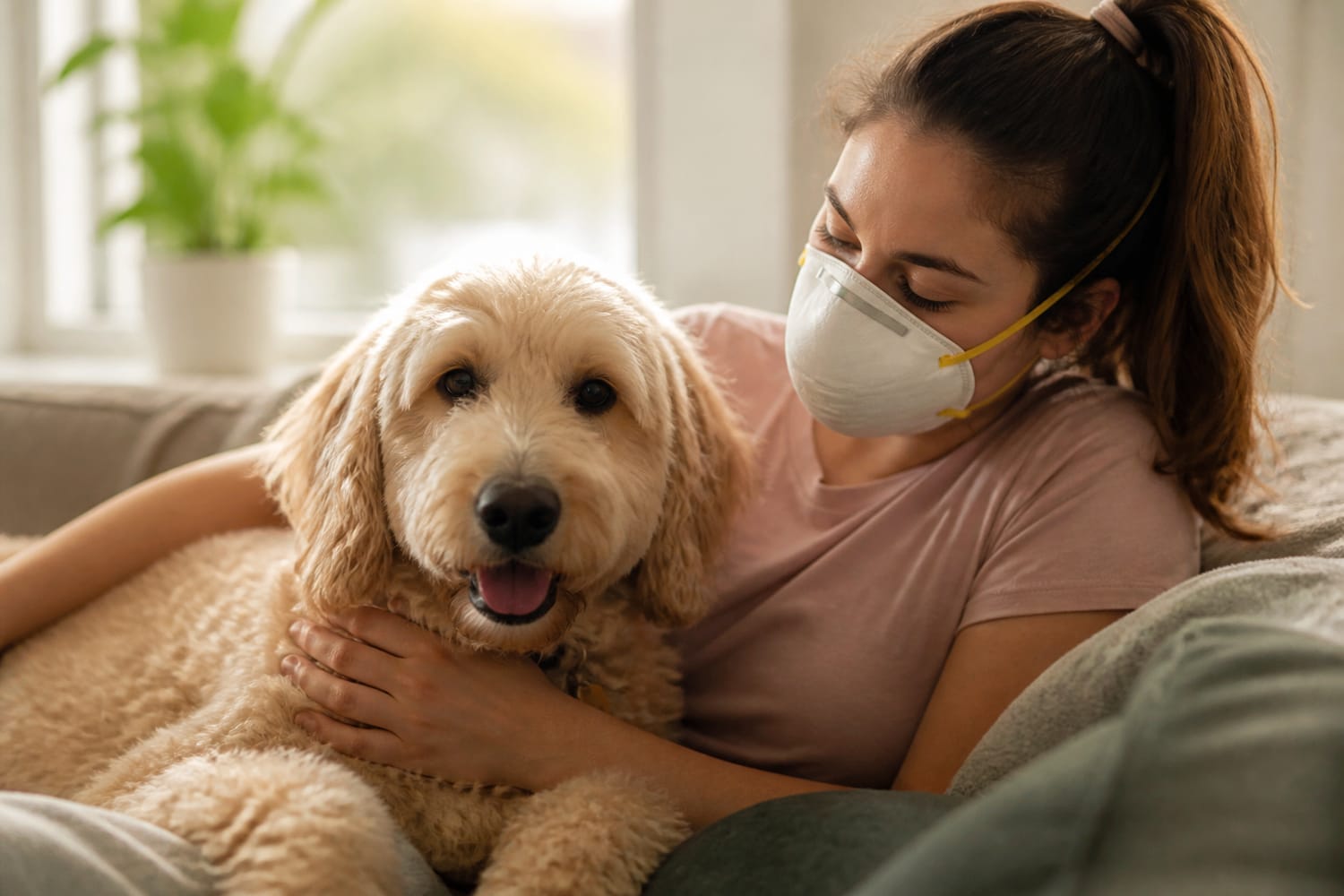
A sneeze during cuddle time can leave a pet lover with a difficult question: Can we keep living together comfortably? Often, yes. The most practical approach is to confirm what’s causing your symptoms, reduce your exposure at home, and work with a clinician on treatment if you need it. No single trick makes a pet allergy disappear, but several small changes can make daily life easier.
The goal isn’t to love your pet from a distance. It’s to find a routine that protects your health while giving your companion the care, play, and affection they deserve.
First, Find Out What You’re Allergic To
It’s easy to blame the fur on the sofa, but fur itself usually isn’t the main problem. Allergy-triggering proteins are found in animals’ skin flakes, saliva, and urine. Those proteins can collect on coats, furniture, bedding, and clothing. A pet’s fur can also carry pollen or dust, so symptoms that flare after a walk or a grooming session may have more than one possible cause.
Common symptoms include sneezing, a stuffy or runny nose, itchy or watery eyes, and sometimes an itchy rash after contact. Wheezing, chest tightness, or shortness of breath may signal that asthma is involved. Symptoms can persist even when you aren’t touching your pet because allergens remain in the home environment.
If you’re unsure what’s setting you off, keep a simple note of when symptoms happen: after your cat sleeps on a pillow, when you vacuum, during pollen season, or after handling bedding. Take that record to an allergist. An evaluation and allergy testing can help identify your triggers rather than leaving you to rearrange your life around a guess.
Give Your Bedroom a Fresh Start
If you make just one household change, consider making the bedroom pet-free. We spend a substantial part of each day there, and keeping your pet out can reduce exposure while you sleep. Close the door consistently, and offer your companion an inviting bed elsewhere—perhaps near a favorite family gathering spot. It’s a new boundary, not a withdrawal of affection.
Wash bedding regularly, and pay attention to throws and cushion covers your pet uses. If a dog has always slept beside your bed, help them adjust with a comfortable alternative and a predictable evening routine. Petspiration’s guide to creating a safe space for your dog has ideas for making a resting place welcoming, whether or not you use a crate.
A bedroom boundary works best when everyone in the household follows it. “Just this once” can leave allergens on the bed long after your pet has hopped down.
Clean Where Allergens Collect
You don’t need a spotless showroom. You need a manageable routine focused on places allergens accumulate: floors, rugs, upholstered furniture, and washable fabrics. Vacuum regularly with a cleaner that has a HEPA or other high-efficiency filter, and clean hard floors and surfaces without sending dust back into the air. If vacuuming stirs up your symptoms, ask someone else to do it when possible and spend time in another room until the dust settles.
Wash your pet’s blankets and removable furniture covers as part of the normal laundry rotation. If you’re updating a room, easy-to-clean flooring and washable textiles can make upkeep simpler; there’s no need to replace everything overnight. For practical ideas, explore Petspiration’s pet-friendly home design guide.
A portable HEPA air cleaner may help reduce airborne particles, especially in a room where you spend a lot of time. Choose one sized for the space, but think of it as an addition to cleaning and exposure reduction, not a substitute for either. The EPA’s guide to air cleaners also advises avoiding devices that intentionally produce ozone, which can irritate the lungs.
Rethink Cuddles, Not Connection
If close contact sets off symptoms, there are gentler ways to stay close. Try playtime, training games, walks, or sitting together without pressing your face into your pet’s coat. Wash your hands after petting, especially before touching your eyes or nose, and avoid letting your pet lick your face. These habits may feel small, but they give you more control over direct exposure.
Grooming can be another opportunity to share the load. Ask a household member who doesn’t have allergies to brush your pet outdoors, if it’s safe and comfortable to do so. Talk with your veterinarian before changing how often you bathe your pet: cats and dogs have different grooming needs, and frequent baths may not suit an individual animal’s skin or temperament. Petspiration’s dog and cat bathing guide can help you start that conversation.
Most importantly, make the new routine enjoyable for your pet. A cat who can’t visit your pillow might appreciate an evening wand-toy session. A dog who’s learning to stay off the sofa can still look forward to a walk and some one-on-one attention. The aim is to change where and how you connect—not how much you care.
Build a Treatment Plan That Fits Your Life
Household changes may not be enough on their own, particularly if symptoms are frequent or affect your sleep. An allergist can discuss options based on your symptoms and medical history. These may include antihistamines, nasal sprays, or other medicines; for some people, allergy shots are a longer-term option. If you have asthma symptoms, ask about an asthma treatment plan rather than relying on cleaning alone.
Be honest at your appointment about your hopes and your limits. Tell the clinician if keeping your pet is important to you, what you’ve already tried, and what a realistic cleaning routine looks like in your home. That makes it easier to weigh the available options together. The American Academy of Allergy, Asthma & Immunology’s pet allergy guide is a useful starting point for questions to bring along.
Take breathing symptoms seriously. If you develop wheezing or chest tightness around your pet, seek medical advice promptly. If breathing becomes severely difficult, seek urgent medical help. Caring for your pet should never require you to ignore a worsening health problem.
Be Hopeful—and Honest—About What Works
There is no truly allergy-free cat or dog breed, and no air cleaner or cleaning schedule can promise a symptom-free home. For many families, though, a combination of a pet-free bedroom, thoughtful cleaning, adjusted contact, and appropriate treatment can make living together more comfortable. Notice what changes help, and revisit the plan if symptoms continue.
Sometimes, despite everyone’s best efforts, continued exposure isn’t workable—especially when breathing problems remain poorly controlled. If that happens, talk with your clinician and loved ones about the safest path forward. It’s a hard conversation, but putting health first is not a failure of love.
For now, start with one achievable step: close the bedroom door, wash the favorite blanket, or book an allergy appointment. A good life together is built through care for both ends of the leash—or both sides of the purr.