
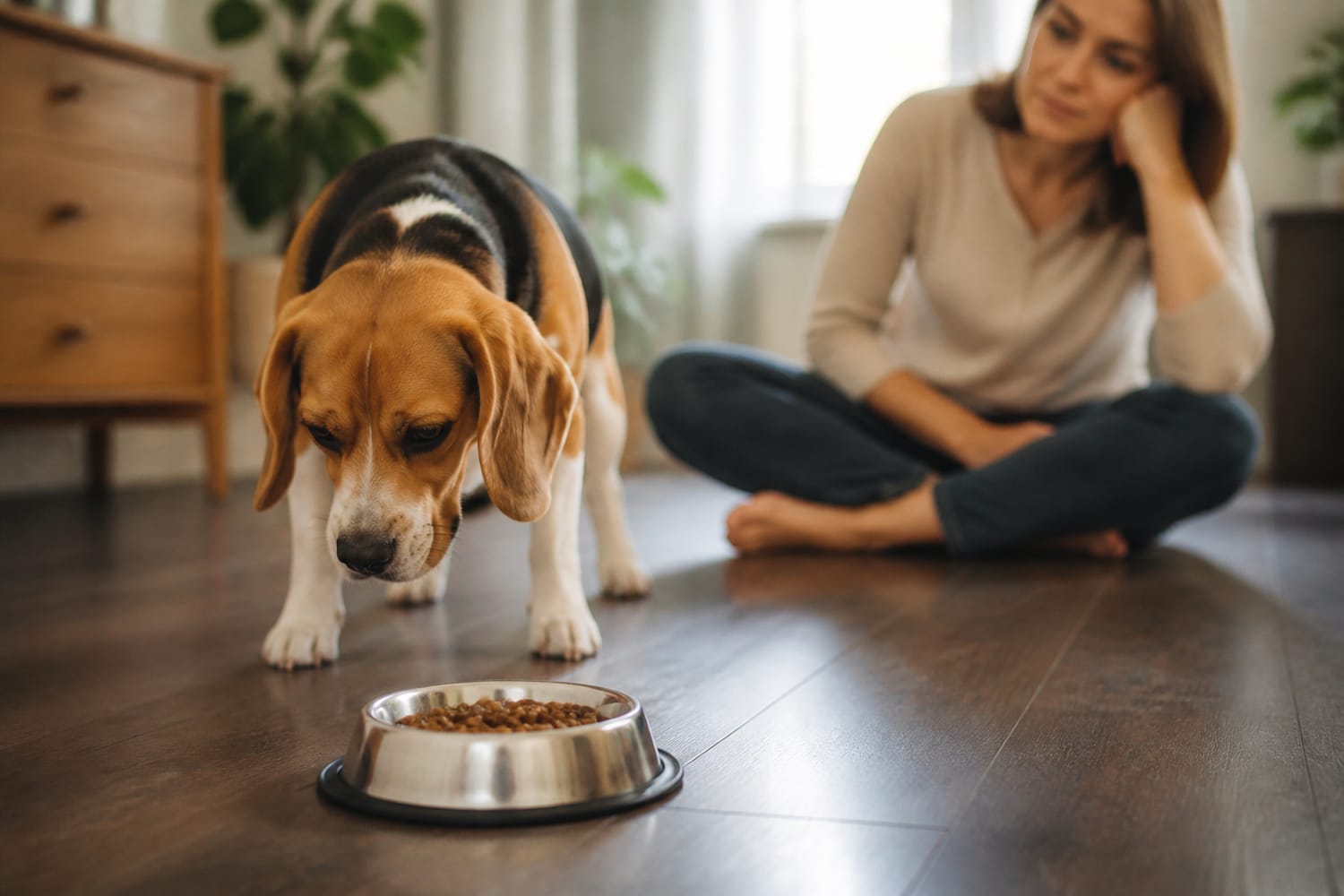
The Problem May Be Around the Food, Not in It
When a pet approaches dinner, sniffs, and walks away—only to eat the same food from your hand or the floor—the recipe may not be the problem. Bowl shape, noise, cleanliness, location, competition, discomfort, and learned associations can all affect mealtime. By observing the whole feeding setup, you may discover a surprisingly simple solution.
Before replacing a balanced diet your pet normally enjoys, look at what happens immediately before, during, and after they approach their bowl. Their body language can offer valuable clues: hesitation, crouching, pawing at food, repeatedly looking behind them, or carrying pieces elsewhere all mean something.
1. The Bowl Is Too Deep or Narrow
Cats use their whiskers as sensitive environmental sensors. Some appear to dislike repeatedly brushing them against the sides of a deep bowl, although “whisker fatigue” remains a debated theory rather than a firmly established medical diagnosis. Research has not shown that whisker-friendly bowls improve eating for every cat, but individual cats may prefer them.
Try serving the same meal on a wide, shallow dish or flat plate. If your cat stops scooping food onto the floor or begins eating more comfortably, you have found a practical solution—whether whisker contact was the precise cause or simply a personal preference.
Flat-faced dogs and cats may also struggle to reach food trapped in deep bowls. A shallow dish with gently sloping sides can make each bite easier to collect.
2. The Bowl Smells, Tastes, or Looks Strange
A bowl that seems perfectly ordinary to us can be unpleasant to a pet’s sharper senses. Scratched plastic may retain odors, while strongly scented soap can leave a smell or taste behind. Some pets are also startled by reflections in shiny metal or by the sight of a moving collar tag reflected near the food.
Experiment with a clean bowl made from stainless steel, ceramic, or glass. If using ceramic, check it regularly for cracks or chips and make sure it is intended for food use.
Rinse thoroughly after washing so no detergent remains. If you recently introduced a new bowl, place it beside the familiar one and allow your pet to investigate without pressure.
3. Yesterday’s Dinner Is Still in the Bowl
Dried food, saliva, grease, and crumbs can make a bowl unappealing—even when fresh food is placed on top. Old residue also gives bacteria an opportunity to multiply.
The FDA’s pet food safety guidance recommends washing food bowls and feeding utensils with soap and hot water after use. Wet-food bowls deserve cleaning after every meal, and dry-food and water bowls should also be washed regularly rather than merely refilled.
Keep several bowls in rotation if daily washing is difficult. A clean placemat matters, too, especially if spilled wet food has collected beneath the bowl.
4. Dinner Is Served in a Stressful Location
Pets need to feel safe enough to lower their heads and focus on eating. A bowl beside a noisy washing machine, busy doorway, television, litter box, or children’s play area may make that impossible.
Cats can be especially particular about feeding locations. Noise, heavy foot traffic, dirty containers, nearby litter boxes, and the presence of other animals may discourage them from eating, according to Cornell’s guidance on feeding cats.
Choose a quiet, easily accessible place where your pet can see the surrounding room and has a clear path away. Avoid cornering a nervous animal between the bowl and a wall.
Water placement matters as well. If hydration is a concern, explore these practical ways to encourage pets to drink more water.
5. Another Pet Is Applying Pressure
Competition is not always dramatic. One pet does not have to growl, chase, or steal food to make another feel threatened. Staring, hovering, blocking a doorway, or waiting nearby can be enough to make a timid pet abandon dinner.
Feed pets in separate areas, ideally with a closed door or visual barrier between them. Give each animal enough time to finish without being watched by a housemate.
If one pet eats faster, do not assume the slower pet is simply less hungry. Pick up bowls after the meal so nobody has an opportunity to patrol or steal leftovers.
6. The Bowl Slides, Tips, or Makes Noise
Imagine trying to eat dinner from a plate that escapes across the table. Lightweight bowls can slide with every lick, while metal dishes may clang against tile or rattle when a collar tag touches the rim.
A pet frightened by one sudden crash may become cautious around that bowl afterward. Look for a heavy, stable dish with a nonslip base, or place it on a washable silicone mat.
You can also remove dangling tags during supervised meals or switch to a quieter tag attachment. Restore identification immediately afterward, especially if your pet may go outdoors.
7. Reaching the Bowl Is Uncomfortable
Senior pets and animals with arthritis, weakness, neck pain, poor vision, or balance problems may want to eat but find the position difficult. Watch for stiff legs, trembling, repeatedly changing stance, or taking a few bites before lying down.
Move the feeding station to an easy-to-reach, nonslip surface. Some pets benefit from an appropriately positioned platform, but elevation is not automatically better for every animal. Ask your veterinarian about the safest height and posture for your pet’s age, body shape, and medical needs.
Also check the route to the bowl. Stairs, slippery floors, and having to jump onto a counter can turn an ordinary meal into an exhausting task.
8. Your Pet Has Formed a Negative Association
Pets learn through association. If a bowl was near a frightening noise, used while your pet felt nauseated, or connected with medication, restraint, or conflict, they may begin avoiding it.
Changing the bowl, mat, or location can provide a fresh start. Keep your response calm and avoid chasing your pet with the dish or repeatedly pushing their face toward it.
Hand-feeding may help briefly, but it can also become the only method your pet expects. Instead, place a few bites beside the bowl, then gradually move them onto a shallow plate and finally into the chosen dish. Reward relaxed investigation rather than pressuring your pet to finish.
Stress beyond the feeding area can also reduce appetite. Moves, visitors, schedule changes, construction noise, and a new family member may all influence mealtime behavior.
9. Eating Hurts—or Your Pet Feels Unwell
A pet that appears to reject the bowl may actually be experiencing dental pain, nausea, congestion, swallowing difficulty, or another health problem. Pets with sore mouths sometimes approach food eagerly but drop pieces, chew on one side, prefer soft textures, or walk away after attempting the first bite.
Other warning signs include:
- Drooling or pawing at the mouth
- Bad breath or bleeding gums
- Vomiting or diarrhea
- Repeated swallowing or lip licking
- Lethargy, hiding, or unusual irritability
- Weight loss
- A swollen abdomen
- Unproductive retching
- Difficulty breathing
Dental disease can cause significant discomfort and difficulty eating in both cats and dogs. A sudden appetite change should never be dismissed as stubbornness, particularly in cats, puppies, kittens, seniors, and pets with existing medical conditions.
Contact a veterinarian promptly if your pet refuses food, seems painful, or develops other symptoms. Veterinary evaluation is especially urgent for a diabetic pet that skips a meal or any animal that may have swallowed a foreign object or toxic substance. Veterinary guidance on appetite loss recommends prompt assessment rather than waiting for the problem to resolve indefinitely.
A Simple Mealtime Troubleshooting Checklist
If your veterinarian has ruled out illness, test one change at a time so you can identify what helps:
- Wash and thoroughly rinse the bowl.
- Serve the usual food on a wide, shallow plate.
- Place it in a quiet, low-traffic location.
- Feed each pet separately.
- Add a nonslip mat beneath the dish.
- Make sure the bowl is comfortably accessible.
- Keep medication and stressful handling away from meals.
- Record how much your pet actually eats.
Avoid responding to every hesitation with extra treats, toppers, or larger servings. Those additions can unbalance the diet, add unnecessary calories, and make it harder to understand the original problem. Petspiration’s pet portion guide can help you consider serving size alongside your veterinarian’s individualized advice.
Listen to What Your Pet Is Telling You
Refusing a bowl is not always fussiness. Sometimes it is a pet’s only way of saying, “This place feels unsafe,” “That noise scares me,” or “Eating hurts.”
Thoughtful observation can transform mealtime. A cleaner dish, quieter corner, steadier mat, or veterinary visit may be all that stands between hesitation and a happy dinner. By listening without judgment, we create feeding routines that support not only good nutrition, but also comfort, confidence, and trust.