
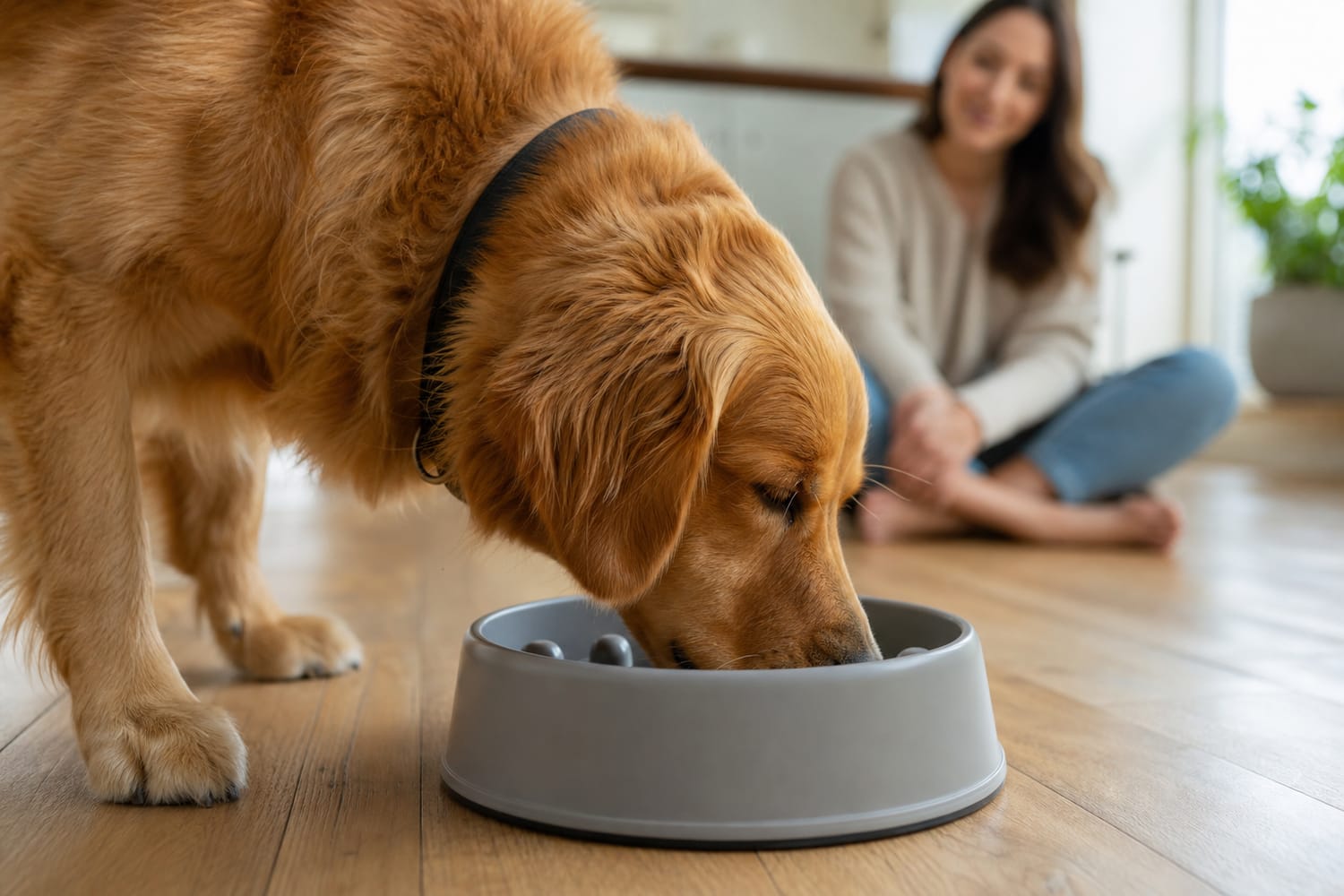
The Short Answer: Why Some Pets Gobble Their Food
Pets may eat too quickly because they are excited, extremely hungry, worried another animal will steal their meal, or simply accustomed to gulping food. Occasionally, a sudden increase in appetite can signal a medical problem. Slowing mealtime with safe feeders, smaller portions, and a calmer routine can make eating more comfortable and enriching.
Why Fast Eating Deserves Your Attention
A bowl that becomes empty in seconds may seem amusing—especially when your pet looks proudly pleased afterward. However, speedy eating can create genuine problems.
Dogs and cats that gulp meals may swallow extra air or take in a large amount of food at once. This can contribute to gas, discomfort, coughing, gagging, regurgitation, or vomiting shortly after eating. Food brought up almost immediately and without abdominal heaving may be regurgitated rather than vomited, but repeated episodes of either deserve veterinary attention.
For dogs, especially large and deep-chested breeds, pet parents should also understand gastric dilatation-volvulus, commonly called GDV or bloat. This life-threatening emergency occurs when the stomach expands and may twist. The evidence connecting eating speed directly to GDV is not completely settled, but fast eating is considered a possible risk factor alongside breed, body shape, age, temperament, and feeding patterns. The American Animal Hospital Association’s guide to canine bloat explains the warning signs and preventive feeding habits in greater detail.
What Makes a Pet Eat So Quickly?
Understanding the reason behind the behavior can help you choose the most effective solution.
Excitement and Natural Enthusiasm
Some pets simply adore food. The sound of a can opening or kibble hitting the bowl can feel like the best event of the day. Young dogs, food-motivated breeds, rescued pets, and pets eating highly appealing foods may approach every meal with tremendous enthusiasm.
Competition With Other Pets
In a multi-pet home, an animal may learn that slow eating gives a housemate an opportunity to steal food. Even if no food theft is happening now, a pet with previous experience competing for meals may continue to eat as though every bite could disappear.
Watch for hovering, staring, blocking access, switching bowls, or one pet waiting to clean up another’s leftovers. These subtle pressures can make mealtime feel stressful.
Long Gaps Between Meals
A pet receiving the correct daily quantity can still become extremely hungry if that food is offered in one large serving or meals are unpredictable. Puppies, kittens, small pets, and animals with certain health needs may benefit from more frequent meals—but the same total daily calories should be divided rather than increased.
A reliable routine is one small but important part of responsible day-to-day pet ownership.
A Learned Habit
Fast eating can become self-reinforcing. Your pet gulps the meal, receives the entire reward immediately, and repeats the pattern at the next feeding. Punishment is not the answer. Instead, change how the food is presented so that slower eating becomes natural and rewarding.
Stress, Boredom, or Anxiety
An overstimulating feeding area may encourage frantic behavior. Noise, children running nearby, another pet watching, or an inconsistent schedule can all add pressure. Some pets also need more opportunities to sniff, forage, lick, and solve simple problems throughout the day.
An Underlying Health Issue
A suddenly ravenous appetite should not automatically be dismissed as greediness. Intestinal parasites, diabetes, digestive disorders, hyperthyroidism in cats, Cushing’s disease in dogs, and certain medications can increase hunger. Contact your veterinarian if fast eating begins suddenly or appears alongside weight loss, excessive thirst, increased urination, diarrhea, repeated vomiting, a potbellied appearance, or unusual restlessness.
8 Safe Ways to Slow Down Mealtime
1. Choose an Appropriate Slow-Feeder Bowl
A slow-feeder bowl uses raised patterns or channels to prevent a pet from taking enormous mouthfuls. Choose one made from a durable, food-safe material with a nonslip base.
The design should be challenging without being frustrating. Avoid very deep or narrow grooves if your pet has a short muzzle, dental disease, reduced vision, or limited mobility. Cats often prefer wide, shallow designs that do not press against their whiskers.
Supervise the first few meals and check the feeder regularly for cracks, sharp edges, or chewed pieces.
2. Turn the Meal Into a Food Puzzle
Puzzle feeders and treat-dispensing toys release small amounts of food as a pet nudges, rolls, paws, or manipulates them. Along with slowing consumption, they provide mental enrichment by encouraging natural foraging behavior.
Begin with an easy puzzle so your pet can succeed. If the toy is too difficult, hunger may turn the activity into frustration. Always choose a product appropriate for your pet’s size and chewing strength, and include all food placed inside it in the daily calorie total.
3. Spread Food Across a Wide Surface
For dry food, try spreading the meal across a clean baking sheet or dividing it among the cups of a muffin pan. The increased distance between pieces makes large mouthfuls more difficult.
A clean snuffle mat can also work for kibble, provided your pet does not chew or swallow the fabric. For wet food, use a pet-safe lick mat or spread the food thinly across a wide, shallow plate. Licking naturally takes longer than gulping from a deep bowl.
VCA Animal Hospitals recommends several similar approaches, including puzzle toys, cookie sheets, muffin pans, and slow-feeder bowls, in its guidance for slowing down fast-eating puppies.
4. Divide the Daily Portion Into Smaller Meals
Rather than serving one or two large meals, ask your veterinarian whether the same daily portion can be divided into three or more smaller servings. Less food is available to swallow at any one sitting, while the pet receives more positive moments throughout the day.
Measure the full day’s allowance first, then divide it. Otherwise, those “little meals” can quietly become extra meals and contribute to unwanted weight gain. If portion sizes are confusing, learning what to look for on pet food labels can be a useful starting point.
5. Feed Pets Separately
Give each pet a peaceful, protected eating space. Separate rooms, closed doors, baby gates, crates for crate-trained dogs, or microchip-activated feeders can prevent food stealing and reduce social pressure.
Pick bowls up when mealtime ends rather than allowing one pet to inspect everyone else’s leftovers. Never punish an animal for guarding food; growling and stiff body language are warnings that require careful management and, when needed, help from a qualified behavior professional.
6. Use Part of the Meal for Training
Set aside a measured portion of kibble and offer it piece by piece during a brief positive-reinforcement session. Practice simple behaviors such as sitting, touching a target, coming when called, or settling on a mat.
Keep training upbeat and suitable for your pet’s abilities. Cats can participate too—many enjoy learning to touch a target, step onto a platform, or enter a carrier voluntarily. Afterward, serve any remaining food using another slow-feeding method.
7. Try a Timed or Automatic Feeder
An automatic feeder can release several small portions at scheduled times, making it helpful for households with long workdays or cats that wake their families early for breakfast. Some models dispense dry food gradually, while specialized refrigerated feeders may accommodate wet food.
Test the device while you are home before relying on it. Confirm that portions are accurate, batteries are working, and your pet cannot tip over or break into the feeder. In multi-pet homes, make sure one clever companion is not collecting every serving.
8. Create a Calm Before-and-After Meal Routine
Ask your pet to pause briefly before the bowl is placed down, but do not demand a long, stressful wait from a hungry animal. Keep the feeding area quiet and predictable, and avoid encouraging frantic chasing or rough play immediately around mealtime.
Dogs at higher risk of GDV may need additional precautions tailored to their health, breed, and family history. Discuss meal frequency, exercise timing, and preventive options with your veterinarian rather than relying on a single feeding trick.
Slow Feeding Should Still Feel Enjoyable
The goal is not to make food difficult to reach. A good slow-feeding setup gently stretches a meal while allowing your pet to eat comfortably and confidently.
Observe body language. Relaxed posture, steady problem-solving, and a comfortable pace suggest the method is working. Barking, frantic scratching, chewing the feeder, walking away despite hunger, or repeatedly flipping the equipment may mean the challenge is unsuitable.
Also remember that feeding speed is only one part of nutrition. Your pet still needs an appropriate, complete and balanced diet, accurately measured portions, clean water, and guidance tailored to their age and health. Avoid placing loose balls, rocks, or other swallowable objects in a bowl; a purpose-designed feeder is a safer choice.
When It Is Time to Call the Veterinarian
Arrange a veterinary visit if your pet’s appetite or eating speed changes suddenly, or if fast eating continues alongside:
- Repeated vomiting or regurgitation
- Coughing, gagging, or difficulty swallowing
- Weight loss despite a strong appetite
- Diarrhea or changes in stool
- Increased thirst or urination
- A painful or enlarged abdomen
- Lethargy, weakness, or behavioral changes
- Persistent hunger immediately after correctly portioned meals
For cats, frequent vomiting should not be accepted as normal simply because hairballs or fast eating seem like an easy explanation. Medical conditions can produce similar symptoms, and early evaluation offers the best chance of identifying the cause.
A Slower Meal Can Be a Happier Meal
Helping a pet slow down does not require taking away their joy. In fact, a thoughtfully designed mealtime can offer more sniffing, licking, learning, and one-on-one connection.
Start with one gentle change, watch how your companion responds, and adjust as needed. With patience and the right setup, that ten-second food frenzy can become a calmer daily ritual—one that nourishes both your pet’s body and the loving bond you share.