
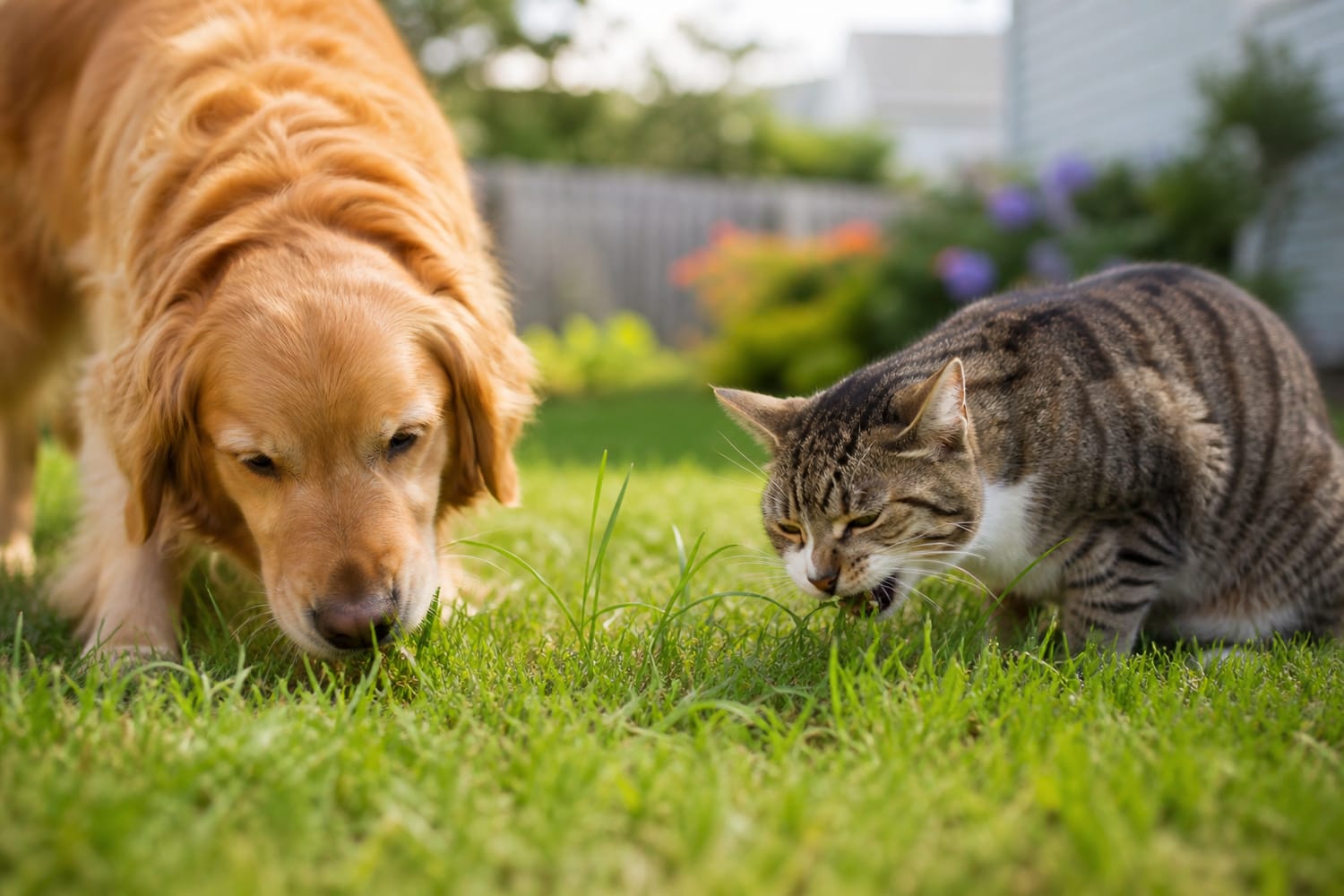
Grass Eating Is Usually Normal—But Context Matters
Seeing your dog nibble the lawn or your cat enthusiastically chewing a blade of grass can be surprising. Fortunately, occasional grass eating is usually a normal behavior, especially when a pet remains bright, active, hungry and comfortable. The important clues are how often it happens, what your pet eats and whether other symptoms appear.
Grass eating is sometimes called a form of pica, a term for consuming non-food materials. However, a pet casually sampling grass is different from one compulsively swallowing plants, soil, fabric, plastic or other objects.
Researchers still do not have one universal explanation for the behavior. Taste, texture, instinct, digestion and simple curiosity may all play a part. In other words, your backyard grazer is not necessarily trying to send an emergency message.
Why Do Dogs Eat Grass?
Dogs may eat grass for several overlapping reasons, and the explanation can vary from one pup to another.
They Like the Taste and Texture
Fresh grass has a distinctive smell, moisture and texture. Some dogs delicately select tender shoots, particularly after rain or during spring growth. If your dog grazes calmly and then carries on with the day, grass may simply be an appealing outdoor snack.
It Is Part of Natural Foraging Behavior
Dogs are enthusiastic explorers who investigate the world with their noses and mouths. Their ancestors consumed varied materials while scavenging, and modern dogs retain many of those foraging instincts.
Eating a few blades during a walk may therefore be no stranger than sniffing a tree, digging in soft earth or investigating an interesting scent.
They May Be Seeking Roughage
Grass contains indigestible plant fiber, so it is possible that some dogs are responding to a digestive need. However, grass eating does not automatically mean a dog has a nutritional deficiency. Dogs eating complete and balanced diets may still graze regularly.
If you are concerned about your dog’s diet, resist the urge to add fiber supplements without guidance. Start by reviewing the food, serving size and feeding routine with your veterinarian. Petspiration’s guide to choosing between raw, kibble and homemade diets offers a helpful overview of balanced feeding options.
Boredom or Anxiety May Contribute
A dog left alone in a yard may chew grass because it is available and interesting. Repetitive grazing can sometimes decrease when the dog receives more exercise, companionship and mental enrichment.
Try adding:
- Sniff-focused walks
- Food puzzles and treat-dispensing toys
- Short, positive training sessions
- Games such as fetch or hide-and-seek
- Safe chew toys
- More opportunities to explore new environments
The goal is not to punish the behavior. Instead, gently redirect your dog toward a safer, more rewarding activity.
Why Do Cats Eat Grass?
Cats are obligate carnivores, meaning they require nutrients found in animal-based foods. Yet many cats are surprisingly enthusiastic plant nibblers.
A large survey-based study of plant eating in domestic cats found that the behavior was common and that most cats did not appear ill beforehand. This supports the idea that plant eating is often an instinctive, normal feline behavior rather than proof of sickness.
Grass May Satisfy a Natural Urge
Wild and domestic felines both consume plant material occasionally. Researchers have proposed several possible explanations, including inherited behavior related to digestion or the removal of unwanted material from the gastrointestinal tract.
The exact benefit remains uncertain, so it is best not to assume that cats consciously use grass as medicine.
It May Provide Enrichment
Indoor cats have fewer opportunities to explore natural textures. A pot of pet-safe grass can offer a satisfying activity and may draw attention away from houseplants.
“Cat grass” is not one special species. It is generally a collection of young cereal grasses such as oat, wheat, barley or rye. Choose a product intended for pets, grow it without pesticides or chemical fertilizers and replace it if it becomes moldy.
What About Hairballs?
Many people believe cats eat grass specifically to bring up hairballs. The evidence is mixed, and plant eating should not be treated as a hairball cure. Frequent hairballs, repeated vomiting, constipation or appetite changes deserve veterinary attention, especially in older cats or long-haired breeds.
Regular brushing can reduce the amount of loose hair a cat swallows while grooming.
Does Eating Grass Make Pets Vomit?
Sometimes—but not always.
A dog or cat may vomit after eating grass because long blades irritate the throat or stomach. A nauseated animal may also seek grass, making it difficult to know which came first.
According to VCA Animal Hospitals’ overview of grass eating in dogs, most dogs do not show signs of illness before grazing, and most do not vomit afterward. Occasional vomiting may occur, but repeated episodes should not be dismissed as a harmless grass habit.
Vomiting also increases the risk of dehydration. Keep fresh water available and learn more from these hydration tips for pets that do not drink enough.
When Grass Eating Is Probably Harmless
Occasional grazing is generally less concerning when your pet:
- Eats only a small amount
- Remains energetic and responsive
- Has a normal appetite
- Drinks normally
- Passes normal stool
- Maintains a healthy weight
- Does not vomit repeatedly
- Stops easily when redirected
Even then, supervise your pet and pay attention to the location. The grass itself may be relatively harmless, but substances or objects around it may not be.
When to Call the Veterinarian
Contact your veterinarian if grass eating suddenly becomes frequent, frantic or compulsive. You should also seek advice if it appears alongside:
- Repeated vomiting or an inability to keep water down
- Persistent diarrhea or constipation
- Blood in vomit or stool
- Loss of appetite
- Unexplained weight loss
- Lethargy, hiding or unusual irritability
- Excessive drooling or repeated swallowing
- Abdominal pain or swelling
- Ongoing coughing, gagging or difficulty swallowing
- Eating other non-food objects
- A major change in thirst or bathroom habits
Petspiration’s article on signs that a pet may be in pain can help you recognize less obvious changes in posture, movement and behavior.
Seek urgent veterinary care for breathing difficulties, collapse, seizures, a swollen abdomen with unsuccessful retching, suspected poisoning or severe weakness.
How to Make Grazing Safer
Not every patch of green is pet-friendly. Lawn treatments, toxic plants, parasites and sharp seed heads can turn casual grazing into a health hazard.
Follow this safety checklist:
- Avoid chemically treated areas. Keep pets away from grass exposed to pesticides, herbicides, fertilizers or weed killers according to product directions.
- Watch for animal waste. Contaminated soil and grass may expose pets to intestinal parasites or infectious organisms.
- Remove dangerous plants. Use the ASPCA’s toxic and non-toxic plant database when checking plants around your home and garden.
- Beware of grass awns. Foxtails and similar barbed seed heads can lodge in the mouth, nose, ears, paws or skin.
- Trim long grass. Long strands may be difficult to swallow and could contribute to gagging or digestive irritation.
- Supervise indoor grass. Use clean soil, avoid mold and prevent your pet from digging up or swallowing large clumps.
Supporting a Happy, Healthy Grazer
You do not need to panic every time your pet samples the lawn. Instead, observe the whole animal. A relaxed pet who occasionally nibbles clean, untreated grass and otherwise behaves normally is usually expressing a natural preference.
Offer complete and balanced nutrition, fresh water, regular exercise, enrichment and preventive veterinary care. If the habit changes or arrives with digestive or behavioral symptoms, reach out to your veterinarian rather than attempting to diagnose a deficiency at home.
Our pets may not explain their choices in words, but their routines tell meaningful stories. By watching with curiosity instead of fear, we can respect their instincts while protecting the joyful, healthy lives they deserve.