
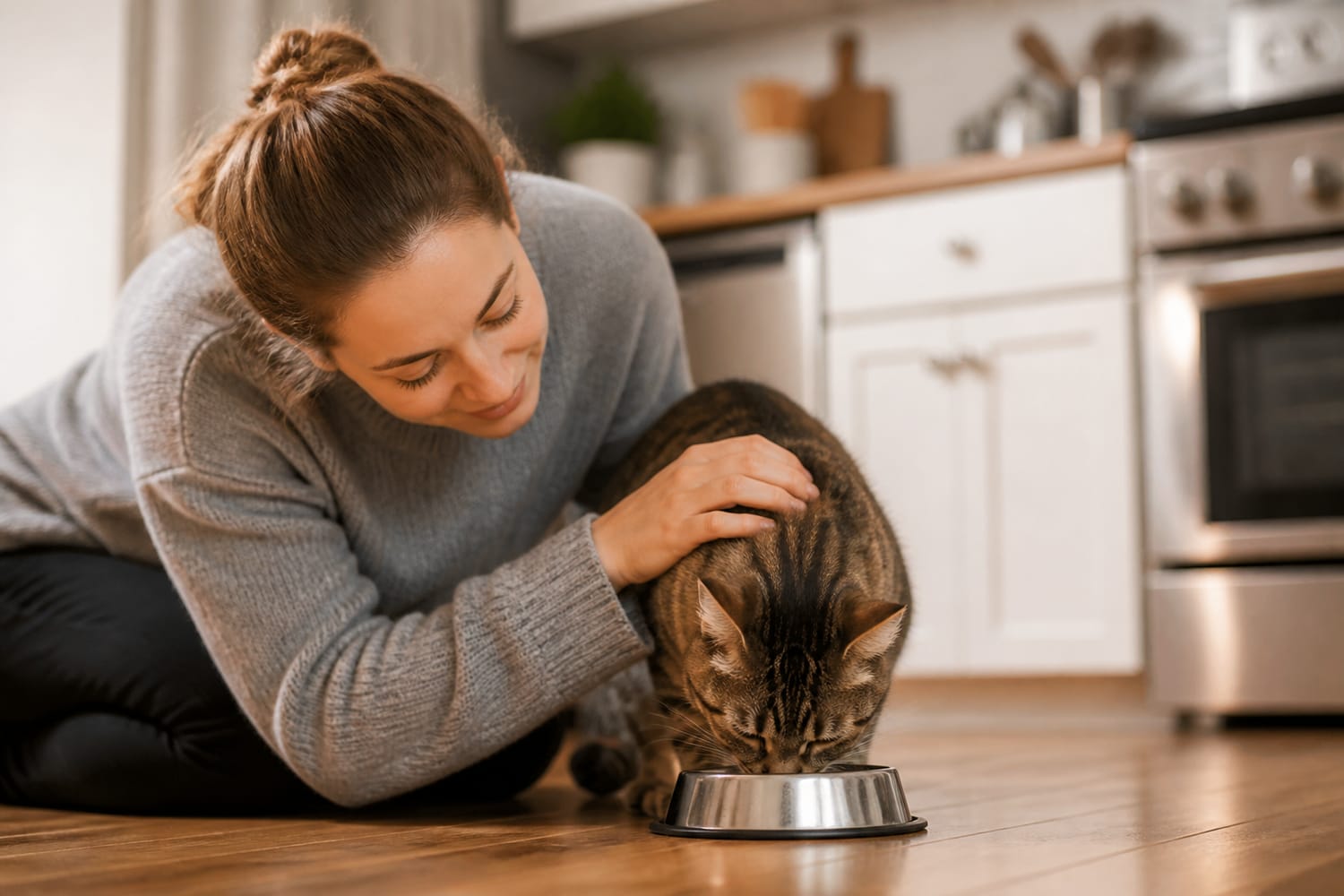
Why Taurine Is Essential for Every Cat
Taurine is an essential nutrient that supports a cat’s heart, vision, digestion, immune system, reproduction, and healthy development. Unlike many animals, cats cannot produce enough taurine to meet their needs, so they must consume it regularly. Fortunately, deficiency is usually preventable by feeding an appropriate, complete and balanced cat food.
This small nutrient has an enormous job. Taurine helps keep a cat’s heart beating efficiently, supports the light-sensitive cells of the eyes, and contributes to the production of bile salts needed for digestion. It is also particularly important for pregnant cats and growing kittens.
In other words, taurine helps power many of the quiet processes behind bright eyes, playful pounces, healthy growth, and contented purrs.
What Exactly Is Taurine?
Taurine is commonly described as an amino acid, although its chemical structure is slightly different from that of the amino acids used to build proteins. It occurs naturally in animal tissues and is especially concentrated in organs, muscles, and certain seafoods.
Many mammals can manufacture taurine from other nutrients. Cats can produce only a limited amount—far less than their bodies require. They also lose taurine through normal digestive processes, which means they need a dependable dietary supply throughout their lives. The VCA Animal Hospitals guide to taurine in cats explains why regular intake is so important.
This is one reason cats are known as obligate carnivores. Their bodies evolved to depend on nutrients naturally available in prey and animal tissue. Although modern cat food does not need to resemble a freshly caught mouse, it must be carefully formulated around feline biology.
What Does Taurine Do Inside a Cat’s Body?
Taurine works behind the scenes in several vital systems. A deficiency may therefore affect more than one area of the body.
It Supports the Heart
The heart is a powerful muscle that must contract continuously and efficiently. Taurine helps maintain normal heart muscle function.
When a cat does not receive enough, the heart muscle can weaken and its chambers may enlarge. This condition is called dilated cardiomyopathy, or DCM. The heart then struggles to pump blood effectively, potentially leading to congestive heart failure.
Taurine deficiency was once a major cause of feline DCM. After researchers established the connection and manufacturers began adding adequate taurine to commercial cat food, diet-related cases became far less common. Cornell University notes that the incidence of feline DCM has become very low because most cat foods are now supplemented appropriately.
It Protects Vision
Taurine is essential for maintaining the retina, the light-sensitive tissue at the back of the eye. Prolonged deficiency can cause the retinal cells to deteriorate, producing a condition known as feline central retinal degeneration.
This damage can gradually impair vision and may eventually cause blindness. Supplementation may slow or stop further deterioration, but established retinal damage is generally irreversible. Prevention is therefore much more effective than waiting for visible symptoms.
It Aids Digestion
Cats use taurine to form bile salts, which help the body digest and absorb fats. Insufficient taurine may interfere with normal digestive function and nutrient use.
It Supports Pregnancy and Kitten Development
Pregnant and nursing cats have especially important nutritional responsibilities. They need adequate taurine to maintain their own health while supporting fetal development and milk production.
Deficiency may contribute to reproductive failure, small litters, low birth weights, abnormal fetal development, or poor kitten growth. Kittens also need taurine as they develop their eyes, muscles, nervous system, and other organs. For this reason, food should always match the cat’s current life stage.
How Taurine Deficiency Develops
Taurine deficiency usually develops gradually. A cat may appear healthy for months while taurine stores decline and internal damage begins.
Today, a healthy cat eating an appropriate complete and balanced commercial diet is unlikely to become deficient. Risk increases, however, when a cat regularly eats food that was not designed to provide total feline nutrition.
Possible risk factors include:
- Feeding dog food as the cat’s main diet
- Relying heavily on treats, table scraps, or plain meat
- Feeding an improperly formulated homemade diet
- Using a raw diet without professional nutritional formulation
- Feeding food labeled for intermittent or supplemental use only
- Feeding an inadequately formulated vegetarian or vegan diet
- Digestive disease that interferes with nutrient absorption
- Using an unbalanced recipe intended for another species or life stage
A bite from the dog’s bowl is unlikely to cause a crisis, but dog food should never become a cat’s regular diet. Cats and dogs have meaningfully different nutritional requirements, as explained in Petspiration’s guide to why dog food and cat food are not interchangeable.
Plain cooked meat is not a complete diet either. Even when it contains some taurine, it may lack the correct amounts and ratios of calcium, vitamins, fatty acids, trace minerals, and other essential nutrients.
Signs That May Point to a Deficiency
There is no single unmistakable symptom of taurine deficiency. Its effects can be slow, subtle, and easily confused with other medical conditions.
Possible warning signs include:
- Reduced energy or unusual weakness
- Reluctance to play or exercise
- Poor appetite
- Unexplained weight loss
- Slow growth in kittens
- Vision changes or difficulty navigating in dim light
- Bumping into furniture or missing jumps
- Rapid or labored breathing
- Coughing, collapse, or fainting
- Abdominal swelling
- Reproductive problems
Cats are skilled at hiding illness, so small changes matter. A once-confident cat that hesitates before jumping, becomes tired after mild activity, or begins breathing faster while resting deserves veterinary attention.
Difficulty breathing, open-mouth breathing, blue or pale gums, sudden collapse, or severe weakness is an emergency. Seek veterinary care immediately rather than attempting to treat the problem with food or supplements at home.
For help recognizing other subtle changes, explore Petspiration’s guide to the signs a pet may be in pain.
How Veterinarians Diagnose Taurine Deficiency
Because the symptoms overlap with many other illnesses, a veterinarian will consider the cat’s diet, medical history, physical examination, and test results together.
Testing may include:
- Blood taurine measurement to evaluate taurine status
- Bloodwork and urinalysis to look for other health problems
- An eye examination to identify retinal changes
- Chest X-rays to assess heart size and the lungs
- An echocardiogram to examine the heart’s structure and movement
- An electrocardiogram to check heart rhythm when appropriate
Bring photographs of food labels, supplement containers, treat packages, and homemade recipes to the appointment. Details matter, including how much of each food the cat eats and whether other pets’ meals are available.
Treatment may involve taurine supplementation, a nutritionally complete diet, and additional care for heart failure or other complications. Taurine-responsive DCM may improve when identified early, but recovery depends on the severity and duration of the disease. Retinal damage is less likely to be reversed.
The Simplest Ways to Prevent Deficiency
For most families, prevention does not require calculating taurine milligrams or adding powders to every bowl. It begins with selecting an appropriate staple food.
Check the Nutritional Adequacy Statement
In the United States, look for a statement indicating that the food provides complete and balanced nutrition for your cat’s life stage. This information is commonly printed in small type on the back or side of the package.
“Complete” means the diet contains the required nutrients, while “balanced” means those nutrients are supplied in suitable proportions. The AAFCO guide to reading pet food labels explains how to locate and understand this statement.
Choose a diet intended for:
- Growth, for kittens
- Adult maintenance, for healthy adult cats
- Gestation and lactation, for pregnant or nursing cats
- All life stages, when appropriate for the individual cat
A food labeled “for intermittent or supplemental feeding only” should not be the sole long-term diet unless your veterinarian specifically directs otherwise.
Keep Treats in Their Proper Place
Treats can make training, medication, and bonding more enjoyable, but they should remain a small part of the overall diet. Large quantities of treats, tuna, chicken, or table food may displace the balanced meals that supply essential nutrients.
Be Careful With Homemade and Raw Diets
Homemade feeding can feel personal and wholesome, but good intentions cannot replace nutritional formulation. Recipes found online may contain meat while still providing inadequate taurine or other nutrients.
If you want to prepare your cat’s meals, work with a veterinarian who specializes in nutrition or a board-certified veterinary nutritionist. Follow the recipe exactly, including prescribed supplements, and do not make ingredient substitutions without approval. Petspiration’s comparison of raw, kibble, and homemade pet diets offers a helpful starting point.
Do Not Supplement “Just in Case”
A complete and balanced cat food should already provide adequate taurine for a healthy cat. Adding supplements without guidance usually offers no benefit and can complicate an otherwise balanced feeding plan.
If your cat has heart disease, digestive illness, unusual dietary needs, or a suspected deficiency, ask your veterinarian whether testing or supplementation is appropriate. Supplement quality can vary, and the correct plan depends on the individual cat.
A Small Nutrient With a Life-Changing Role
Taurine may be invisible, but its effects shine through every confident leap, steady heartbeat, curious gaze, and healthy kitten. Understanding it is a wonderful reminder that loving a cat means caring for the biology beneath the whiskers.
The encouraging news is that taurine deficiency is largely preventable. By feeding a complete and balanced feline diet, checking labels, limiting nutritional guesswork, and consulting a veterinarian before making major dietary changes, you can protect your cat from avoidable harm.
Every thoughtful meal is more than food in a bowl. It is an everyday act of love—one that helps your feline companion see clearly, feel strong, and enjoy many more years of purrs, play, and togetherness.