
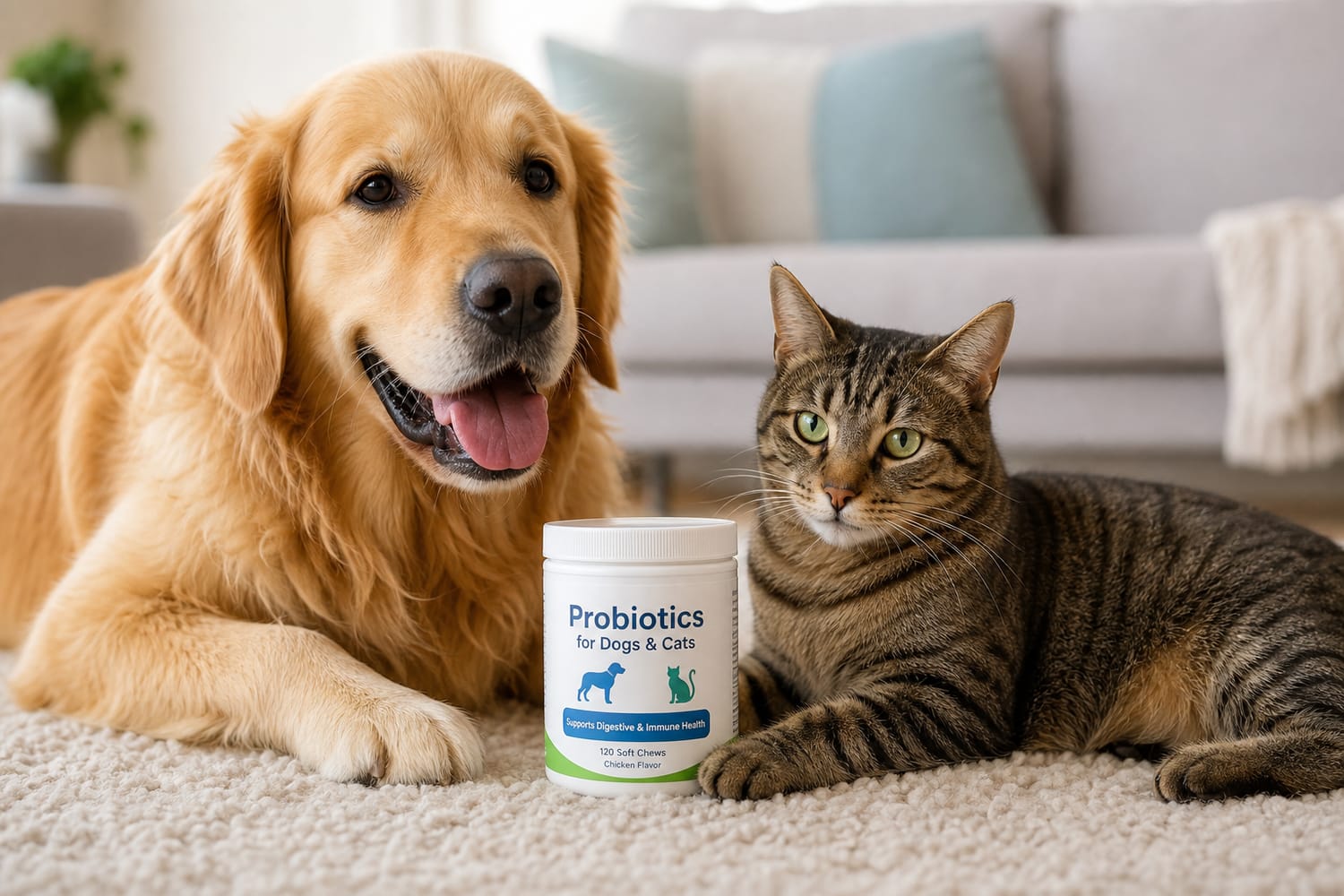
Tiny Helpers for Happier Tummies
If you’ve ever lived with a dog who eats mystery “snacks” on walks or a cat whose stomach seems to object to every menu change, you know how much digestive health matters. A comfortable belly can mean brighter eyes, better energy, healthier stools, and a pet who feels more like themselves.
That’s where probiotics often enter the conversation. These tiny beneficial microbes are promoted for everything from diarrhea to immune support—but what do they actually do, and when are they worth considering for dogs and cats?
Probiotics are live microorganisms that, when given in appropriate amounts, may provide a health benefit. In pets, they are most often used to support the digestive system. They can help maintain a balanced gut microbiome—the community of bacteria and other microorganisms living in the intestines. This microbiome plays a role in digestion, stool quality, immune function, and even how the body responds to stress.
But probiotics are not magic dust. They are not all the same, and they are not a cure-all. The right probiotic, used at the right time, can be a helpful tool in your pet care kit. The key is knowing when they may help and how to choose a product that is safe, appropriate, and supported by evidence.
What Probiotics Do in Dogs and Cats
Inside your pet’s digestive tract is a busy world of microorganisms. Many are helpful, some are neutral, and some can cause trouble if they grow out of balance. A healthy gut microbiome helps break down food, supports the intestinal lining, produces certain beneficial compounds, and communicates with the immune system.
Probiotics may help by adding beneficial bacteria or yeasts to the gut. Depending on the strain, they may compete with less helpful microbes, support firmer stools, help maintain the gut barrier, or influence local immune responses.
The important word here is “strain.” Saying “probiotics help pets” is a bit like saying “vehicles are good for transportation.” A bicycle, a bus, and a tractor all move—but not in the same way or for the same job. Probiotic benefits depend on the specific organism, strain, dose, product quality, and the individual pet’s condition.
Common probiotic organisms used in pet products include certain strains of:
- Enterococcus faecium
- Lactobacillus species
- Bifidobacterium species
- Bacillus species
- Saccharomyces boulardii, a beneficial yeast
Some of these have been studied more than others in dogs and cats. Your veterinarian may recommend a specific product based on your pet’s symptoms, medical history, and current medications.
When Probiotics May Help
Probiotics are most often considered for digestive upset, especially stool changes. They may be useful in several common situations, although results can vary.
During or After Antibiotics
Antibiotics can be necessary and even lifesaving, but they may also disrupt the gut microbiome. Some dogs and cats develop soft stools or diarrhea while taking them. In certain cases, a probiotic may help support stool quality during or after antibiotic treatment.
However, timing matters. If you give a bacterial probiotic at the exact same time as an antibiotic, the antibiotic may reduce the probiotic’s effectiveness. Many veterinarians suggest separating the probiotic and antibiotic by a few hours, but you should follow your vet’s specific instructions.
Mild, Short-Term Digestive Upset
Some pets experience mild diarrhea after dietary changes, travel, boarding, stress, or eating something unusual. Probiotics may help some dogs and cats recover normal stool consistency more quickly, especially when combined with a bland or easily digestible diet recommended by your veterinarian.
That said, diarrhea is a symptom, not a diagnosis. If your pet is very young, elderly, pregnant, immunocompromised, vomiting repeatedly, refusing food, acting lethargic, passing blood, or having diarrhea that lasts more than a day or two, veterinary care is important.
Stress-Related Stool Changes
Big life events can affect pets, too. Moving homes, welcoming a new animal, traveling, or staying at a kennel can lead to stress-related digestive changes. Some probiotics have been studied for use during stressful events, particularly in dogs prone to loose stools.
For nervous pets, probiotics are just one piece of the puzzle. Routine, hydration, gradual transitions, enrichment, and a calm environment matter too.
Chronic Gastrointestinal Conditions
Some dogs and cats live with chronic digestive issues, such as inflammatory bowel disease or other long-term gastrointestinal disorders. Probiotics may be part of a broader management plan, but they should not replace diagnosis and veterinary treatment.
Chronic vomiting, weight loss, ongoing diarrhea, poor appetite, or changes in coat condition deserve a proper workup. Your veterinarian may recommend lab testing, fecal testing, imaging, diet trials, medications, or supplements depending on what’s going on.
When Probiotics Are Not Enough
Because probiotics are easy to buy, it can be tempting to try them before calling the vet. Sometimes that’s reasonable for a healthy adult pet with mild, brief soft stool and no other concerning signs. But there are times when waiting is risky.
Contact your veterinarian promptly if your dog or cat has:
- Bloody or black stool
- Repeated vomiting
- Severe diarrhea or diarrhea lasting more than 24–48 hours
- Signs of dehydration, such as tacky gums or weakness
- Loss of appetite, especially in cats
- Weight loss
- Fever, pain, bloating, or unusual behavior
- Diarrhea in a puppy, kitten, senior pet, or medically fragile pet
- Possible toxin exposure or foreign object ingestion
Cats deserve special caution when they stop eating. Even a short period of poor appetite can become serious, especially for overweight cats, because they are at risk for hepatic lipidosis, a dangerous liver condition.
Probiotics can support health, but they cannot remove a blockage, treat parasites, cure pancreatitis, fix food allergies, or solve serious infections on their own. When in doubt, it’s always kindest to ask for help early.
How to Choose a Quality Probiotic
The pet supplement aisle can feel overwhelming. Bright labels, big promises, and cute packaging are everywhere. To choose wisely, look past the marketing and focus on quality.
Choose Pet-Specific Products
Dogs and cats have different digestive systems from humans, and they also have different needs from each other. A product made for pets is usually a better choice than a human probiotic, especially because pet products are more likely to have dosing instructions appropriate for animal use.
Never give a supplement containing ingredients that may be unsafe for pets. Some human products may contain sweeteners, flavorings, or additives that are not appropriate for dogs or cats. Xylitol, for example, is highly toxic to dogs.
Look for the Strain, Not Just the Species
A good label should identify the probiotic clearly. Ideally, it lists the genus, species, and strain. For example, a label that only says “Lactobacillus” is less informative than one that gives a full strain name.
Why does this matter? Because research is done on specific strains. If a study supports one strain, that doesn’t automatically mean every strain from the same species has the same effect.
Check the CFU Count
CFU stands for “colony forming units,” which is a way of estimating the number of live microorganisms in a dose. More is not always better, but the product should provide an appropriate amount through the expiration date—not just at the time it was manufactured.
Look for wording that indicates the CFU count is guaranteed until expiration. Probiotics are living organisms, and some may die over time, especially if stored incorrectly.
Consider Storage Requirements
Some probiotics need refrigeration; others are shelf-stable. Follow the label directions carefully. Heat, moisture, and light can reduce the number of live organisms in some products.
If you live in a hot climate or order supplements online during summer, consider shipping conditions. A probiotic left in a hot mailbox or delivery truck may not arrive at full strength.
Choose Brands With Quality Control
Supplements are not regulated in the same way as prescription medications, and quality can vary. Choose companies that are transparent, provide lot numbers and expiration dates, use good manufacturing practices, and can answer questions about testing.
Veterinary-recommended brands may be a safer starting point because your vet is more likely to know which products have research, consistent manufacturing, and appropriate formulations.
Probiotics vs. Prebiotics: What’s the Difference?
Probiotics are live beneficial microorganisms. Prebiotics are types of fiber or nutrients that feed beneficial gut bacteria. Think of probiotics as adding helpful gardeners to the soil, while prebiotics are the nourishment that helps the garden grow.
Some pet products contain both probiotics and prebiotics. These are sometimes called synbiotics. Prebiotics may support stool quality and help beneficial microbes thrive, but like probiotics, they should be chosen carefully. Too much fiber or the wrong type of fiber can cause gas, bloating, or stool changes in some pets.
Common prebiotic ingredients in pet nutrition may include inulin, fructooligosaccharides, beet pulp, or other fermentable fibers. Your veterinarian can help determine whether these are appropriate for your pet, especially if your dog or cat has a medical condition.
How to Give Probiotics Successfully
Most pet probiotics come as powders, capsules, chews, or pastes. The best form is the one your pet will actually take consistently.
For dogs, powders mixed into meals often work well. Chews may be convenient, but check the calorie count and ingredient list, especially for dogs with food sensitivities. For cats, powders or capsules that can be opened and mixed with wet food may be easier than chews, depending on your cat’s preferences.
Introduce the product as directed. Some pets do fine starting at the full recommended amount, while others with sensitive stomachs may benefit from a gradual introduction if your veterinarian approves.
Keep an eye on your pet’s stool, appetite, energy, and comfort. Mild changes can happen, but worsening diarrhea, vomiting, itching, swelling, or any unusual symptoms should be discussed with your veterinarian.
Also remember that probiotics may need time. Some stool changes may improve within a few days, while other situations may require longer use. If you don’t see improvement, don’t simply keep adding supplements. It may be a sign that your pet needs a diagnosis or a different treatment plan.
Can Pets Eat Yogurt Instead?
Many pet lovers wonder whether plain yogurt can work as a natural probiotic. Some yogurts contain live cultures, but yogurt is not the same as a veterinary probiotic. The strains may not be proven to help dogs or cats, and the amount of live bacteria can vary.
Additionally, many pets don’t tolerate dairy well. Yogurt may cause gas or diarrhea in some animals, and flavored yogurts can contain sugar or unsafe additives. Any yogurt offered should be plain, unsweetened, and free of xylitol—but even then, it is not the best choice for many pets.
A targeted pet probiotic is usually more reliable, especially when you are trying to address a specific digestive issue.
The Vet’s Role in Choosing the Right One
Your veterinarian is your best partner when deciding whether a probiotic makes sense. This is especially true if your pet has ongoing symptoms, takes medication, has a weakened immune system, or has a condition such as diabetes, kidney disease, pancreatitis, or inflammatory bowel disease.
In rare cases, probiotics may not be appropriate for severely immunocompromised animals or pets with certain serious illnesses. While probiotics are generally considered safe for many healthy dogs and cats, “natural” does not always mean risk-free.
Your vet can help you answer the most important questions:
- What problem are we trying to solve?
- Is a probiotic appropriate for this pet?
- Which strain or product is most suitable?
- How long should we use it?
- What signs mean we should stop or recheck?
This team approach keeps your pet’s care thoughtful, safe, and personalized.
A Small Supplement With Big Possibilities
Probiotics are a wonderful example of how pet care continues to grow. We now understand that health is not only about organs and symptoms, but also about the microscopic communities that help our animals thrive from the inside out.
For some dogs and cats, probiotics can be a gentle and useful way to support digestive balance, especially during stress, diet transitions, or antibiotic use. For others, they may be only one piece of a larger health puzzle. The best results come from choosing quality products, using them correctly, and involving your veterinarian when symptoms are more than mild or temporary.
At the heart of it all is the same loving goal: helping our pets feel comfortable, nourished, and full of life. Whether your companion is a goofy dog with a sensitive stomach or a dignified cat with very specific opinions about dinner, caring for their gut health is one more way to say, “I love you,” in a language their whole body understands.