
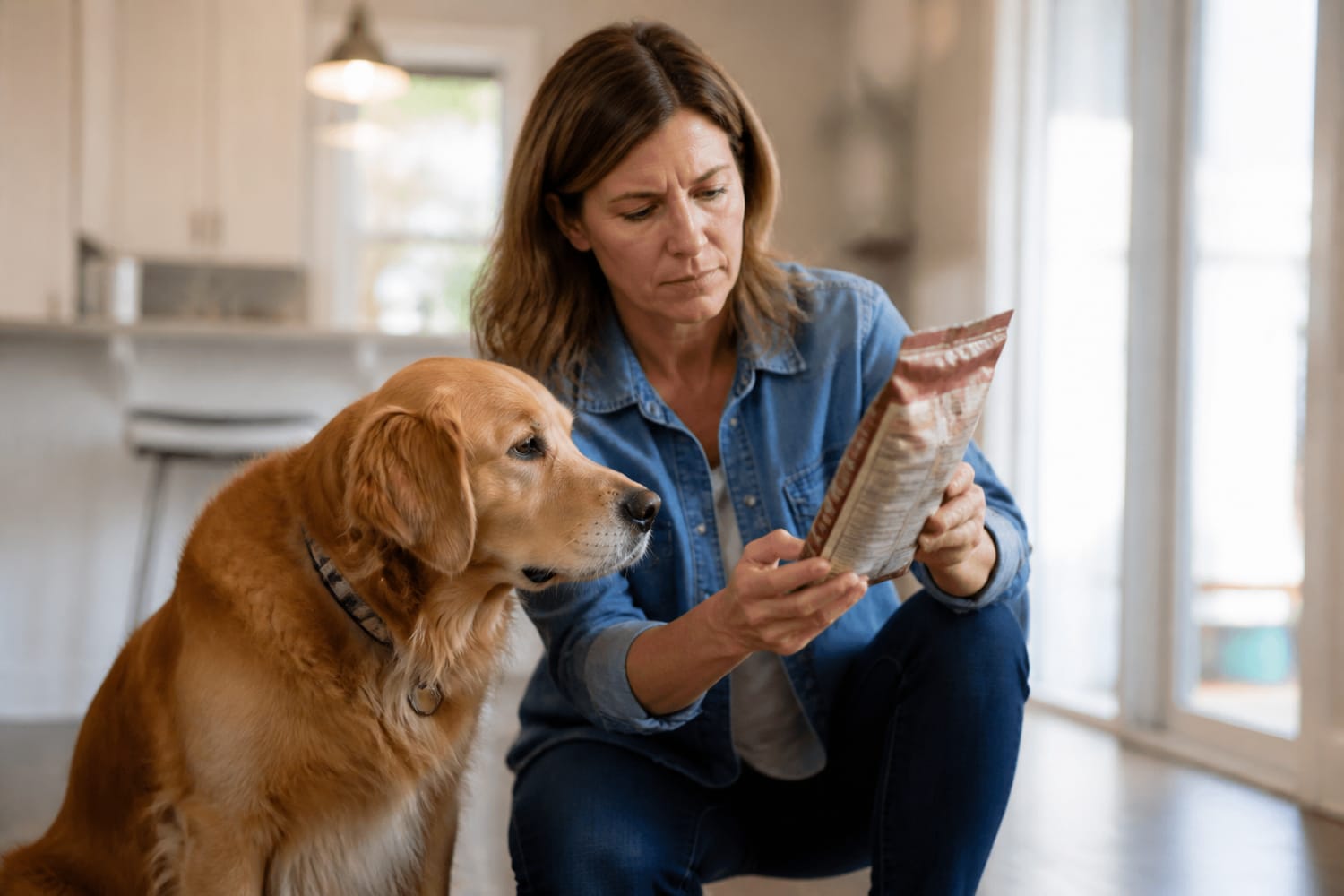
Is Your Pet’s Food Recalled? How to Check Lot Codes and What to Do Next
The Quick Answer: Check Before You Panic
A matching brand name does not automatically mean your pet’s food is recalled. Compare the recall notice with the product’s exact name, recipe, package size, lot code, best-by date, UPC, and distribution area. If every identifying detail matches, stop feeding the product and follow the notice’s instructions.
Why Pet Food Recalls Happen
Finding out that your pet’s food may have been recalled can feel frightening. After all, meals are part of the daily care, comfort, and love we give our animals. The reassuring news is that a recall is a safety action designed to identify a possible problem and keep pets and people protected.
Pet food, treats, chews, supplements, and milk replacers may be recalled for reasons such as:
- Possible contamination with bacteria, including Salmonella or Listeria
- Mold toxins such as aflatoxin
- Excessive or insufficient levels of a vitamin or mineral
- Foreign material, such as pieces of plastic or metal
- Labeling mistakes or undeclared ingredients
- Packaging defects that could affect safety
- Other manufacturing or quality-control concerns
A recall may include one production batch, several lots, or multiple products. That is why checking the package details—not simply the brand—is so important.
You may also see the words “voluntary recall.” This does not mean the concern should be ignored. It generally means the manufacturer or distributor initiated the recall, often while working with regulators.
Start With a Reliable Recall Notice
Social media can spread safety news quickly, but posts may leave out dates, lot numbers, or later updates. Begin with an official or directly verified source.
For pet foods sold in the United States, check the FDA’s current animal and veterinary recalls and withdrawals. You can also look for a notice on the manufacturer’s official website or contact its customer-care department using the information printed on the package.
Read the complete notice rather than relying on its headline. A useful recall announcement should identify several of the following:
- Brand and product name
- Recipe, flavor, or variety
- Package type and weight
- Lot or batch code
- Best-by, use-by, or expiration date
- UPC
- States, stores, or regions where the product was distributed
- Reason for the recall
- Instructions for returning, disposing of, or storing the product
- Symptoms or health concerns to watch for
If a post is missing those details, treat it as a reason to investigate—not as proof that your particular package is affected.
How to Find and Read a Pet Food Lot Code
A lot code, sometimes called a lot number, batch number, production code, or packing code, links a product to a particular manufacturing run. It may be a short number or a long combination of letters, numbers, spaces, and punctuation.
According to the FDA’s guide to saving and identifying pet food lot numbers, the code helps regulators and manufacturers determine where and when a product was made. It also allows a company to recall a specific batch rather than every package it sells.
Where to Look
Depending on the packaging, check:
- Near the best-by or expiration date
- Along the top, side, or bottom seam of a dry-food bag
- On the back of a treat pouch
- On the lid, bottom, or label of a can
- On the end flap of a box
- On the rim or seal of a tub
- On the outer case and individual packages of multipacks
- Near the barcode or manufacturer information
Codes can be faint, smudged, embossed, or printed in ink that blends into the package. Try shining a flashlight across the surface or taking a close-up photo and enlarging it.
Do not guess whether a character is a zero, the letter O, a one, or the letter I. If the code is unclear, call the manufacturer and describe exactly what you see.
Lot Code, UPC, and Best-By Date Are Not the Same
These three identifiers serve different purposes:
- Lot code: Identifies a manufacturing batch or production run.
- UPC: Identifies the general product sold at checkout. Every package of the same product and size may share it.
- Best-by date: Usually relates to expected product quality and may also help identify the affected production period.
A UPC match alone is usually not enough to confirm that a package has been recalled. Compare every detail included in the notice.
Learning to read the entire package is useful beyond emergencies. Petspiration’s guide to spotting misleading pet food claims can also help you become a more confident label reader.
A Simple Recall-Checking Checklist
Use this step-by-step process whenever you receive a recall alert:
- Confirm the source. Find the official FDA or manufacturer notice.
- Check the exact product name. Include the recipe, flavor, and intended species.
- Compare the package size and type. A recalled 13-ounce can does not necessarily affect a different size.
- Match the lot code exactly. Include every letter, number, and symbol.
- Check the date. Compare the best-by, use-by, or expiration date.
- Compare the UPC if one is provided.
- Review the distribution area. Some recalls affect only certain states, retailers, or online orders.
- Read all instructions. The notice may be expanded or updated as more information becomes available.
If some details match but others do not, contact the manufacturer before continuing to feed the product. Have the package in front of you during the call.
What to Do If Your Package Is Recalled
If the details match, stop feeding the product immediately. Do not give it to another pet, donate it, or leave it where wildlife can reach it.
Then follow these steps:
- Separate the food securely. Place the closed package somewhere children and animals cannot access it.
- Save the packaging. It contains information that may be needed by your veterinarian, the manufacturer, or regulators.
- Photograph the identifying details. Include the lot code, UPC, date, product name, and package condition.
- Keep your receipt or order record. This can help establish when and where the food was purchased.
- Follow the recall notice. It may direct you to return the product, request a refund, or dispose of it securely.
- Contact the manufacturer. Ask about reimbursement and whether it wants the package or a sample preserved.
- Clean feeding equipment. Wash bowls, scoops, mats, and storage containers thoroughly. Follow any special disinfecting directions in the recall notice.
- Wash your hands. This is especially important when bacterial contamination is suspected.
Pet food can sometimes carry germs without looking or smelling spoiled. Regular handwashing and cleaning of feeding supplies help protect the whole household, particularly young children, older adults, pregnant people, and anyone with a weakened immune system.
When to Contact Your Veterinarian
Call your veterinarian if your pet ate recalled food, especially if the recall notice recommends an examination or your companion develops unusual symptoms.
Possible warning signs vary according to the hazard but may include:
- Vomiting or diarrhea
- Loss of appetite
- Unusual tiredness or weakness
- Fever
- Abdominal discomfort
- Excessive drooling
- Tremors or poor coordination
- Yellowing of the eyes, gums, or skin
- Coughing, gagging, or difficulty swallowing
- Changes in thirst or urination
Seek urgent veterinary care for collapse, seizures, breathing difficulty, repeated vomiting, bloody diarrhea, severe weakness, or another sudden and serious change. Pet parents can learn more about veterinary red flags that should never be ignored.
Tell the veterinary team the product name, lot code, recall reason, how much your pet may have eaten, and when exposure occurred. Bring photos or the original packaging, but keep potentially contaminated food sealed unless the clinic asks you to bring it.
How to Report a Suspected Pet Food Problem
You do not have to wait for a formal recall to speak up. Report concerns such as a foul odor, unusual color, swollen can, leaking pouch, foreign object, or illness that appears after feeding a product.
The FDA explains how to report a pet food complaint and recommends providing as much identifying information as possible. Useful details include the product name, package type, lot number, UPC, best-by date, purchase location, storage method, symptoms, veterinary findings, and the amount remaining.
You should also notify the manufacturer. Consumer reports can help companies and regulators notice patterns, investigate possible hazards, and protect other animals.
Choosing a Safe Replacement Food
A recall may require an immediate switch, even though dietary changes are normally made gradually. Never mix recalled food into the replacement diet simply to create a slower transition.
Choose a complete diet made for your pet’s species and life stage. Try to find a similar texture and primary protein, but ask your veterinarian for guidance if your pet has allergies, digestive problems, kidney disease, diabetes, or another medical condition. Prescription diets should not be replaced without veterinary advice.
Monitor appetite, energy, vomiting, stool quality, and water intake during the change. Petspiration’s overview of puppy, adult, and senior diet needs can help you understand why an appropriate life-stage formula matters.
Build a Safer Feeding Routine for the Future
A few easy habits can make future recall checks faster:
- Keep dry food inside its original bag, even when placing it in a storage bin.
- Clean and dry the bin before adding a new bag.
- Do not top off old food with new food.
- Photograph every new package’s codes.
- Keep receipts until the food is finished.
- Wash food bowls and scoops regularly.
- Check recall alerts before buying a replacement after a safety announcement.
A recall can be unsettling, but knowledge turns worry into action. By checking the exact codes, preserving useful information, contacting your veterinarian when needed, and following trusted instructions, you are doing what devoted pet lovers do best: protecting a cherished companion with calm, thoughtful care.