
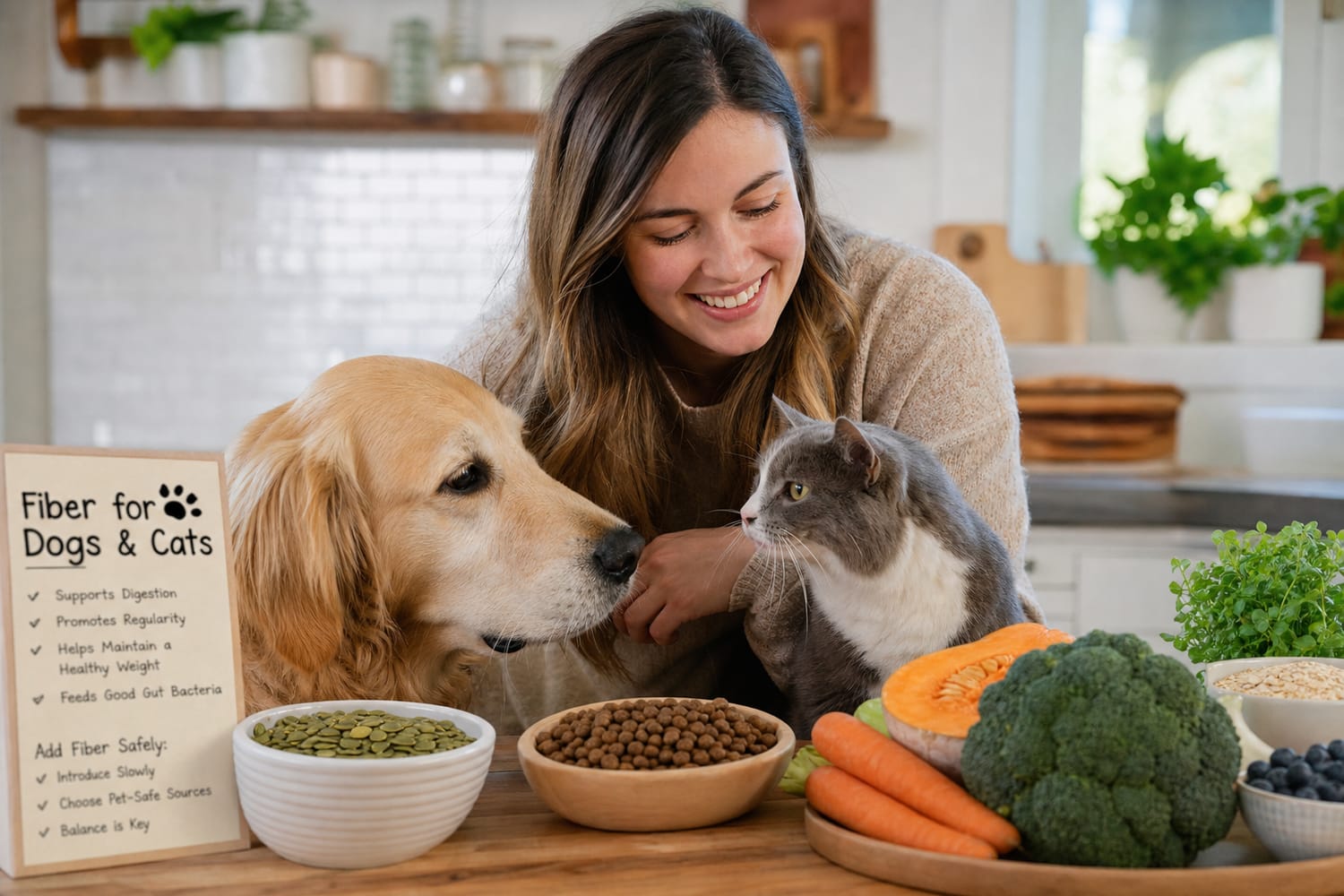
The Unsung Hero in Your Pet’s Bowl
When we think about pet nutrition, protein often gets the spotlight—and for good reason. Dogs and cats need high-quality animal-based nutrients to thrive, especially cats, who are obligate carnivores. But tucked quietly into many healthy pet diets is another important nutrient that can make a big difference in digestion, comfort, and overall wellness: fiber.
Fiber is a type of carbohydrate found in plant foods. Unlike sugars and starches, fiber is not fully digested by your pet’s body. Instead, it travels through the digestive tract, where it can help regulate stool, support beneficial gut bacteria, and even contribute to a feeling of fullness.
For pet lovers, fiber may not sound exciting at first. But if you have ever celebrated a normal poop after days of digestive trouble, you already know how important gut health can be. A balanced amount of fiber can help many dogs and cats feel more comfortable, energetic, and ready to enjoy life with their favorite humans.
What Fiber Does for Dogs and Cats
Fiber plays several roles in your pet’s digestive system. The two main types are soluble fiber and insoluble fiber, and both can be useful in different ways.
Soluble fiber dissolves in water and forms a gel-like substance in the gut. It can help slow digestion, support healthy blood sugar balance, and feed beneficial bacteria in the colon. These “good” bacteria produce short-chain fatty acids, which help nourish the cells lining the intestine.
Insoluble fiber does not dissolve in water. Instead, it adds bulk to stool and helps food move through the digestive tract. This can be helpful for some pets who struggle with constipation, though too much insoluble fiber may make stools larger or more frequent.
Fiber is not a cure-all, but it can support several areas of health, including:
- More consistent stool quality
- Relief from mild constipation or loose stool in some pets
- Support for healthy gut bacteria
- Weight management by helping pets feel fuller
- Hairball support in some cats
- Anal gland support in some dogs by encouraging firmer stools
The key word is balance. Too little fiber may contribute to irregular digestion, while too much can cause gas, bloating, diarrhea, or reduced absorption of some nutrients.
Dogs, Cats, and Fiber: Same Nutrient, Different Needs
Dogs and cats both can benefit from fiber, but they are not nutritionally identical.
Dogs are omnivores, meaning they can digest and use nutrients from both animal and plant sources. Many dogs tolerate moderate amounts of fiber well, and some dog foods are specifically formulated with added fiber for weight control or digestive support.
Cats, however, are obligate carnivores. Their bodies are designed to rely heavily on animal-based protein and fat. That does not mean cats cannot benefit from fiber, but it does mean fiber should be used thoughtfully and usually in smaller amounts. Some cats may benefit from fiber for hairballs, constipation, or certain digestive concerns, but others may become gassy or have looser stools if too much is added.
This is why it is important to avoid guessing. If your pet has ongoing digestive issues, a sudden change in stool, vomiting, weight loss, appetite changes, or signs of pain, fiber should not be your first and only solution. A veterinarian can help determine whether the issue is diet-related, medical, or something more urgent.
Signs Your Pet Might Benefit from More Fiber
A little extra fiber may help some pets, especially when added carefully. Possible signs your dog or cat may benefit from fiber include:
- Occasional constipation
- Mild irregular stool consistency
- Frequent begging or hunger during a weight-loss plan
- Hairballs in cats
- Soft stools related to low dietary fiber
- Anal gland issues in some dogs
However, these signs can have many causes. For example, constipation may be related to dehydration, pain, kidney disease, medication, obstruction, or low activity levels. Diarrhea may be caused by parasites, food intolerance, infection, stress, or inflammatory bowel disease.
If symptoms are severe, persistent, or recurring, check with your veterinarian before changing your pet’s diet. This is especially important for kittens, puppies, senior pets, pregnant pets, and animals with chronic conditions such as diabetes, kidney disease, pancreatitis, or gastrointestinal disorders.
Safe Fiber-Rich Foods for Dogs
Many dog-safe foods contain fiber and can be used as occasional additions to a balanced diet. Always introduce new foods slowly and in small amounts.
Good options for many dogs include:
Plain canned pumpkin
Pumpkin is one of the most popular fiber additions for dogs. Use plain canned pumpkin, not pumpkin pie filling, which may contain sugar, spices, or unsafe ingredients.
Cooked green beans
Green beans are low in calories and provide fiber and crunch. Offer them plain, without butter, salt, garlic, or onion.
Cooked carrots
Carrots can be served cooked or raw in small pieces, depending on your dog’s chewing habits. They provide fiber and a naturally sweet taste many dogs enjoy.
Sweet potato
Plain cooked sweet potato can be a tasty fiber source, but it is higher in calories than green beans or pumpkin. Use small portions.
Psyllium husk
Psyllium is a concentrated soluble fiber. It may help some dogs with constipation or stool quality, but dosing matters. Too much can cause bloating or worsen constipation if your dog is not drinking enough water. Ask your vet before using it regularly.
Avoid adding high-fiber human foods that contain seasoning, oils, sauces, artificial sweeteners, onion, garlic, or too much salt. Also avoid giving corn cobs, fruit pits, or large hard vegetable pieces that could become choking hazards or cause intestinal blockage.
Safe Fiber Options for Cats
Cats can be pickier than dogs, and their digestive systems may be less tolerant of plant-heavy additions. Still, some cats do well with small amounts of fiber.
Common options include:
Plain canned pumpkin
Some cats accept a small amount mixed into wet food. Start with a tiny portion, such as 1/4 teaspoon, and watch for changes in stool and appetite.
Psyllium husk
Psyllium is sometimes recommended for cats with constipation or hairball concerns, but it should be used with veterinary guidance. Cats must have adequate water intake when fiber is increased.
High-fiber veterinary diets
For cats with chronic constipation, hairballs, diabetes, or digestive issues, your veterinarian may recommend a prescription or therapeutic diet designed with a specific fiber blend.
Cat grass
Cat grass is not a major fiber supplement, but many cats enjoy nibbling it. It may provide enrichment and a bit of plant material, though it should not replace a complete and balanced cat food.
Never force a cat to eat fiber-rich foods. Cats who dislike a diet change may eat less, and reduced food intake can become dangerous. If your cat refuses meals, contact your veterinarian.
How to Add Fiber Without Upsetting the Tummy
The golden rule of adding fiber is simple: go slowly.
A sudden increase can cause gas, bloating, cramping, diarrhea, or constipation. Your pet’s digestive system needs time to adjust. If your veterinarian approves adding fiber, begin with a very small amount and monitor your pet’s stool, appetite, comfort, and energy.
For dogs, a common starting point might be a teaspoon of plain pumpkin for a small dog or a tablespoon for a larger dog, but individual needs vary. For cats, start much smaller—often just a tiny dab mixed into food. If using psyllium or a fiber supplement, follow veterinary dosing instructions carefully.
Make sure your pet has access to plenty of fresh water. Fiber works best when the body is well hydrated. Without enough moisture, some fibers can actually make constipation worse.
Also remember that treats and toppers should not make up too much of your pet’s daily calories. Most dogs and cats should get the majority of their nutrition from a complete and balanced food formulated for their life stage.
When Fiber Is Not the Answer
Fiber can be wonderful, but it is not always the right fix. In some cases, adding fiber may delay proper treatment.
Call your veterinarian if your pet has:
- Vomiting along with diarrhea or constipation
- Blood in the stool
- Straining without producing stool
- Loss of appetite
- Weight loss
- A painful or swollen belly
- Severe lethargy
- Constipation lasting more than 24–48 hours
- Diarrhea lasting more than a day or two
- Repeated digestive problems
Cats who strain in the litter box need special attention. Sometimes pet parents assume a cat is constipated when the cat may actually be unable to urinate. A urinary blockage is a life-threatening emergency, especially in male cats. If your cat is straining, crying, repeatedly entering the litter box, or producing little to no urine, seek veterinary care immediately.
Fiber and Weight Management
Fiber can be a helpful tool for pets who need to lose weight, but it should be part of a complete plan. Because fiber adds bulk without adding many calories, it may help some pets feel fuller between meals.
For dogs, replacing a portion of high-calorie treats with low-calorie vegetables like green beans can be a positive step. For cats, weight loss should be handled carefully and gradually, because rapid weight loss can be dangerous. A veterinarian can calculate the right calorie target and recommend an appropriate diet.
Fiber is not a substitute for portion control, exercise, and regular veterinary checkups. But when used wisely, it can support a healthier, more satisfying routine.
A Happier Gut, A Happier Pet
Fiber may not be the flashiest part of pet nutrition, but it is one of those quiet helpers that can make everyday life better. From supporting healthy stools to helping pets feel full and comfortable, the right amount of fiber can be a meaningful part of your dog’s or cat’s wellness routine.
The most important thing is to treat fiber as part of the bigger picture. Every pet is unique. A bouncy young Labrador, a senior indoor cat, a tiny terrier, and a kitten with a sensitive stomach all have different needs. What works beautifully for one pet may not be right for another.
Start small, choose safe foods, keep water available, and partner with your veterinarian if digestive issues continue. With patience and care, you can help your pet’s gut stay balanced—and give them more of what every pet lover wants most: happy days, comfortable bellies, and many joyful moments together.