
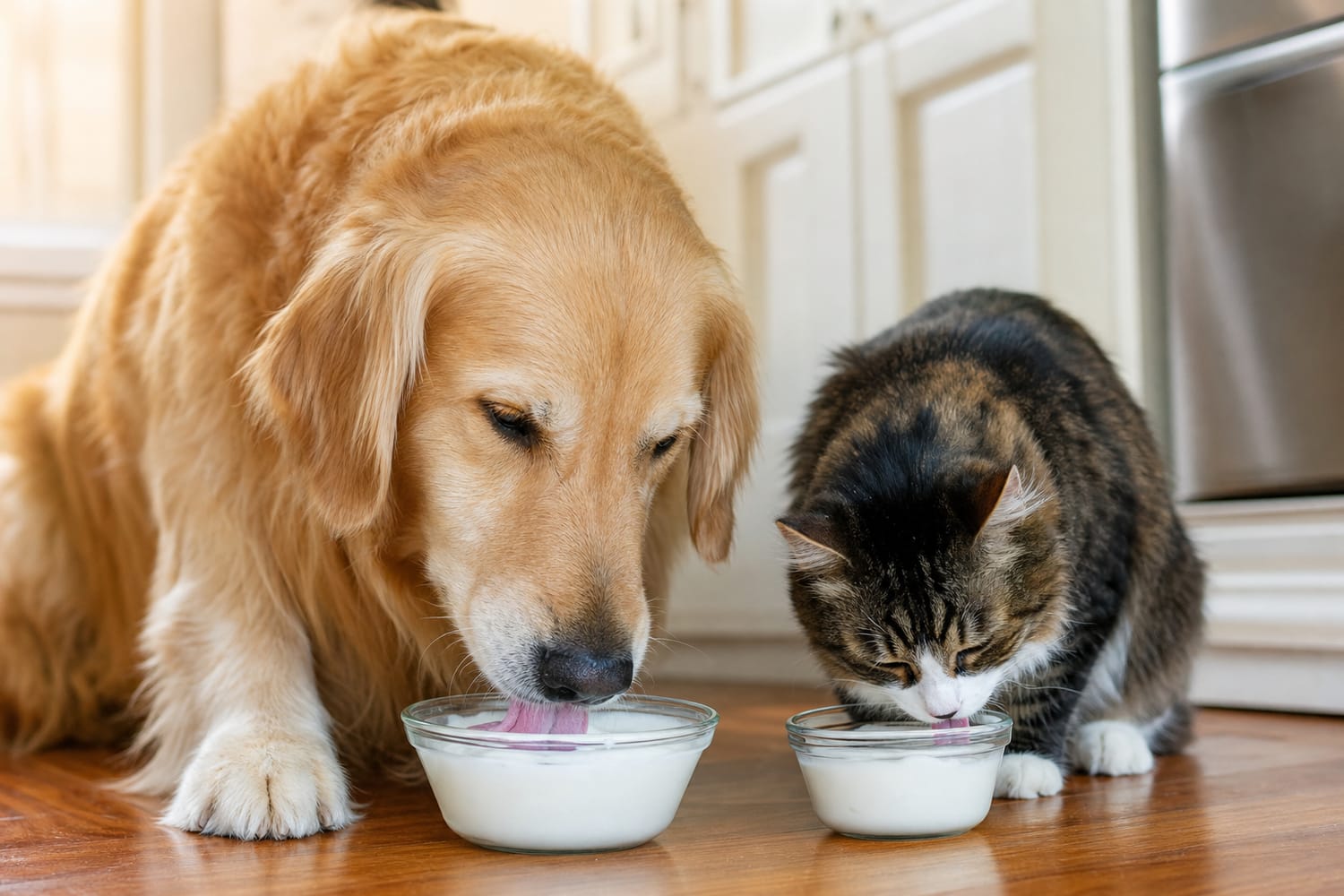
A Creamy Question Many Pet Lovers Ask
If you’ve ever opened a cup of yogurt and felt a pair of curious eyes watching your spoon, you’re not alone. Dogs and cats are masters at noticing when something tasty appears in the kitchen. Yogurt seems wholesome, simple, and nourishing for humans—but can our pets safely enjoy it too?
The short answer is: yes, many dogs and some cats can eat small amounts of plain yogurt, but it depends on the individual pet, the type of yogurt, and how it is served. Yogurt is not necessary in a dog’s or cat’s diet, and it should never replace a complete and balanced pet food. However, when chosen carefully and offered in moderation, it can be a fun occasional treat.
The key words are plain, unsweetened, and small portions. Some yogurts contain ingredients that are unhealthy—or even dangerous—for pets. Others may simply upset sensitive stomachs. Like many pet treats, yogurt is best approached with curiosity, care, and a little label-reading.
What Is Yogurt, and Why Do Pets Like It?
Yogurt is a dairy product made by fermenting milk with live bacterial cultures. These bacteria help give yogurt its tangy taste and creamy texture. Many pets are drawn to yogurt because it smells rich and slightly sour, and its smooth texture makes it easy to lick.
For dogs, yogurt can feel like a special reward, especially when served chilled or added to a puzzle toy. Cats may be more selective. Some cats adore dairy flavors, while others sniff once and walk away with royal disinterest. Both reactions are perfectly normal.
It’s important to remember that although kittens and puppies drink milk early in life, many animals produce less lactase—the enzyme needed to digest lactose—as they grow older. This means some adult dogs and cats may struggle to digest dairy, including yogurt.
Potential Benefits of Yogurt for Dogs and Cats
When served safely, yogurt can offer a few potential benefits. These benefits are modest, but they help explain why some pet owners like using yogurt as an occasional treat.
One of yogurt’s most well-known features is its live and active cultures. These beneficial bacteria are often called probiotics. In theory, probiotics may help support a healthy balance of bacteria in the digestive tract. However, not all yogurts contain the same strains, and not all probiotic cultures survive digestion in meaningful amounts. If your pet has digestive issues, a veterinarian-recommended probiotic is usually a better choice than relying on grocery-store yogurt.
Yogurt also contains protein, which helps support muscles and overall body function. Greek yogurt, in particular, tends to be higher in protein than regular yogurt. It also contains nutrients such as calcium and B vitamins, though pets should already be getting these from their regular balanced diet.
For some pet parents, yogurt is most useful as a treat enhancer. A small spoonful can make medication easier to take, encourage a picky eater, or add variety to enrichment toys. Frozen yogurt dots or yogurt-stuffed lick mats can also provide mental stimulation, especially for dogs who enjoy slow, interactive snacks.
The Biggest Risk: Lactose Intolerance
The main reason yogurt does not agree with every dog or cat is lactose intolerance. Lactose is the natural sugar found in milk and dairy products. If a pet does not have enough lactase to break it down, lactose can ferment in the gut and cause discomfort.
Signs that yogurt may not agree with your pet include:
- Gas
- Bloating
- Soft stool or diarrhea
- Vomiting
- Stomach gurgling
- Loss of appetite
- Restlessness or discomfort
Cats are especially known for having difficulty digesting dairy as adults. The classic image of a cat happily lapping up a bowl of milk may be charming, but in real life, many cats end up with an upset stomach afterward. Yogurt is sometimes easier to digest than milk because fermentation reduces some lactose, but that does not make it risk-free.
Dogs vary widely. Some can enjoy a small amount without issue, while others may react even to a teaspoon. The safest approach is to start tiny and watch closely.
Ingredients to Avoid Completely
Not all yogurt is pet-safe. In fact, some types should never be shared. Before offering yogurt to a dog or cat, always check the ingredient list.
The most important ingredient to avoid is xylitol, also called birch sugar. Xylitol is a sugar substitute that is highly toxic to dogs. Even small amounts can cause a rapid drop in blood sugar and potentially life-threatening liver damage. While xylitol poisoning is most commonly discussed in dogs, it is still best to keep xylitol-containing products away from all pets.
Also avoid yogurts that contain:
- Added sugar
- Artificial sweeteners
- Chocolate
- Coffee or espresso flavoring
- Grapes or raisins
- Macadamia nuts
- Candy pieces
- Dessert mix-ins
- High-fat cream layers
- Strong spices
Flavored yogurts may sound harmless, but they often contain more sugar than pets need. Sugar can contribute to weight gain and dental issues, and rich foods may trigger digestive upset. For pets with a history of pancreatitis, fatty foods can be especially risky.
The best choice is always plain, unsweetened yogurt with no dangerous additives.
Is Yogurt Better for Dogs Than Cats?
In general, dogs are more likely than cats to tolerate small servings of yogurt, but this is not a strict rule. Every pet is an individual.
Dogs are omnivores, meaning they can digest a wider variety of foods than cats. Many dogs enjoy yogurt as an occasional treat, especially when it is used in frozen snacks or mixed with pet-safe fruits like blueberries or banana. Still, dogs can be lactose intolerant too, and some have sensitive stomachs or food allergies.
Cats are obligate carnivores, which means their bodies are designed to thrive on nutrients from animal-based foods. They do not need yogurt, and many cats are not particularly interested in it. If a cat does enjoy yogurt and tolerates it well, a tiny taste may be acceptable. But it should remain a rare treat, not a routine part of the diet.
For both species, moderation matters more than enthusiasm. Just because a pet wants more does not mean their stomach will thank them later.
How Much Yogurt Can Dogs and Cats Eat?
Serving size depends on your pet’s size, health, and tolerance. Yogurt should be treated as an occasional snack, and all treats together should generally make up no more than 10% of a pet’s daily calories.
A cautious starting point is:
- Small dogs: ½ teaspoon to 1 teaspoon
- Medium dogs: 1 to 2 teaspoons
- Large dogs: 1 tablespoon
- Cats: ¼ to ½ teaspoon
If your pet has never had yogurt before, start with less than you think they can handle. Offer a tiny amount, then wait 24 hours to see how they respond. If there is vomiting, diarrhea, or discomfort, skip yogurt in the future.
Pets with medical conditions—such as diabetes, pancreatitis, obesity, kidney disease, food allergies, or chronic digestive problems—should only have yogurt if your veterinarian says it is appropriate.
Safe and Fun Ways to Serve Yogurt
One of the joys of pet parenting is finding little ways to brighten your animal’s day. Yogurt can be part of that fun when it’s served safely.
For dogs, try spreading a thin layer of plain yogurt on a lick mat. This can provide calming enrichment and encourage slower eating. You can also freeze tiny drops of yogurt on a parchment-lined tray for a warm-weather treat. Another idea is to mix a spoonful of yogurt with mashed pumpkin—not pumpkin pie filling—for a creamy snack.
For cats, keep things simple. Offer a tiny dab on a spoon or plate and let them decide. Cats appreciate choice, and forcing new foods can create stress or food aversion.
Pet-safe yogurt pairings may include:
- Blueberries
- Plain cooked pumpkin
- Banana slices
- Unsweetened applesauce in tiny amounts
- A small sprinkle of your pet’s regular kibble
Avoid turning yogurt treats into rich desserts. Pets don’t need the sweetness we often enjoy, and their healthiest treats are usually simple.
When Yogurt Is Not a Good Idea
Yogurt may not be suitable for every pet. Skip it if your dog or cat has shown signs of lactose intolerance or dairy sensitivity in the past. Also avoid yogurt if your pet is overweight and struggling with calorie control unless your veterinarian helps you include it appropriately.
Do not give yogurt to pets who are vomiting, having diarrhea, or dealing with an unknown illness. It’s better to let your veterinarian guide diet choices during digestive upset. Yogurt is sometimes mistakenly used as a home remedy for stomach problems, but it can make symptoms worse in lactose-sensitive animals.
You should also avoid giving yogurt to very young puppies or kittens unless your veterinarian specifically recommends it. Young animals have delicate nutritional needs, and their diets should be carefully balanced for growth.
What About Probiotic Supplements?
Because yogurt is associated with probiotics, many people wonder if it can help with digestive health. While yogurt may contain beneficial bacteria, it is not the same as a veterinary probiotic.
Pet-specific probiotic supplements are designed with strains that have been studied for dogs or cats. They also provide measured amounts, which makes them more reliable. If your pet has recurring diarrhea, constipation, gas, or digestive discomfort, it’s best to talk with your vet rather than experimenting with yogurt.
That said, for a healthy pet who tolerates dairy, plain yogurt can still be a pleasant occasional snack. Think of it as a treat with possible digestive perks—not a medical treatment.
The Final Scoop
So, can dogs and cats eat yogurt? Yes, some can—but only the right kind, in the right amount. Plain, unsweetened yogurt may be safe as an occasional treat for pets who tolerate dairy. It can add variety, enrichment, and a little creamy joy to their day.
But yogurt is not essential, and it is not suitable for every pet. Lactose intolerance, added sugars, artificial sweeteners, and unsafe ingredients can turn a simple snack into a problem. Always read labels carefully, start with a tiny serving, and watch your pet’s reaction.
As pet lovers, we want every treat to feel like a small celebration. The best treats are not just tasty—they are thoughtful. Whether your dog happily licks a frozen yogurt treat or your cat politely declines with a flick of the tail, the goal is the same: honoring their health, happiness, and unique personality.
When in doubt, ask your veterinarian. And when yogurt is a safe choice, serve it with love, moderation, and maybe a few happy tail wags.