
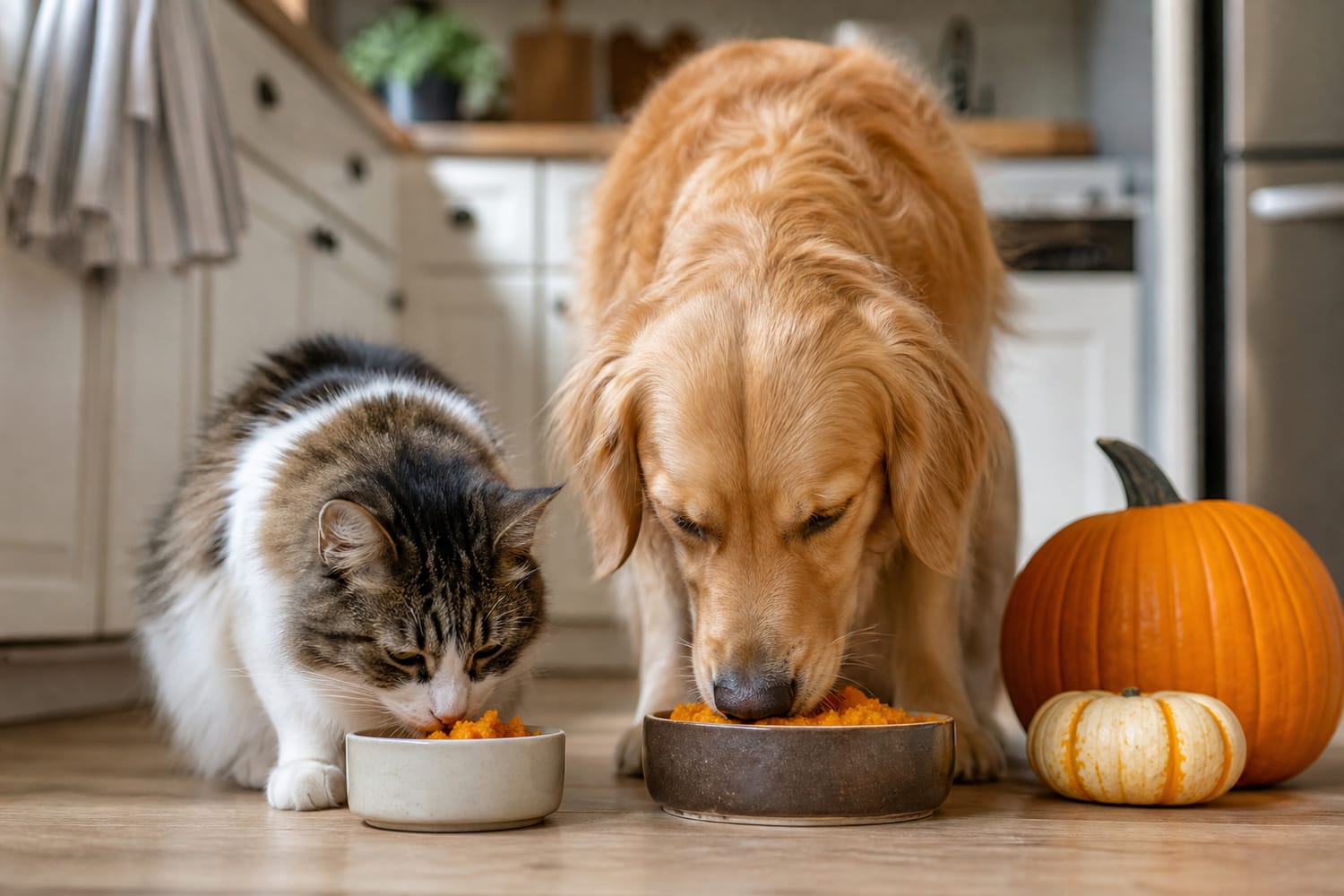
A Cozy Superfood Many Pets Can Share
Pumpkin has a special kind of magic. It shows up in autumn pies, warm soups, porch decorations, and—surprisingly often—in pet bowls. If you share your home with a dog or cat, you may have heard that pumpkin can help with tummy troubles. The good news is that, yes, many dogs and cats can safely eat pumpkin when it is served the right way.
Plain pumpkin is rich in water, fiber, and helpful nutrients, making it a gentle addition to many pets’ diets. It is not a cure-all, and it should never replace veterinary care when something is wrong, but it can be a useful tool for supporting healthy digestion.
For pet lovers, pumpkin is one of those simple foods that feels wholesome and practical. A spoonful mixed into dinner can turn an ordinary meal into something special, while also offering benefits for the digestive system. The key is knowing what kind to use, how much to serve, and when to call your veterinarian.
Can Dogs Eat Pumpkin?
Yes, dogs can eat pumpkin. In fact, plain pumpkin is commonly recommended by veterinarians as a short-term dietary addition for dogs with mild digestive upset. Its fiber content can help support healthy stool quality, and many dogs enjoy its naturally mild, slightly sweet flavor.
Pumpkin can be served to dogs in several safe forms, including plain canned pumpkin, cooked fresh pumpkin, or pumpkin puree made without added sugar, salt, spices, butter, or oils. The most important word here is “plain.”
Canned pumpkin is often the easiest option because it is already cooked and smooth. However, pet parents should read labels carefully. Plain canned pumpkin and pumpkin pie filling are not the same thing. Pumpkin pie filling often contains sugar, spices, and sometimes ingredients that are not appropriate for pets.
Dogs should not eat pumpkin desserts, pumpkin spice treats made for humans, sweetened pumpkin products, or foods containing nutmeg. While cinnamon in tiny amounts is not usually toxic to dogs, many spiced human foods contain multiple ingredients, and it is safer to avoid them.
When served properly, pumpkin can be a delicious and nutritious topper for your dog’s regular food. It should be used as a supplement, not as the main part of the meal.
Can Cats Eat Pumpkin?
Yes, cats can eat pumpkin too. While cats are obligate carnivores, meaning they require nutrients found in animal-based foods, small amounts of plain pumpkin can still be useful for digestive support.
Some cats are curious and will happily lick pumpkin from a spoon. Others may look at you as if you have betrayed their royal standards. Both reactions are normal. Cats can be wonderfully opinionated about texture, smell, and routine.
Pumpkin is not a required part of a cat’s diet, but it may help some cats with stool consistency. Because cats tend to be more sensitive to dietary changes than many dogs, it is wise to introduce pumpkin slowly and in very small amounts.
As with dogs, cats should only be offered plain pumpkin. Avoid pumpkin pie filling, sweetened pumpkin, pumpkin spice foods, baked goods, and anything containing dairy, butter, sugar, or seasoning. A tiny spoonful of plain pumpkin mixed into wet food is usually the easiest way to offer it.
If your cat is having repeated vomiting, diarrhea, constipation, appetite loss, weight loss, or signs of pain, do not rely on pumpkin alone. Cats can hide illness very well, and digestive changes may be the first visible clue that something needs veterinary attention.
Why Pumpkin Can Help Digestion
Pumpkin’s digestive reputation comes mostly from its fiber content. Fiber plays an important role in stool quality and gut movement. Interestingly, pumpkin may help in two seemingly opposite situations: mild diarrhea and mild constipation.
For loose stools, pumpkin’s soluble fiber can absorb excess water in the digestive tract, helping stool become more formed. For constipation, the fiber and moisture in pumpkin can help add bulk and softness to stool, encouraging more normal bowel movements.
That does not mean pumpkin works for every pet or every digestive problem. Diarrhea can be caused by parasites, infections, food allergies, toxins, stress, pancreatitis, dietary indiscretion, or more serious disease. Constipation can be related to dehydration, pain, hairballs, pelvic issues, kidney disease, neurological problems, or obstruction.
Think of pumpkin as a gentle helper, not a detective, doctor, or emergency treatment. It may support the digestive system, but it cannot diagnose the reason your pet feels unwell.
Pumpkin also contains nutrients such as beta-carotene, which the body can convert into vitamin A, along with potassium and other beneficial plant compounds. However, pets eating a complete and balanced commercial diet generally do not need pumpkin for vitamins. Its main value is usually digestive support and meal enrichment.
How Much Pumpkin Should Dogs and Cats Eat?
Serving size matters. Too much pumpkin can upset the stomach, cause gas, or contribute to diarrhea—the very problem you may be trying to improve. Start small and increase only if your pet tolerates it well.
For dogs, a common starting point is:
- Small dogs: 1 teaspoon per meal
- Medium dogs: 1 to 2 teaspoons per meal
- Large dogs: 1 tablespoon per meal
Some large dogs may tolerate a little more, but bigger is not automatically better. If you are using pumpkin to help with stool quality, keep portions modest and observe your dog’s response.
For cats, start even smaller:
- Cats: 1/4 to 1/2 teaspoon mixed into food
- Larger cats may tolerate up to 1 teaspoon, if introduced gradually
Pumpkin should not make up a large portion of your pet’s diet. If you find yourself needing to use it daily for ongoing digestive issues, it is time to talk with your veterinarian. Your pet may need a diet change, hydration support, parasite testing, medication, or another treatment plan.
Also remember that treats and extras should generally make up no more than about 10% of a pet’s daily calories. Pumpkin is low in calories compared with many treats, but it still counts as an extra.
The Safest Types of Pumpkin to Serve
The safest pumpkin for pets is plain, cooked, and unseasoned. Here are the best options:
- Plain canned pumpkin
- Fresh pumpkin that has been cooked and mashed
- Plain pumpkin puree with no added ingredients
- Small amounts of cooked pumpkin flesh
Fresh pumpkin can be prepared by removing the stem, skin, stringy center, and seeds, then baking, steaming, or boiling the flesh until soft. Once cooked, mash or puree it before serving.
Raw pumpkin is not usually toxic, but it is harder to digest and may cause stomach upset. The tough outer rind can also be a choking hazard or contribute to intestinal blockage, especially if swallowed in chunks. For that reason, cooked pumpkin flesh is the better choice.
Avoid giving pets the carved jack-o’-lantern from your porch. Decorative pumpkins may have mold, bacteria, candle residue, dirt, or other contaminants. A pumpkin that has been sitting outside is not a safe snack for your dog or cat.
Pumpkin seeds are a little more complicated. Plain, shelled, roasted pumpkin seeds are not considered toxic to dogs or cats, but they are higher in fat and can be difficult for some pets to digest. Whole seeds may also be a choking risk for small pets. If offered at all, they should be plain, unsalted, unseasoned, and given sparingly. For digestive support, pumpkin flesh is the better option.
What to Avoid: Pumpkin Foods That Are Not Pet-Friendly
Pumpkin may be safe, but many pumpkin-flavored human foods are not. Pet parents should be cautious with seasonal treats, coffee drinks, baked goods, and desserts.
Avoid giving dogs or cats:
- Pumpkin pie filling
- Pumpkin pie
- Pumpkin spice lattes
- Pumpkin bread or muffins
- Cookies, cakes, or pastries
- Sweetened pumpkin puree
- Pumpkin products containing chocolate
- Foods containing xylitol, also called birch sugar
- Pumpkin dishes made with butter, cream, onions, garlic, or heavy spices
Xylitol is especially dangerous to dogs and can cause life-threatening drops in blood sugar and liver injury. It is found in some sugar-free products, gums, candies, baked goods, and specialty foods. Cats appear less sensitive to xylitol than dogs, but it is still not something to offer.
Onions and garlic are also unsafe for dogs and cats and can damage red blood cells. Many savory pumpkin soups or side dishes contain these ingredients, so it is best to avoid sharing seasoned table food.
The golden rule is simple: if the pumpkin food was made for humans and includes extra ingredients, do not assume it is safe for pets.
When Pumpkin May Not Be Enough
Pumpkin is often used for mild, temporary digestive changes, but there are times when a veterinarian should be involved right away. Contact your vet if your dog or cat has:
- Diarrhea lasting more than 24 to 48 hours
- Repeated vomiting
- Blood in the stool or black, tarry stool
- Severe constipation or straining without producing stool
- Loss of appetite
- Lethargy or weakness
- Signs of pain, bloating, or distress
- Possible ingestion of a toxin, foreign object, or spoiled food
- Digestive upset in a puppy, kitten, senior pet, or pet with chronic illness
Cats who strain in the litter box may appear constipated, but they could actually have a urinary blockage, especially male cats. A urinary blockage is a medical emergency. If your cat is repeatedly visiting the litter box, crying, producing little or no urine, or acting uncomfortable, seek veterinary care immediately.
Dogs with sudden bloating, retching, restlessness, or a swollen abdomen also need emergency care, as these signs may indicate a serious condition such as gastric dilatation-volvulus, commonly called bloat.
Pumpkin can be comforting and helpful, but it should never delay care when symptoms are serious.
Fun Ways to Serve Pumpkin
One of the joys of pumpkin is how easy it is to use. A simple spoonful can add flavor, moisture, and variety to your pet’s meal.
Try these pet-friendly ideas:
- Mix a small amount into your dog’s regular food
- Stir a tiny spoonful into your cat’s wet food
- Spread a thin layer on a lick mat
- Freeze plain pumpkin in a treat mold for dogs
- Mix pumpkin with your dog’s usual kibble and a splash of warm water
- Use pumpkin as a low-calorie food topper for pets who enjoy it
For dogs, frozen pumpkin treats can be especially fun on warm days. Just remember to keep portions appropriate. You can also combine plain pumpkin with a little plain, unsweetened yogurt if your dog tolerates dairy, but many pets are sensitive to lactose, so this is not necessary.
For cats, texture is everything. Some prefer pumpkin blended smoothly into wet food. Others may reject the meal if they notice a change. Start with a tiny amount so your cat does not feel ambushed by an unfamiliar flavor.
A Simple Ingredient With Heartwarming Benefits
Pumpkin is one of those humble foods that reminds us how thoughtful pet care can be. It is not fancy. It is not complicated. But when used wisely, it can support digestion, add variety, and make mealtime a little more special.
Dogs and cats can both eat plain pumpkin in appropriate amounts. The safest choices are plain canned pumpkin or cooked fresh pumpkin with no sugar, salt, spices, or added fats. Serve small portions, introduce it gradually, and pay attention to how your pet responds.
Most of all, remember that every pet is an individual. One dog may adore pumpkin and benefit from it, while another may not care for it at all. One cat may lick the bowl clean, while another may insist pumpkin is beneath their dignity. That is part of the fun of loving animals: learning their preferences, honoring their needs, and celebrating their personalities.
When in doubt, your veterinarian is your best guide. With a little knowledge and a lot of love, pumpkin can be a safe, nourishing, and delightful addition to your pet care toolkit.