
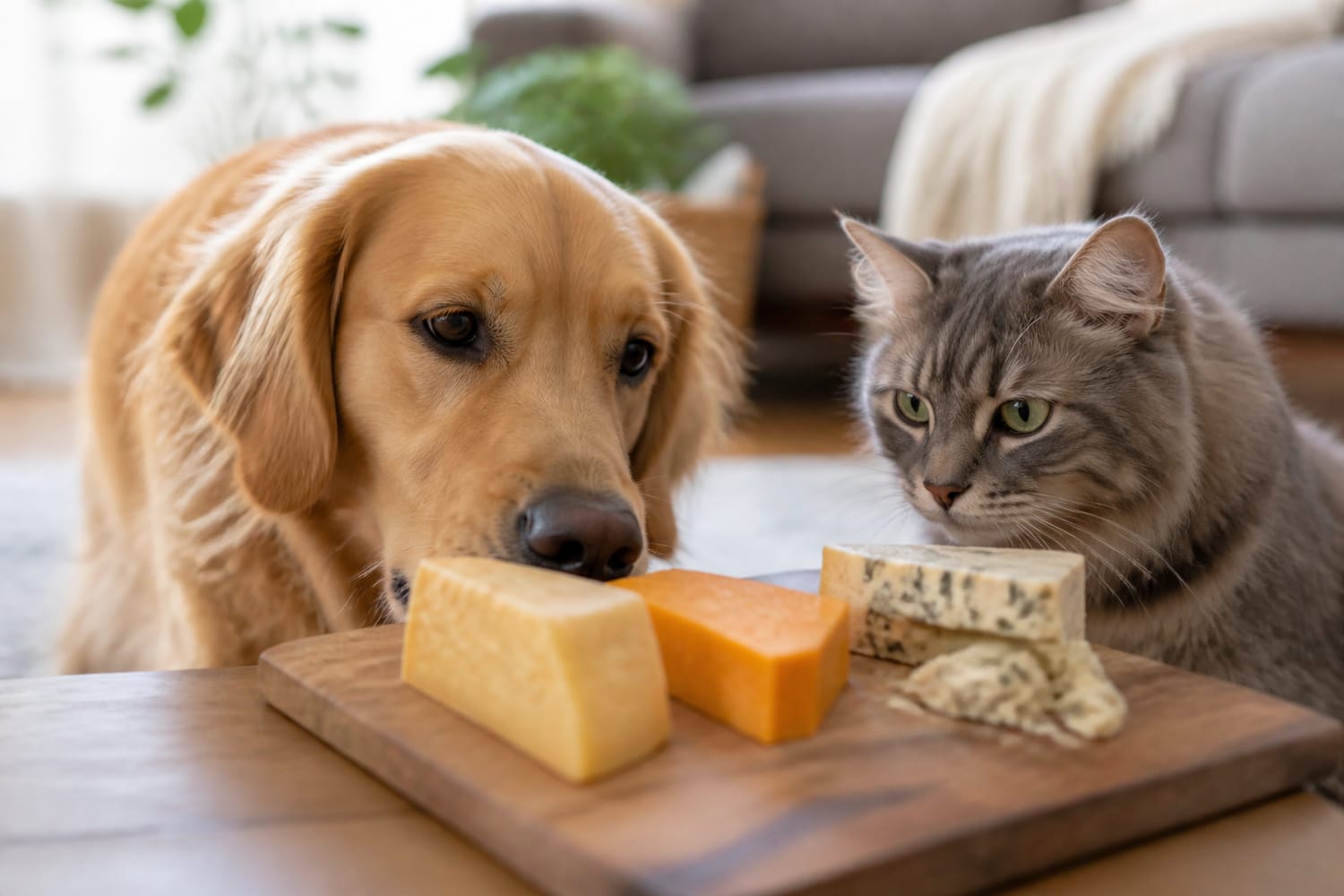
The Short Answer: Yes, but Keep It Small and Simple
Most healthy dogs and cats can eat a tiny amount of plain cheese occasionally, provided they tolerate dairy. However, cheese is high in calories, fat, and often sodium, while many adult pets have difficulty digesting lactose. Choose an unseasoned variety, offer a very small portion, and watch for digestive upset.
Cheese should be treated as a special extra—not a nutritional necessity or a regular part of your pet’s meals. Cats and dogs need complete, balanced food formulated for their species and life stage. Cheese cannot replace that foundation, even though it contains protein and calcium.
Why Cheese Can Be Tricky for Pets
The storybook image of a cat happily drinking milk is charming, but it is not a reliable guide to feline nutrition. Many adult cats are lactose-intolerant, and dogs can also have trouble digesting dairy. The ASPCA notes that pets generally do not produce significant amounts of lactase, the enzyme needed to break down lactose.
When lactose is not digested properly, cheese may cause:
- Gas or a rumbling stomach
- Bloating
- Loose stools or diarrhea
- Vomiting
- Abdominal discomfort
Lactose is only part of the picture. Many cheeses are rich in fat, making it easy to add more calories than intended. Too much fatty food may contribute to weight gain and, in vulnerable animals, pancreatitis—a painful inflammation of the pancreas.
Cheese may also cause problems for a pet with a dairy allergy. Unlike lactose intolerance, which is a digestive issue, an allergy involves the immune system and may cause itching, inflamed skin, recurring ear trouble, or gastrointestinal symptoms. A veterinarian should evaluate any suspected food allergy.
The Best Cheese Choices for Dogs and Cats
No cheese is universally safe for every pet. Nevertheless, some varieties are more practical than others when offered plain and in truly tiny portions.
Plain, aged cheeses
Cheddar and Swiss are relatively low in lactose because much of it is removed or broken down during cheesemaking and aging. A crumb or two may be tolerated better than milk or a soft, fresh cheese, although these aged cheeses can still be high in fat and sodium.
PetMD recommends hard cheeses such as cheddar or Swiss when giving cheese to a cat that can tolerate dairy.
Part-skim mozzarella
Plain, part-skim mozzarella may be an occasional option for dogs because it is typically lower in fat than many rich cheeses. Avoid marinated mozzarella and varieties seasoned with garlic, herbs, chili, or onion.
Low-fat cottage cheese
Low-fat, unseasoned cottage cheese may contain less fat and sodium than some firm cheeses. However, it generally contains more lactose than a well-aged cheese, so it is not automatically the best choice for a lactose-sensitive pet.
Begin with a tiny taste rather than a spoonful. If your pet develops gas, vomiting, or diarrhea, do not offer it again.
Cheese Types and Products to Avoid
Some cheese products introduce risks that go far beyond ordinary dairy intolerance. Keep the following off your pet’s menu:
- Cheese containing onion, garlic, leeks, or chives: These ingredients can damage red blood cells in dogs and cats, with cats being especially susceptible.
- Blue and mold-ripened cheese: Avoid deliberately giving pets blue cheese, and never allow them to eat spoiled or moldy dairy products.
- Nacho cheese, queso, and cheese sauces: These may contain excessive fat, salt, spices, onion, or garlic.
- Highly processed cheese spreads: They often contain more sodium and additives than a small piece of plain cheese.
- Cheese with hot peppers or strong seasonings: Spicy ingredients can irritate the digestive system.
- Cheese paired with unsafe foods: Pizza, cheeseburgers, casseroles, and party dips may include onions, garlic, fatty meats, macadamia nuts, chocolate, or other unsuitable ingredients.
- Very rich cheeses and large servings of cream cheese: High-fat portions can trigger digestive trouble and add substantial calories.
Before sharing anything from your plate, check every ingredient—not just the cheese. The ASPCA’s guide to people foods pets should avoid is a helpful reference for identifying common hazards.
How Much Cheese Can a Dog Have?
There is no single serving size that works for every dog. A safe amount depends on the dog’s size, daily calorie needs, health, and ability to digest dairy.
Use these guidelines to keep the portion sensible:
- Begin with one pea-sized piece. This is enough to test tolerance without serving a large dairy snack.
- Scale conservatively. A few tiny shreds may be plenty for a larger dog, while one small crumb can be meaningful to a toy breed.
- Break training rewards into fragments. Dogs usually value the number of rewarding moments more than the size of each bite.
- Use only the amount needed for medication. Wrap or coat the pill lightly rather than hiding it in a large ball of cheese.
- Count cheese among all daily treats. Treats and extras should provide no more than about 10% of a dog’s daily calories, according to the UC Davis treat guidelines for dogs.
Because cheese is calorie-dense, it should generally occupy only a small part of that treat allowance. Dogs managing excess weight may be better rewarded with pieces of their regular food or another veterinarian-approved, lower-calorie option. Pet parents can also explore Petspiration’s advice on preventing obesity in indoor pets.
How Much Cheese Can a Cat Have?
Cats require even more restraint. Their bodies are small, their calorie needs are limited, and cheese does not provide the balanced animal-based nutrition they need.
For a healthy adult cat that has previously tolerated dairy, offer one or two pea-sized crumbs. PetMD advises limiting cheese to no more than a dice-sized amount in total, offered only once or twice per week—and broken into smaller pieces to prevent gulping.
Many cats will be perfectly happy without cheese. If your cat is curious about what you are eating, a species-appropriate cat treat or a piece of plain, fully cooked, unseasoned meat may be a more suitable reward.
Cheese should not be used as a calcium supplement for kittens or puppies. Growing animals need carefully balanced levels of calories, protein, vitamins, and minerals—not isolated additions from human foods. Learn more in Petspiration’s guide to life-stage nutrition for puppies and kittens.
When Cheese Should Be Skipped Completely
Even a small portion may be inappropriate for some pets. Avoid cheese unless your veterinarian specifically approves it if your dog or cat has:
- A known dairy allergy or lactose intolerance
- Previous vomiting or diarrhea after dairy
- Pancreatitis or a history of pancreatitis
- Obesity or an active weight-loss plan
- Diabetes
- Kidney, liver, or heart disease
- Inflammatory bowel disease or a sensitive digestive system
- A diet trial for suspected food allergies
- A veterinary prescription diet
Prescription foods are designed for particular medical goals. Adding cheese may interfere with those goals, especially when a pet is eating a urinary, kidney, low-fat, elimination, or hydrolyzed-protein diet.
Cheese is also unnecessary for a pet that is already experiencing vomiting or diarrhea. Instead of experimenting with treats, contact your veterinarian and review appropriate next steps. Petspiration’s overview of feeding pets after vomiting or digestive upset offers additional general guidance.
What to Do If Your Pet Eats Too Much Cheese
A stolen cheese cube may cause nothing more than temporary gas, but a large serving—or a flavored product—deserves closer attention. Check the package or recipe immediately for onion, garlic, chives, macadamia nuts, excessive salt, or other unsafe ingredients.
Monitor your pet for:
- Repeated vomiting or diarrhea
- A swollen or painful abdomen
- Loss of appetite
- Unusual tiredness or weakness
- Restlessness, trembling, or poor coordination
- A hunched posture or reluctance to move
- Excessive thirst
- Pale gums or rapid breathing
Contact your veterinarian promptly if symptoms appear, if your pet ate a large quantity, or if the cheese contained a potentially toxic ingredient. Seek advice immediately if packaging, foil, wax, or a plastic wrapper was swallowed as well.
A Little Treat, a Lot of Love
Sharing food can feel like sharing affection, but the most loving choice is one that supports your companion’s long-term health. For some dogs and cats, a tiny crumb of plain cheese can be an enjoyable occasional surprise. For others, skipping dairy entirely is the kinder decision.
Keep portions miniature, choose plain varieties, respect your pet’s individual health needs, and remember that attention, play, praise, and cuddles are wonderful calorie-free rewards. After all, the joy is not really in the cheese—it is in the happy moment you share together.