
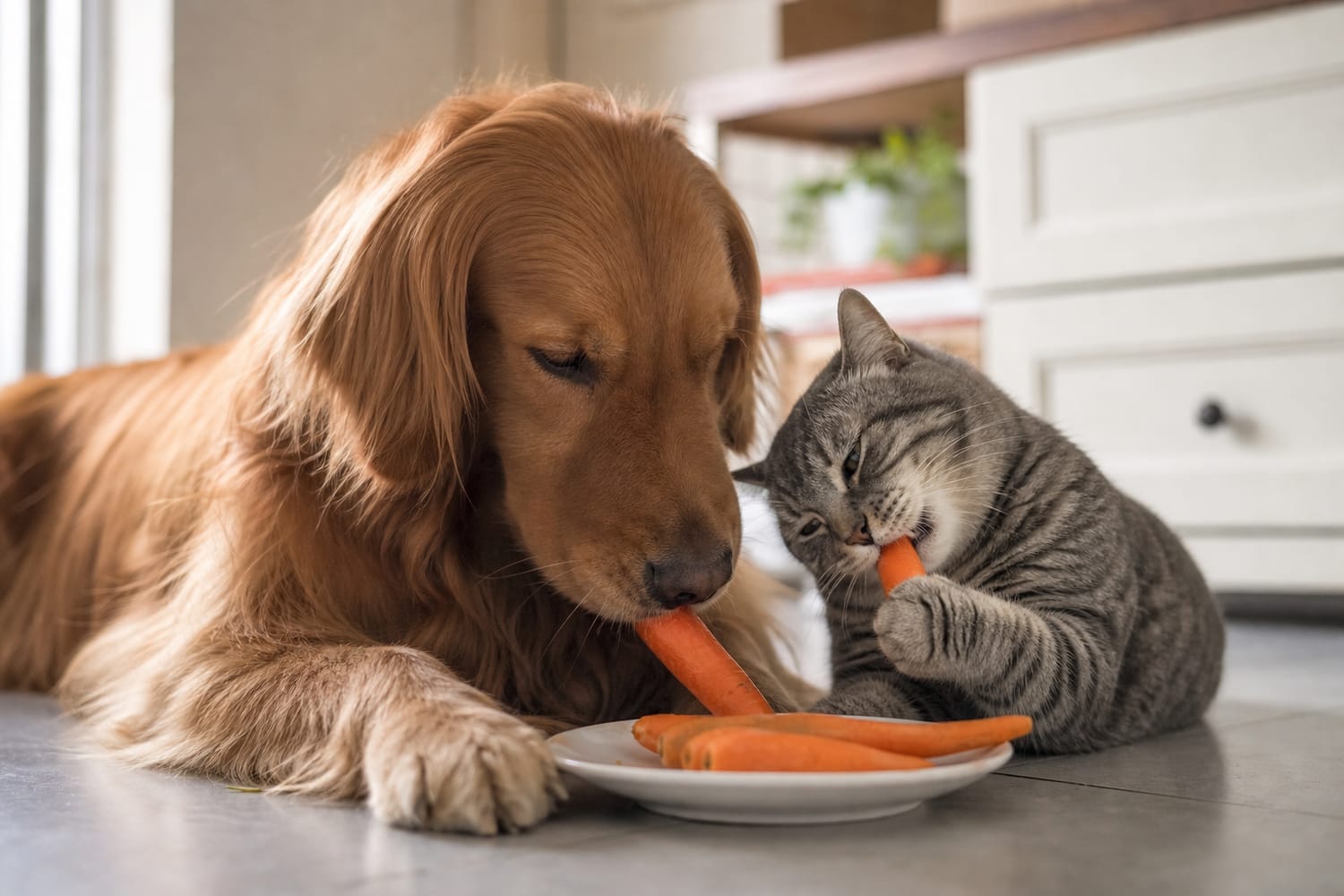
Can Dogs and Cats Eat Carrots?
Yes—dogs and cats can eat carrots, and for many pets, this bright orange veggie can be a crunchy, fun, and nutritious treat. Carrots are non-toxic to both dogs and cats, low in calories, and full of fiber and beneficial plant nutrients. Whether served raw, cooked, sliced, steamed, or mashed, carrots can be a lovely addition to your pet’s treat rotation when offered safely and in moderation.
That said, dogs and cats have very different nutritional needs. Dogs are omnivores, meaning they can enjoy a variety of animal and plant-based foods. Cats, on the other hand, are obligate carnivores, which means their bodies are designed to get most of their nutrition from meat. So while carrots can be a healthy snack for both species, they should never replace a complete and balanced pet food.
Think of carrots as a bonus—not a main course. They can add texture, variety, and enrichment to your pet’s day, but they are not essential to your dog’s or cat’s diet.
Why Carrots Can Be Good for Dogs
Many dogs love carrots because they are naturally sweet, crunchy, and satisfying to chew. For pet parents looking for a lower-calorie alternative to commercial treats, carrots can be a great option.
Carrots contain several nutrients that may support your dog’s overall wellness, including:
- Fiber, which can support healthy digestion and help some dogs feel fuller between meals.
- Beta-carotene, a plant pigment that gives carrots their orange color and can be converted by dogs into vitamin A.
- Vitamin K, which plays a role in normal blood clotting.
- Potassium, an important mineral for muscle and nerve function.
- Antioxidants, which help support the body’s natural defenses.
Carrots are especially popular with dogs who enjoy a good crunch. Some pet parents offer chilled or frozen carrot pieces as a soothing chew for teething puppies. This can be helpful, but supervision is important. A frozen carrot may be too hard for some dogs, especially tiny breeds or enthusiastic chewers who might try to swallow large pieces.
While chewing raw carrots may help scrape away a little plaque, carrots are not a replacement for regular dental care. Toothbrushing, dental diets, veterinary cleanings, and vet-approved dental chews remain the gold standard for keeping your dog’s teeth healthy.
Are Carrots Good for Cats Too?
Cats can eat carrots, but whether they want to is another story! Some cats are curious and enjoy nibbling on soft cooked carrots. Others may sniff once and walk away with the confidence of a tiny royal food critic.
Carrots are safe for cats when served plain and in small amounts. However, cats do not need vegetables the way humans do. Their bodies require nutrients found in animal tissues, such as taurine, arachidonic acid, and preformed vitamin A. Unlike dogs, cats are not very efficient at converting beta-carotene from plants into vitamin A.
This means carrots should be treated as an occasional snack or food topper—not a nutritional necessity. If your cat enjoys carrots, the best way to offer them is usually cooked, soft, and finely chopped or mashed. Raw carrots can be too hard and may pose a choking risk, especially for cats who are not used to chewing firm vegetables.
Some cats enjoy the texture of a tiny bit of carrot mixed into wet food. Others may prefer a smooth puree. As with all new foods, start small and watch for any digestive changes.
The Nutritional Benefits of Carrots
Carrots have earned their reputation as a wholesome food, and they can offer some gentle benefits to pets when served appropriately.
One of the biggest advantages is that carrots are low in fat and calories. For dogs who are watching their weight, small carrot pieces may be a more waistline-friendly treat than biscuits, cheese, or table scraps. They also add a satisfying crunch without loading up on unnecessary calories.
The fiber in carrots can support healthy digestion. Fiber helps add bulk to stool and may be useful for pets who need a little extra digestive support. However, too much fiber too quickly can lead to gas, loose stool, or stomach upset.
Carrots also contain water, making them a hydrating snack. While they should not replace your pet’s water bowl, fresh vegetables can contribute a small amount of extra moisture to the diet.
Their beautiful orange color comes from carotenoids, including beta-carotene. In dogs, beta-carotene may be converted into vitamin A, which supports normal vision, immune function, and skin health. In cats, this conversion is limited, so they must get vitamin A from animal-based sources in their regular diet.
Possible Risks to Know Before Serving
Carrots are safe for most healthy dogs and cats, but there are a few risks to keep in mind.
The biggest concern is choking. Raw carrots, especially large chunks or whole baby carrots, can be difficult for some pets to chew properly. Small dogs, puppies, kittens, senior pets, and cats are especially at risk if the pieces are too large or hard.
Another concern is digestive upset. Any new food can cause vomiting, diarrhea, gas, or changes in appetite if introduced too quickly. Carrots are high in fiber compared with many pet treats, so it is best to begin with a small amount.
Carrots also contain natural sugars. This is not usually a problem in tiny portions, but pets with diabetes, weight issues, or specific medical conditions should have treats approved by a veterinarian.
You should also avoid carrots prepared with ingredients that can harm pets. Never give dogs or cats carrots cooked with:
- Garlic
- Onion
- Chives
- Heavy butter or oil
- Excess salt
- Spicy seasonings
- Sugary glazes
- Sauces or gravies
Garlic, onions, and related ingredients are especially dangerous for both dogs and cats. They can damage red blood cells and cause serious illness. Plain is always best.
Canned carrots may be safe if they are low-sodium and contain no added seasonings, but fresh or plain frozen carrots are often better choices. Always read labels carefully.
How to Safely Serve Carrots to Dogs
For dogs, carrots can be served raw or cooked, depending on your dog’s size, chewing style, and preferences.
Here are safe serving ideas:
- Raw carrot sticks for larger dogs who chew carefully
- Thin carrot coins for medium dogs
- Tiny diced pieces for small dogs
- Steamed carrots for seniors or dogs with dental issues
- Mashed carrots mixed into regular food
- Frozen carrot pieces for supervised chewing or enrichment
- Grated carrot sprinkled lightly over meals
Always wash carrots thoroughly before serving, even if you plan to peel them. Dirt, pesticides, and bacteria can be present on the surface.
For dogs who gulp food, cooked carrots are often safer than raw chunks. Steaming or boiling carrots until soft makes them easier to chew and digest. Just be sure they are completely plain and cool before offering them.
A good starting amount might be one or two small pieces for a small dog, a few pieces for a medium dog, or a small handful for a large dog. Exact portions depend on your pet’s size, health, and daily calorie needs.
How to Safely Serve Carrots to Cats
Cats usually do best with carrots that are cooked until soft. Raw carrot pieces can be tough for cats to chew and may not be very appealing.
Try offering carrots to cats in these ways:
- Steamed and finely chopped
- Mashed into a smooth texture
- Pureed and mixed with wet food
- Tiny soft cubes as an occasional snack
Keep portions very small. A cat does not need much—think a pea-sized taste at first. If your cat enjoys it and has no digestive upset, you can occasionally offer a little more.
Avoid forcing your cat to eat carrots. Cats can be particular, and that is perfectly normal. If your cat is not interested, there is no need to worry. A complete and balanced cat food provides the nutrition they need.
If your cat has a medical condition such as diabetes, kidney disease, inflammatory bowel disease, or food allergies, check with your veterinarian before adding new foods.
Raw vs. Cooked Carrots: Which Is Better?
Both raw and cooked carrots can be safe, but the better choice depends on your pet.
Raw carrots are crunchy and may provide enrichment for dogs who like to chew. They can be a fun snack, but they must be cut into appropriate sizes. Raw carrots are usually not ideal for cats, very small dogs, or pets with dental problems.
Cooked carrots are softer and easier to digest. Light steaming is a great option because it softens the carrot while preserving many nutrients. Boiled carrots are fine too, as long as they are plain.
Avoid frying carrots or cooking them with rich fats. Pets do not need butter, cream, or seasoning to enjoy food. In fact, simple is often healthier—and safer.
If you are not sure which form is best, start with a small piece of soft cooked carrot. It is gentle, easy to chew, and less likely to cause choking.
Can Pets Eat Carrot Tops?
Carrot tops, the leafy green part of the carrot plant, are not considered toxic to dogs or cats. However, they can be bitter, fibrous, and more likely to cause stomach upset if eaten in large amounts.
If you want to offer carrot greens, wash them very thoroughly and provide only a tiny amount. Many pets will not be interested, and that is fine. The root—the orange carrot most of us eat—is usually the more practical choice.
If your pet gets into a garden and eats a large amount of carrot tops, monitor for vomiting, diarrhea, drooling, or appetite changes. Contact your veterinarian if symptoms appear or if you are concerned.
When to Ask Your Veterinarian
For most healthy pets, a small amount of plain carrot is perfectly fine. Still, some situations call for professional guidance.
Ask your veterinarian before feeding carrots if your pet:
- Has diabetes
- Is on a weight-loss plan
- Has chronic digestive issues
- Has kidney disease or another medical condition
- Has a history of pancreatitis
- Is a very young puppy or kitten
- Has trouble chewing or swallowing
- Is on a prescription diet
You should also contact your vet if your pet eats a large amount of carrots and develops vomiting, diarrhea, bloating, lethargy, or loss of appetite.
Veterinarians can help you decide whether carrots fit into your pet’s overall nutrition plan. Every pet is an individual, and what works beautifully for one may not be right for another.
A Bright, Crunchy Treat to Share With Care
Carrots can be a cheerful little way to add variety to your pet’s day. For dogs, they can be a crunchy snack, a training treat, or a low-calorie reward. For cats, they may be an occasional soft bite for the curious and veggie-inclined.
The key is simple: serve carrots plain, cut them safely, offer small portions, and remember that treats are extras. Your pet’s main nutrition should always come from a complete and balanced food designed for their species and life stage.
Whether your dog joyfully crunches every bite or your cat politely declines with a flick of the tail, carrots are a reminder of one of the sweetest parts of pet care: learning what makes our companions happy, healthy, and uniquely themselves.