
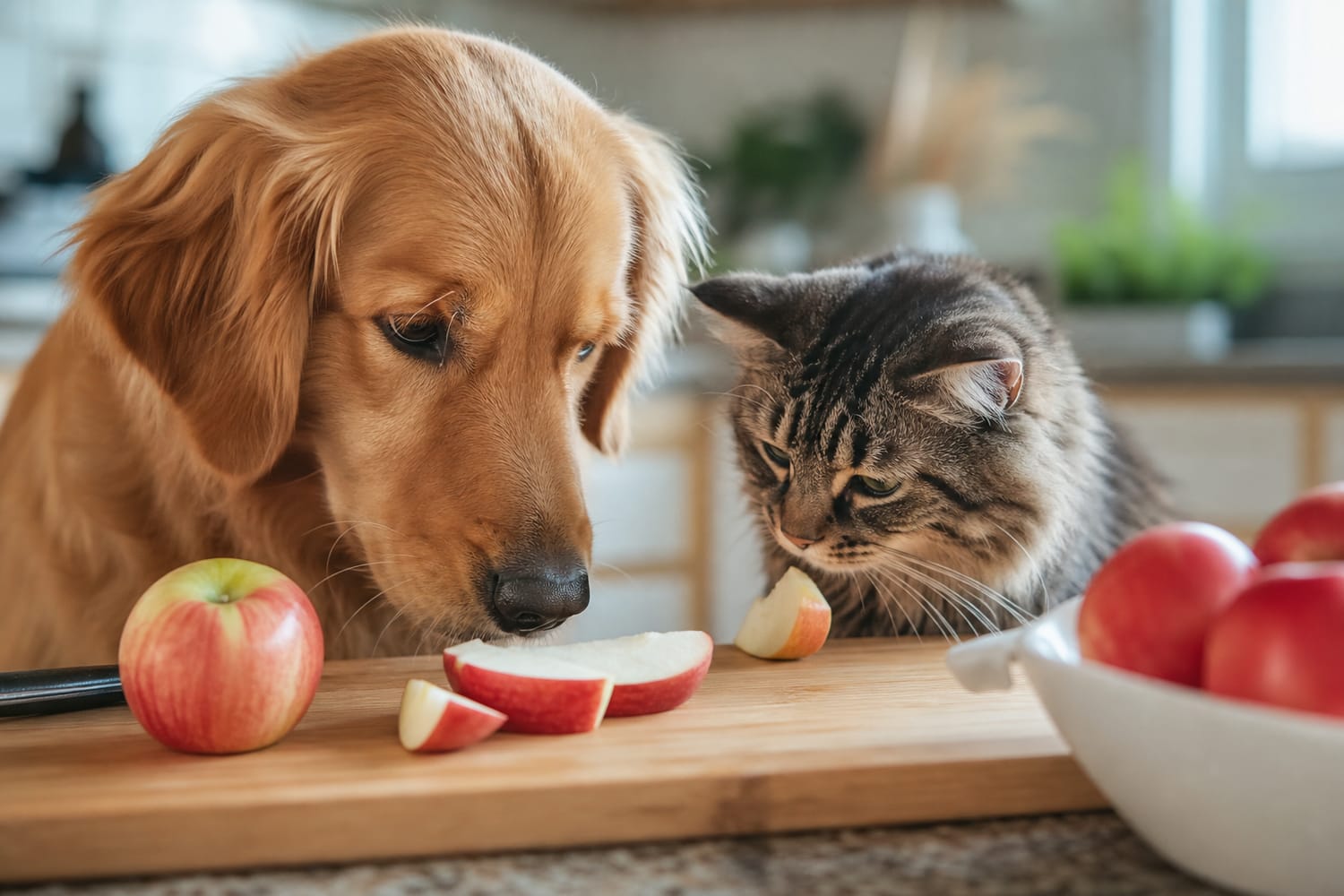
A Crisp Question for Pet Lovers: Can Dogs and Cats Eat Apples?
If you’ve ever sliced into a crunchy apple and felt a hopeful nose nudge your knee—or noticed a curious cat sniffing the fruit bowl—you may have wondered: can dogs and cats eat apples?
The short answer is yes, many dogs and cats can safely eat small amounts of apple, as long as it’s prepared properly. Apples are non-toxic to both dogs and cats, and they can be a refreshing, low-fat treat. However, like many human foods, apples come with a few important rules: remove the seeds and core, serve in small portions, and skip sweetened apple products.
For dogs, apples are often a fun, crunchy snack. For cats, apples are usually more of a curiosity than a craving—because cats are obligate carnivores, they don’t need fruit in their diet. Still, a tiny piece of plain apple is generally safe if your cat shows interest.
As pet lovers, we know treats are about more than nutrition. They’re part of bonding, training, celebrating, and sharing little moments of joy. So let’s explore how apples can fit safely into your pet’s world.
Are Apples Good for Dogs?
Apples can be a healthy occasional treat for dogs when served correctly. They’re naturally sweet, crisp, and full of water, making them especially enjoyable for dogs who love crunchy textures.
Apples contain:
- Fiber, which can support healthy digestion
- Vitamin C, an antioxidant that supports overall wellness
- Vitamin A, which contributes to healthy skin, coat, and immune function
- Water, helping make apples hydrating and refreshing
- Low fat content, making them lighter than many commercial treats
That said, dogs don’t need apples to be healthy if they’re already eating a complete and balanced dog food. Think of apples as a “bonus snack,” not a dietary requirement.
Some dogs adore apples. Others may sniff once and walk away dramatically, as if you offered them a salad at a birthday party. Both reactions are completely normal. Every dog has unique tastes, and that’s part of what makes sharing life with them so fun.
Are Apples Good for Cats?
Cats can eat small amounts of apple, but the bigger question is whether they want to. Many cats are not very interested in fruit, and that makes sense: cats are obligate carnivores, meaning their bodies are designed to get nutrients primarily from animal-based proteins.
Unlike dogs, cats also have limited ability to taste sweetness. So while an apple may taste bright and sugary to us, your cat may find it… mildly confusing.
Still, if your cat nibbles a small piece of peeled or unpeeled apple flesh, it’s usually not a problem. The apple flesh itself is not toxic to cats. However, cats have smaller mouths and more sensitive digestive systems than many dogs, so portion size matters even more.
For cats, apples should be:
- Plain
- Fresh
- Seedless
- Core-free
- Cut into very tiny pieces
- Offered rarely, not regularly
If your cat prefers a bit of cooked chicken or a cat-specific treat, that’s perfectly fine. Apples are optional, not essential.
The Risks: Seeds, Cores, Sugar, and Stomach Upset
While apple flesh is safe for many pets, not every part of the apple is pet-friendly.
The biggest concerns are the seeds and core. Apple seeds contain compounds called cyanogenic glycosides, which can release cyanide when chewed and digested. A pet would usually need to eat a significant amount of crushed seeds to be seriously poisoned, but it’s still safest to avoid them entirely. There’s no benefit to letting pets eat apple seeds.
The apple core is also risky because it can be tough, fibrous, and awkwardly shaped. For dogs, especially enthusiastic gulpers, it can be a choking hazard or cause digestive blockage. For cats, the core is simply too large and difficult to chew safely.
Other risks include:
- Too much sugar: Apples contain natural sugar. This is fine in small amounts, but not ideal in large servings.
- Digestive upset: Too much apple may cause gas, loose stool, or vomiting.
- Choking: Large chunks can be dangerous, especially for small dogs and cats.
- Dental concerns: Apples are not a replacement for brushing or veterinary dental care.
- Health conditions: Pets with diabetes, obesity, or sensitive digestion may need stricter treat limits.
If your pet has a medical condition, always ask your veterinarian before adding new treats—even healthy-looking ones.
How to Safely Serve Apples to Dogs
Serving apples safely is simple. A little preparation goes a long way.
Here’s the best way to offer apple to your dog:
- Wash the apple thoroughly to remove dirt, wax, or pesticide residue.
- Remove the stem, seeds, and core.
- Cut the apple into small slices or cubes based on your dog’s size.
- Start with a tiny amount to see how your dog’s stomach reacts.
- Serve plain, with no sugar, spices, caramel, or toppings.
For small dogs, one or two small pieces may be plenty. Medium and large dogs can usually have a few more pieces, but moderation is key. Treats should generally make up no more than 10% of a pet’s daily calories, and that includes all snacks—not just apples.
You can serve apples:
- Fresh and raw
- Chilled on a warm day
- Frozen in tiny pieces for a crunchy treat
- Mixed in small amounts with dog-safe foods
- Added to enrichment toys if appropriately sized
Always supervise your dog when offering new foods, especially if your pup tends to swallow first and think later.
How to Safely Serve Apples to Cats
Cats are smaller and usually less enthusiastic about fruit, so apple servings should be extra modest.
To serve apple to a cat:
- Wash the apple well.
- Remove all seeds, stem, and core.
- Cut a very small piece of apple flesh.
- Dice it into tiny bits.
- Offer just a nibble and watch for any reaction.
Some cats may lick the apple. Some may bat it across the floor. Some may look offended that it isn’t tuna. All acceptable outcomes.
If your cat does eat apple, don’t offer more than a tiny amount. A small bite once in a while is enough. Cats need protein-rich diets, and too much fruit can crowd out the nutrition they actually require.
Apple Products Pets Should Avoid
Plain fresh apple is one thing. Apple-flavored human foods are another story.
Avoid giving dogs or cats:
- Apple pie
- Apple crumble
- Candied apples
- Caramel apples
- Apple pastries
- Sweetened applesauce
- Apple juice
- Apple snacks with added sugar
- Products containing xylitol
Xylitol, also called birch sugar, is extremely dangerous for dogs and can cause life-threatening drops in blood sugar and liver damage. It is less clearly documented in cats, but it should still be avoided completely. Always check ingredient labels on “sugar-free” products.
Apple pie and desserts may also contain butter, nutmeg, cinnamon, large amounts of sugar, or other ingredients that can upset your pet’s stomach. While cinnamon in tiny amounts is not usually toxic to dogs, sugary spiced desserts are not appropriate pet treats.
Plain, unsweetened applesauce may be safe for some dogs in small amounts, but it should contain no added sugar, xylitol, or spices. For cats, it’s usually unnecessary and may not be appealing.
How Much Apple Is Too Much?
When it comes to apples, the golden rule is: small portions, occasional treat.
A few general serving ideas:
- Small dogs: 1–2 small pieces
- Medium dogs: 2–4 small slices
- Large dogs: A few slices, depending on size and calorie needs
- Cats: A tiny nibble or a few very small cubes
These are not strict medical serving sizes, but they’re helpful starting points. Your pet’s ideal amount depends on size, weight, activity level, health conditions, and overall diet.
If your dog eats half an apple once, they may simply have some stomach upset. But regularly feeding large amounts of fruit can add unnecessary sugar and calories. For pets prone to weight gain, even healthy treats can become too much.
Signs that apple may not agree with your pet include:
- Vomiting
- Diarrhea
- Gas
- Loss of appetite
- Drooling
- Abdominal discomfort
- Unusual tiredness
If symptoms are severe, persistent, or your pet ate a large amount of seeds/core, contact your veterinarian or a pet poison helpline.
Fun Ways to Share Apples With Your Dog
Apples can be more than a snack—they can become part of enrichment and play.
Try these dog-friendly ideas:
- Apple training bits: Cut apple into pea-sized pieces for quick rewards.
- Frozen apple cubes: Freeze tiny apple chunks in water for a summer treat.
- Apple and carrot mix: Combine small pieces of apple and carrot for crunch-loving pups.
- Stuffed toy surprise: Add a few small apple pieces to a food puzzle or enrichment toy.
- Apple “confetti”: Sprinkle a few tiny bits over regular dog food for variety.
Remember: keep pieces small, avoid seeds and core, and don’t overdo it.
For cats, enrichment usually works better with cat-safe toys, puzzle feeders, or protein-based treats. But if your cat likes batting a tiny apple cube around before tasting it, consider it a quirky little moment of feline joy.
When to Ask Your Veterinarian
Most healthy pets can try a small piece of apple without concern, but some animals need extra caution.
Check with your veterinarian before offering apples if your pet:
- Has diabetes
- Is overweight or on a weight-loss plan
- Has pancreatitis history
- Has inflammatory bowel disease or chronic digestive issues
- Has food allergies or sensitivities
- Is a puppy or kitten with a sensitive stomach
- Is on a prescription diet
Veterinarians can help you decide which treats fit your pet’s individual needs. This is especially important if your pet is managing a medical condition where sugar, fiber, or calories need careful control.
The Sweet Takeaway
So, can dogs and cats eat apples? Yes—small, plain pieces of apple flesh are generally safe for many dogs and cats. Dogs are more likely to enjoy them, while cats may be indifferent. Either way, apples should be served thoughtfully.
The key safety steps are simple:
- Wash the apple
- Remove seeds, stem, and core
- Cut into small pieces
- Serve plain
- Offer only in moderation
Apples can be a bright, crunchy way to share a healthy moment with your pet. Whether your dog catches a chilled slice on a sunny afternoon or your cat gives one tiny sniff before returning to royal business, the experience is part of the beautiful everyday bond we share with our animals.
After all, loving pets well often comes down to small choices: safe treats, gentle care, and the joy of learning what makes each furry friend feel happy, healthy, and cherished.