
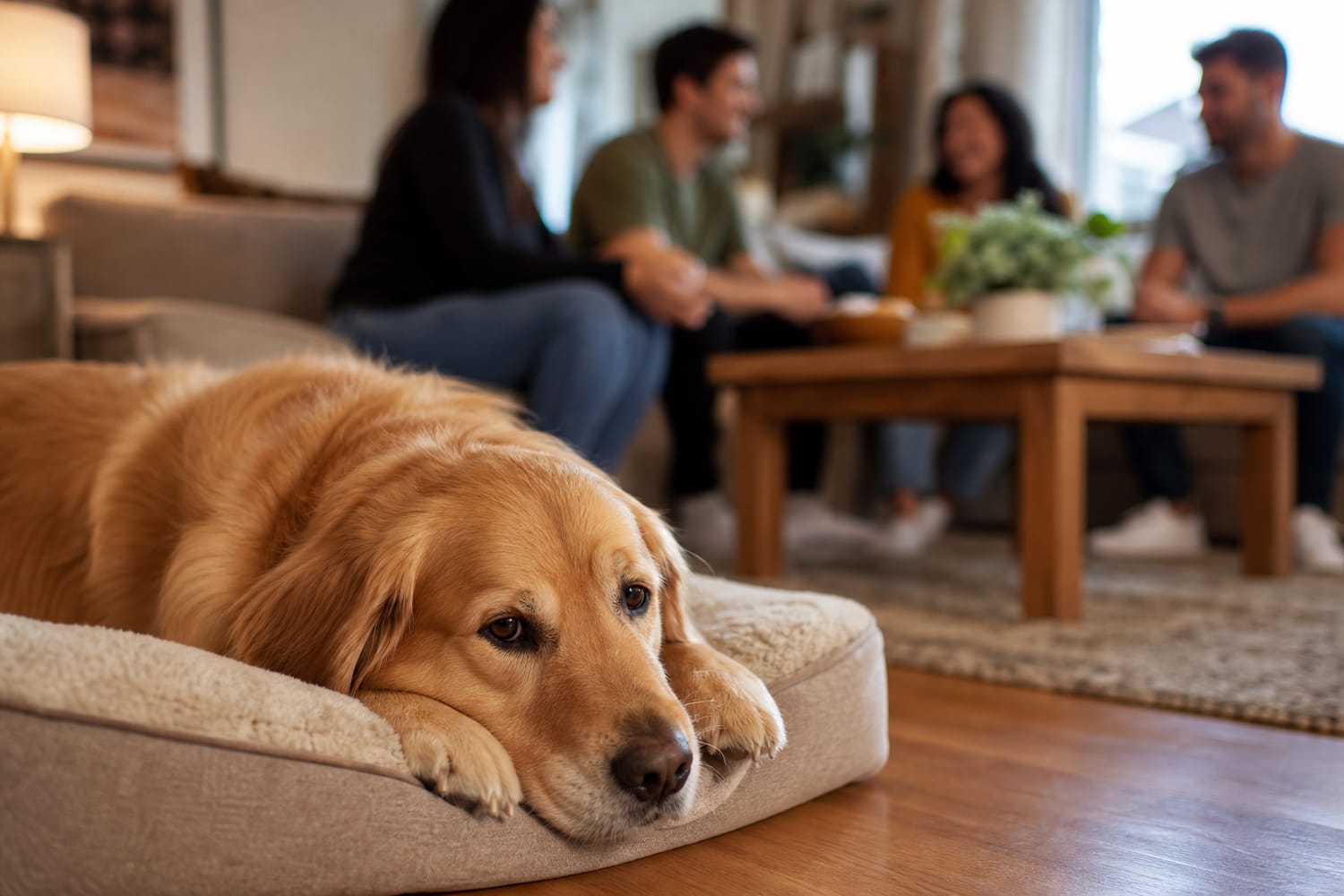
A Warm Welcome Starts With Your Pet’s Comfort
Pet-friendly hosting is not about making your pet greet everyone or remain in the middle of the celebration. It is about creating choices: a calm retreat, a familiar routine and carefully managed interactions. With a little preparation, you can help guests feel welcome while protecting your pet from noise, attention and unexpected hazards.
A busy home can be exciting for people but bewildering for animals. The doorbell rings, unfamiliar voices fill the rooms and tempting food appears at nose level. Even a sociable pet may need breaks from all that activity.
The best hosting plan therefore begins with one simple question: What would help my pet feel safe today?
Plan Around the Pet You Have
Every pet has a different social comfort zone. One dog may joyfully collect belly rubs from an entire birthday party, while another prefers one quiet visitor at a time. A confident cat may supervise dinner from the back of the sofa; a shy cat may disappear before the first coat comes off.
Age, health, past experiences and temperament all matter. Senior pets may tire quickly, young animals may become overexcited and pets experiencing pain can be less tolerant of touch. If your companion has recently become withdrawn, fearful or irritable, consider whether the change could have a medical cause. Petspiration’s guide to signs that a pet may be in pain can help you recognize changes worth discussing with a veterinarian.
Before hosting, decide which approach suits your pet:
- Social participation: Your relaxed pet can mingle under supervision.
- Short introductions: Your pet meets guests briefly, then takes a break.
- Partial separation: Your pet stays in a quiet area during arrivals, meals or lively activities.
- Full separation: Your pet remains comfortably away from visitors throughout the gathering.
Full separation is not a failure. For some pets, it is the kindest and safest option.
Create a Retreat Before Anyone Arrives
Every pet should have access to an undisturbed retreat. The ASPCA’s guidance for hosting guests recommends providing a safe space with essentials such as water and suitable enrichment, while ensuring that visitors—especially children—leave the animal alone there.
Prepare this area well before the event so it already feels familiar. Depending on your pet, it might include:
- A comfortable bed, blanket, open crate or hiding box
- Fresh water and, for cats, an accessible litter box
- A favorite toy, chew or appropriate food puzzle
- Soft background sound to reduce sudden noise
- Curtains or blinds that can be closed if outdoor activity is stimulating
- A perch or elevated resting place for a cat
- A secure enclosure for rabbits, guinea pigs, birds or other small pets
Place the retreat away from the front door, kitchen and main social area. Avoid introducing an unfamiliar crate or closing your pet in a new room for the first time on the day of the gathering. Build positive associations beforehand with treats, rest and calm activities.
You can also find practical ideas in Petspiration’s guide to designing a comfortable, pet-friendly home.
Most importantly, make the retreat a no-visitor zone. No reaching into crates, pulling cats from beneath furniture or sending children in to “say hello.” When a pet withdraws, listen.
Keep the Familiar Parts of the Day Familiar
Pets often find predictability reassuring. Hosting may change your schedule, but it does not have to overturn your pet’s entire day.
Feed meals at the usual time when possible. Give dogs an appropriate walk and bathroom break before guests arrive, and offer cats or other playful pets a gentle activity session. The goal is to meet normal physical and mental needs—not to exhaust the animal.
Prepare enrichment in advance so you are not searching for toys while answering the door. Depending on the species and individual pet, useful options may include a stuffed food toy, snuffle mat, chew, cardboard hiding box, scratching surface or scatter-feeding activity.
If your pet follows a special diet, subtract enrichment treats from the day’s normal food allowance where appropriate. Keep routines calm rather than turning pre-party exercise into another overstimulating event.
Make Arrivals Boring—in the Best Possible Way
The doorway is often the most chaotic part of hosting. Guests enter carrying bags, coats swing overhead and excited greetings happen in a confined space. There is also a risk that a pet could slip through an open door.
Before the first arrival:
- Secure your pet behind a closed door, gate or other suitable barrier.
- Place a note near the entrance reminding guests to close doors and gates.
- Ask visitors to text rather than knock or ring if those sounds upset your pet.
- Let guests settle before considering an introduction.
- Keep identification details and microchip contact information current in case of an escape.
If you introduce a dog, keep the atmosphere quiet and controlled. Ask guests to avoid crowding, staring, leaning over or immediately touching the dog. Allow the dog to choose whether to approach. A guest can calmly toss an owner-approved treat away from their body, giving the dog space rather than using food to lure the animal into unwanted contact.
Cats should also control the pace. A cat who watches from a staircase or doorway is gathering information and does not need to be picked up and presented.
Give Guests a Simple Pet Etiquette Script
Guests usually want to do the right thing; they may simply need clear guidance. Send a friendly message before the visit or explain the rules when they arrive:
“We’re excited to see you! Please let Luna approach you first, and don’t feed her anything unless you check with us. Her bed in the study is her quiet space, so we leave her alone when she goes there.”
Your house rules might include:
- Let the pet initiate contact.
- Do not hug, chase, lift or corner the pet.
- Avoid disturbing an animal that is sleeping, eating or hiding.
- Ask before offering treats.
- Keep bedroom, yard and exterior doors closed.
- Store bags, medications and snacks out of reach.
- Supervise every interaction between young children and pets.
Petspiration’s advice on raising pets safely alongside children offers an important reminder: children should learn to use gentle touch and respect an animal’s personal space.
Pet-Proof the Party
Visitors can unintentionally bring hazards into a pet-friendly home. Handbags may contain medication or gum, suitcases can hold snacks and bouquets may include plants that are unsafe for animals.
Set up a secure place for coats and bags. Clear plates promptly, use covered trash cans and ask guests not to leave food on low tables. Be especially cautious with alcohol, chocolate, grapes and raisins, onions, xylitol-sweetened products, cooked bones and rich leftovers. Some plants can also be dangerous; lilies are particularly hazardous to cats.
Avoid assuming that “just a little” is harmless. Your guests may not know your pet’s medical history, dietary restrictions or what other people have already offered. One designated person should control all treats.
For birds and small mammals, consider air quality as well as food safety. Keep them away from cooking fumes, smoke, aerosols, candles and loud speakers. Do not allow unsupervised handling, even when a visitor has experience with animals.
Learn to Recognize “I Need a Break”
Do not wait for barking, swatting or snapping before intervening. Watch for smaller changes in behavior.
A worried dog may pant when it is not hot, lick its lips, pace, hide, cower, freeze or repeatedly move away. The RSPCA notes that regular signs such as excessive panting, lip licking, hiding, cowering or aggression can indicate distress or another underlying problem.
A stressed cat may crouch, flatten or rotate the ears, flick the tail, widen the pupils, hide or avoid interaction. Cats benefit from constant access to safe hiding places where they can escape when afraid.
Other pets communicate discomfort too. A rabbit may become unusually still or hide, while a bird may retreat, attempt to escape or show defensive behavior. Learn what “normal and relaxed” looks like for your individual companion.
At the first signs of discomfort, calmly increase distance or guide your pet to the prepared retreat. Never punish growling, hissing or other warnings. Those signals provide valuable information that your pet needs space.
Know When Professional Support Is Needed
If your pet has a history of biting, lunging, intense fear or escape attempts, casual introductions are not appropriate. Use secure separation and speak with your veterinarian. The veterinarian can check for medical contributors and, when necessary, refer you to a qualified behavior professional who uses humane, reward-based methods.
Medication or calming products should only be used according to veterinary guidance. Do not try a new supplement, sedative or management tool for the first time immediately before a major gathering.
In some households, the best arrangement may be a trusted pet sitter, a quiet stay with a familiar relative or veterinary-approved boarding. Choose the option based on the pet’s welfare, not on the expectation that every animal should enjoy company.
End the Evening With a Gentle Reset
Once guests leave, check doors and gates before releasing a separated pet. Offer a bathroom break, refresh water and restore the normal household rhythm.
Some pets will want affection; others will prefer to sleep. Let your companion choose. The following day, watch for lingering changes in appetite, toileting, activity or behavior, particularly after a long or noisy event.
Thoughtful hosting is an act of kindness in two directions. Your guests receive a warm welcome, while your pet receives something equally valuable: protection, patience and permission to be themselves. When comfort matters more than performance, your home can remain both wonderfully social and genuinely pet-friendly.