
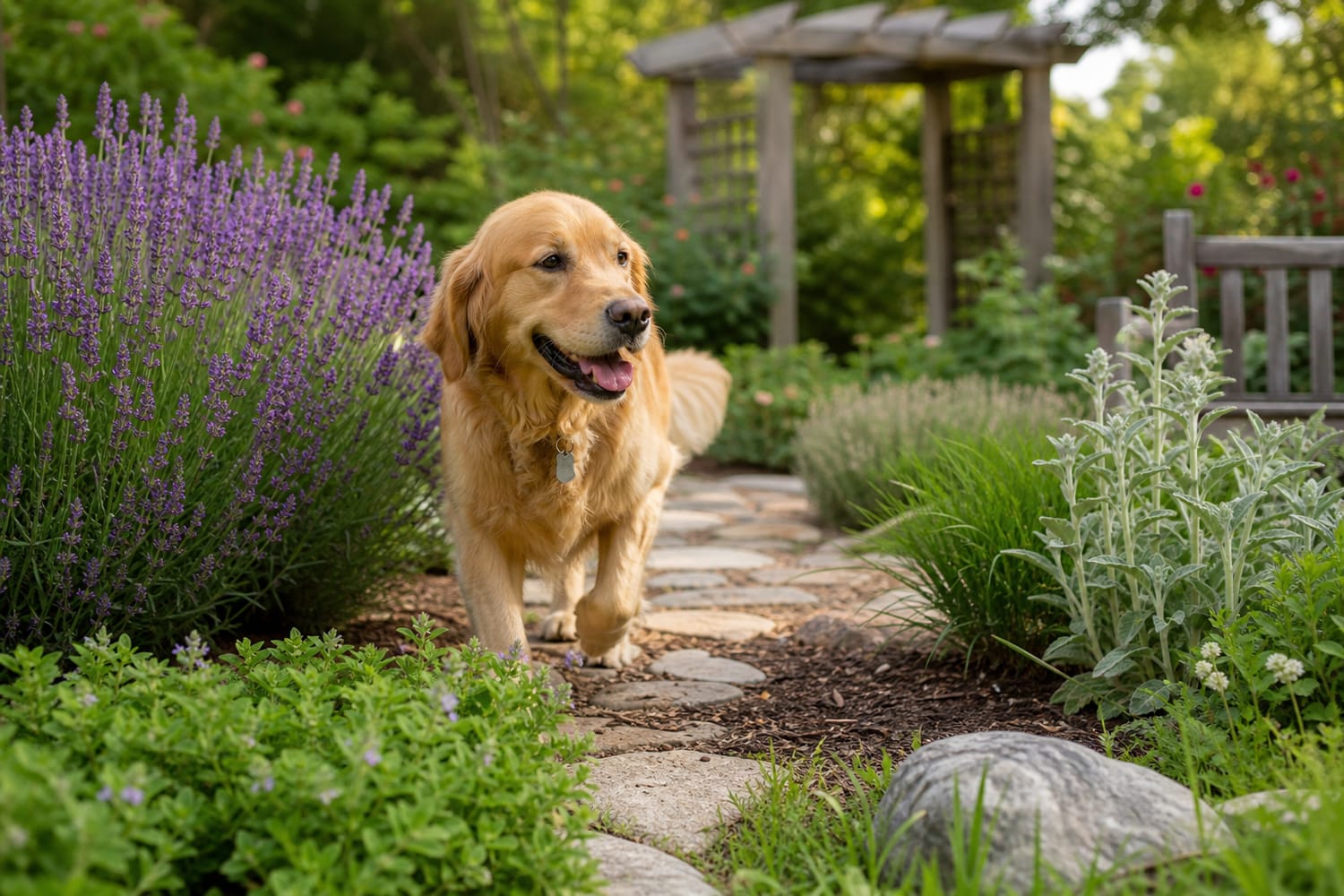
A Garden Designed for Curious Paws
A pet-safe sensory garden is an outdoor space that encourages animals to sniff, listen, look, move, and explore at their own pace. By combining non-toxic plants, varied surfaces, secure pathways, shade, water, and peaceful resting places, you can turn anything from a balcony to a backyard into an enriching retreat.
Sensory gardens can be especially engaging for dogs, whose powerful noses help them gather information about their surroundings. They may also offer gentle stimulation for senior pets and help cautious animals investigate new experiences without being hurried. The goal is not to create an obstacle course your pet must complete, but a safe place where they can choose their own adventure.
The ASPCA’s sensory garden for fearful dogs demonstrates how sniffing, movement, and safe new experiences can support confidence-building and enrichment. A thoughtfully planned home garden can offer many of the same opportunities on a smaller scale.
Begin With Safety, Security, and Comfort
Before choosing flowers or building pathways, inspect the garden from your pet’s perspective. Look for gaps beneath fences, sharp wire, unstable pots, exposed nails, thorny plants, deep water, and objects small enough to swallow. Gates should close securely, and climbing or digging pets may require additional barriers.
Remember that different animals need different arrangements. Dogs may enjoy a securely fenced yard, while cats are usually safest in an enclosed catio or garden area that prevents roaming. Rabbits and guinea pigs need predator-proof exercise runs with shelter, ventilation, and protection from digging out. They should never be allowed to sample unidentified garden plants.
Every sensory garden should include:
- A reliable source of fresh drinking water
- Shade throughout the hottest part of the day
- A dry, sheltered resting area
- Secure boundaries appropriate for the pet
- Clear paths without sharp edges or trip hazards
- An easy route back indoors or into a protected enclosure
Materials can become dangerously hot in direct sunlight. Test artificial turf, decking, concrete, and paving with the back of your hand before allowing your pet onto them. If a surface feels uncomfortably hot to you, choose a cooler time of day.
Choose Pet-Safe Plants Carefully
Plants bring scent, movement, color, and seasonal change into a sensory garden, but “natural” does not automatically mean harmless. Plant safety varies by species, and common names can refer to several different plants. Check both the common and scientific name before buying anything.
The ASPCA’s searchable toxic and non-toxic plant database is a valuable starting point for homes with dogs, cats, or horses. Rosemary and certain sunflowers, for example, are listed as non-toxic to dogs and cats. However, even a non-toxic plant can cause stomach upset if an animal eats too much of it.
Fragrant plants can create fascinating sniffing stations. Depending on your pet species and the exact plant variety, possible choices may include:
- Rosemary, with its strong, woody aroma
- Basil, offering soft leaves and a distinctive scent
- Sunflowers, which add height, movement, and visual interest
- Pet grass grown specifically for the intended species
- Species-appropriate edible herbs, selected with veterinary guidance for rabbits or guinea pigs
Place delicate plants in raised pots or behind low barriers if your pet is likely to trample or chew them. Avoid planting anything at eye level that has thorns, stiff spikes, or sharp seed heads.
Do not assume that a plant is safe because it is described as an herb, edible plant, or wildlife-friendly flower. Daffodils, tulips, foxgloves, lilies, and lily of the valley are among the familiar garden plants that may pose serious risks to pets. True lilies are particularly dangerous to cats, including exposure to small amounts of plant material or pollen.
Create a Landscape of Interesting Textures
A sensory garden becomes more engaging when it includes surfaces that feel different beneath paws. Instead of covering the entire space with one material, create small texture zones connected by a comfortable main path.
Suitable options may include:
- Closely cut grass
- A patch of longer, pet-safe grass for supervised sniffing
- Smooth, securely fitted paving
- Untreated wooden platforms
- Pet-safe sand or clean soil in a digging area
- Non-slip outdoor mats
- Large, stable logs with smooth, splinter-free surfaces
- Shallow trays containing pet-safe leaves or paper for supervised investigation
Avoid sharp gravel, loose stones that could be swallowed, splintering wood, rusty metal, and landscaping materials treated with preservatives. Cocoa mulch should not be used around dogs because it may contain theobromine, the same compound that makes chocolate dangerous to them.
A digging zone can be a wonderful addition for dogs that naturally love to excavate. Use a sturdy sandbox or a clearly defined patch of clean soil, then hide a durable toy just beneath the surface. Reward your dog for digging there rather than punishing them for visiting flower beds. Petspiration’s guide to the magic of positive reinforcement explains how rewarding desired choices can make them more likely to happen again.
Add Paths, Platforms, and Places to Pause
A good sensory garden has more than things to smell—it has spaces that invite different kinds of movement. A looping path encourages wandering without leading to a dead end, while gentle curves reveal the garden gradually.
Low platforms can give confident dogs a new view, but they should be broad, stable, and low enough to step onto safely. Senior pets and animals with joint or vision difficulties may need ramps with raised edges instead of steps. Never pressure an uncertain animal to climb; exploration should remain voluntary.
You can also create distinct garden “rooms”:
The Sniffing Trail
Position fragrant plants, untreated logs, and rotating scent objects along a simple path. Let your pet stop as often as they wish. For dogs, sniffing is an important part of experiencing the environment, so there is no need to rush them.
The Quiet Retreat
Set aside a shaded corner with comfortable outdoor bedding or a raised cot. Surround it with visual screening, such as safe plants or a secure panel, while keeping the entrance open. This gives your pet somewhere to rest away from busy play.
The Lookout
Some dogs and enclosed cats enjoy observing birds, people, or garden activity from a safe platform. Position the lookout far enough from fences that it cannot be used as an escape route.
The Exploration Zone
Use tunnels, wide hoops, low poles, or open-ended boxes to create changing routes. All equipment should be stable, appropriately sized, and free of strings or openings that could trap a head, paw, or collar.
Bring in Gentle Sounds and Movement
A sensory garden can engage hearing and vision without becoming noisy or overwhelming. Rustling grasses, fluttering leaves, and moving shadows provide natural interest. A shallow fountain may add a soft sound, provided its water is clean and the feature cannot tip over or trap a small animal.
Avoid sudden mechanical noises and loud wind chimes near resting areas. Pets with anxiety or noise sensitivities may prefer a simple arrangement of leaves, grasses, and distant natural sounds.
Wildlife can add movement, but attracting bees and butterflies requires careful planning. Keep heavily visited flowering plants away from narrow paths, food bowls, and resting spaces. Pets that chase or snap at insects should be closely supervised, as stings around the mouth or face may require urgent veterinary attention.
Avoid Hidden Garden Hazards
A sensory garden should be as safe below the leaves as it is above them. Fertilizers, pesticides, herbicides, rodenticides, and slug products can present risks through direct ingestion, residue, or contaminated paws that are later licked.
Store all garden products in locked containers beyond your pet’s reach. If treatment is unavoidable, follow the manufacturer’s directions precisely and keep animals away for the full recommended period. The Blue Cross guide to pet-friendly gardens also recommends securing ponds, avoiding hazardous chemicals, and checking outdoor spaces for escape routes.
Other hazards to remove or manage include:
- Compost containing moldy food or pet-toxic ingredients
- Mushrooms and unidentified fungi
- Standing water where algae or mosquitoes can develop
- Exposed gardening tools
- Small plant labels or broken pot fragments
- Snail and slug trails on toys or bowls
- Toxic bulbs uncovered by digging
- Treated wood, peeling paint, and loose wire
After gardening, collect clippings and spilled products before your pet returns. Check the space after storms as well, because damaged fencing and fallen branches can create new dangers overnight.
Make the Garden Personal
The most successful sensory garden reflects the animal who uses it. A scent-loving dog may spend most of the visit following a winding herb path. A sun-seeking cat in a secure catio may prefer a warm shelf beside a shaded hideaway. A rabbit may be happiest with tunnels, digging material, and veterinarian-approved forage.
Observe what your pet chooses rather than what you expect them to enjoy. Signs of comfortable engagement may include relaxed sniffing, loose body movement, voluntary investigation, play, or settling down peacefully. Repeated attempts to leave, freezing, hiding, frantic movement, or excessive panting may mean the environment is too warm, busy, or intense.
Introduce the garden slowly and supervise early visits. You can scatter a few treats for a dog to find, place a familiar blanket in the resting zone, or simply sit quietly while your pet investigates. For more inspiration beyond the backyard, explore Petspiration’s pet bucket list of memorable dog experiences.
Let the Garden Grow With Your Pet
A pet-safe sensory garden does not need to be large, expensive, or finished in a weekend. Begin with one secure pathway, a shaded bed, fresh water, and a few carefully verified plants. Over time, add textures and features based on what genuinely delights your companion.
As seasons change and pets grow older, the garden can change with them. Lower a platform, widen a path, move a water bowl closer to the resting area, or replace energetic activities with gentle sniffing stations. The result will be more than an attractive outdoor space—it will be a living landscape built around curiosity, comfort, and the joyful bond you share.