
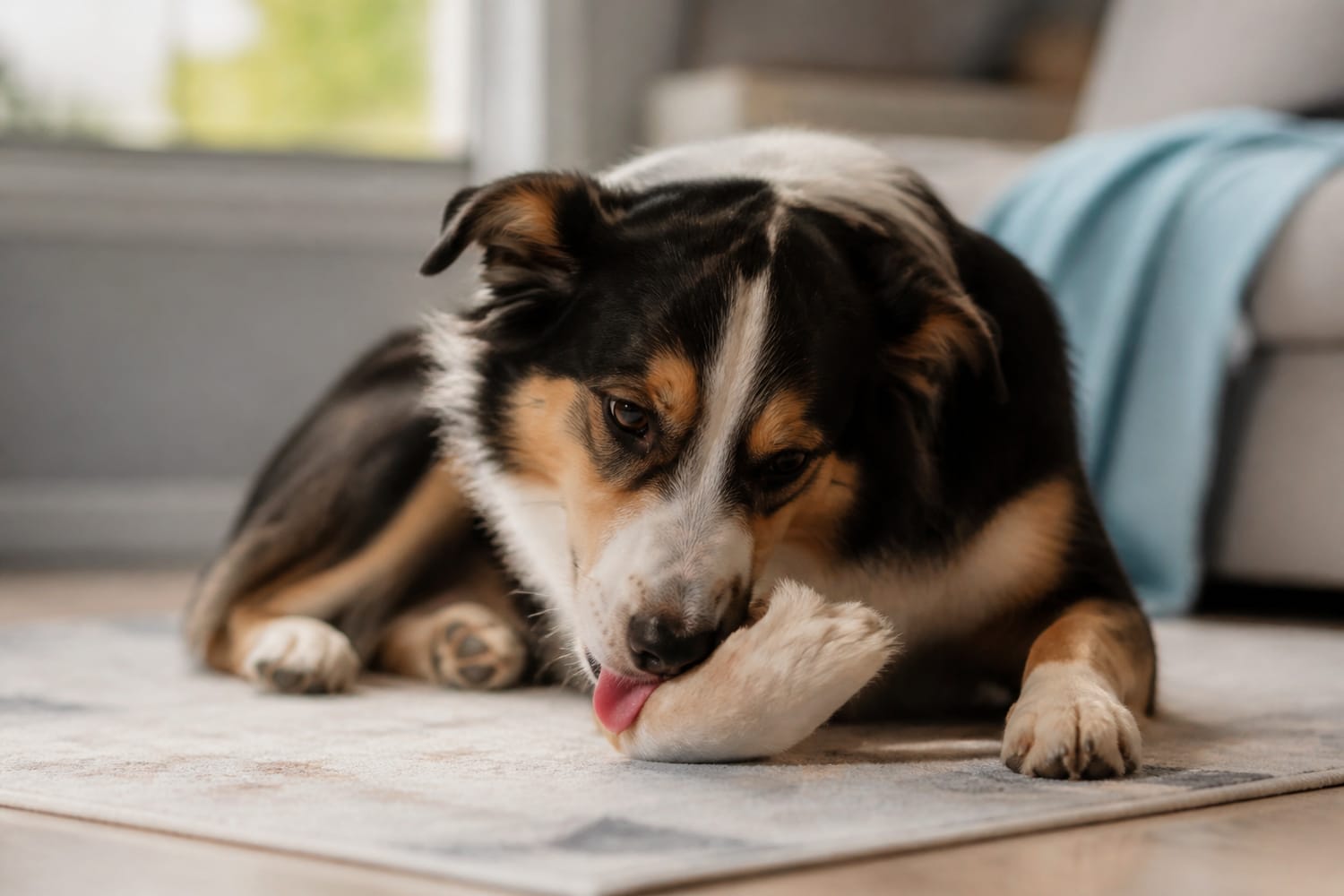
Occasional paw licking is normal grooming, but frequent or intense licking can signal allergies, an injury, infection, parasites, or pain. Stress can also play a role. If your dog keeps returning to their paws, develops skin changes, or seems uncomfortable, contact your veterinarian rather than assuming it’s simply a habit.
For pet lovers, that rhythmic slurp, slurp can become a familiar evening soundtrack. The important question isn’t whether your dog ever licks their feet—it’s whether something has changed.
Let’s explore what those busy tongues might be telling you and how to help your companion feel comfortable again.
Normal Grooming or a Sign of Trouble?
A brief cleanup after a muddy walk is different from repeatedly chewing the same toes or licking throughout the evening. There isn’t one universal “safe” number of licks. Instead, pay attention to frequency, intensity, and changes from your dog’s usual behavior. Excessive licking, sores, or accompanying behavior changes warrant veterinary attention.
During a gentle inspection, look for:
- Redness or swelling.
- Missing fur or damp, irritated skin.
- Crusts, discharge, or an unusual smell.
- Broken nails, cuts, or something caught between the toes.
- Limping or reluctance to let you touch a foot.
These clues help distinguish a grooming session from an uncomfortable paw problem, although they can’t identify the cause by themselves.
Common Reasons Dogs Lick Their Paws
Allergies: An Itch They Can’t Scratch
Environmental allergies can affect a dog’s feet, ears, face, and belly. Triggers may include pollen or other environmental allergens, and symptoms can be seasonal or continue year-round. Paw licking alongside recurring ear problems or itching elsewhere makes allergies worth discussing with your veterinarian.
Food allergies can also cause itchy paws, but licking alone doesn’t prove dinner is the culprit. Environmental allergies are more common than food allergies, and diagnosis requires more than switching bags of kibble. A veterinarian-supervised elimination diet, followed by a controlled food challenge, may be necessary.
For a broader look at related symptoms, explore Petspiration’s guide to subtle signs your pet might have allergies.
Injuries, Irritants, and Unwelcome Hitchhikers
Sudden attention to one foot deserves a careful look. A torn nail, small cut, thorn, or pebble can make an otherwise ordinary walk end with persistent licking. Hot pavement and deicing products can also irritate or injure paws. The American Kennel Club’s veterinarian-written explanation of paw licking highlights these everyday possibilities.
Grass awns, including foxtails, can embed in the skin between toes and cause discomfort and infection. A swollen spot or draining opening needs veterinary attention; what looks small at the surface may require more investigation.
Bacteria, Yeast, and Parasites
Bacterial and yeast infections can make paws itchy, sore, swollen, or unusually smelly. They may develop alongside another problem, such as allergies, rather than being the original trigger. Fleas, ticks, and mites are other possible contributors, and treatment depends on identifying what’s actually present.
Painful bumps between the toes can also prompt licking and limping. Often called interdigital cysts or furuncles, these lesions need a veterinary assessment rather than squeezing or home treatment.
Pain Beyond the Skin
Sometimes the problem isn’t primarily an itch. Arthritis and other painful conditions affecting a foot or leg can cause licking, even when there’s no obvious cut. Changes such as limping, reluctance to walk, or altered sleep and appetite provide useful clues.
Our guide to signs your pet may be in pain can help you notice other changes to mention at the appointment.
Stress, Boredom, or Repetitive Behavior
Some dogs lick to soothe themselves when anxious or under-stimulated. However, medical causes should be investigated before labeling the behavior “just anxiety”—even a dog showing stress signals can also have painful or itchy feet.
If separation-related distress is a concern, Petspiration’s guide to helping dogs with separation anxiety offers additional context to discuss with your veterinary team.
Why Constant Licking Can Make Things Worse
Licking may begin as a response to discomfort, then help keep the problem going. Repeated licking and persistent moisture can encourage secondary bacterial or yeast infections, creating more itching and further licking. Treating the original trigger and protecting damaged skin are both important.
Veterinary charity PDSA explains why preventing licking is part of caring for wounds and skin injuries.
What You Can Safely Do at Home
For mild licking without an obvious injury or significant discomfort, start with a calm check:
- Look gently. Examine the nails, pads, tops of the feet, and between the toes. Stop if handling hurts.
- Remove ordinary surface dirt. Gently rinse dirty paws with water after a walk, then towel them dry.
- Avoid digging. Don’t probe swollen skin or attempt to extract an embedded object.
- Prevent further damage. Ask your vet whether a properly fitted recovery collar is appropriate if licking is making the skin sore.
Resist experimenting with leftover prescriptions or medicated products. Different causes need different treatments; a product aimed at yeast won’t remove a foreign body or address joint pain. Your veterinarian can recommend appropriate products after assessing the problem.
If medical issues have been addressed, enrichment can support your dog’s wellbeing. Supervised food puzzles, suitable sniffing activities, and gentle play provide opportunities to use natural behaviors. Choose activities that don’t put pressure on a sore foot.
When Should You Call the Vet?
Arrange an appointment for persistent, recurring, or intense licking, even if the paw looks fairly normal. Contact your vet promptly if you notice redness, hair loss, odor, discharge, swelling, a new lump, or limping. Don’t wait for the skin to become raw before asking for help.
Seek same-day advice if your dog cannot comfortably bear weight, appears significantly painful, or has an obvious paw or nail injury. These signs need assessment rather than an extended trial of home care.
Seek urgent veterinary care for heavy or uncontrolled bleeding, a deep wound, an embedded object, or a suspected burn. Apply firm pressure with clean material to a heavily bleeding wound while arranging help; don’t pull out an embedded object.
What Happens at the Appointment?
Your veterinarian will examine your dog and ask about timing, diet, parasite prevention, environmental changes, and previous treatments. Depending on the findings, they may recommend skin samples, parasite testing, cultures, imaging, or a biopsy. Not every dog needs every test.
You may hear the term pododermatitis, which simply means inflammation of the paws—not a single diagnosis. Treatment must address its cause, whether that involves managing allergies, treating an infection, removing foreign material, or another approach.
Happier Paws Start With Paying Attention
Some paw problems resolve with targeted treatment; others, particularly allergic skin disease, need ongoing management and occasional adjustments. Follow-up appointments help your veterinary team check progress and refine the plan.
You don’t have to solve the mystery alone. Noticing a change, checking gently, and asking for help are meaningful acts of care. Those paws carry your dog through a world of adventures—and a little attention can help keep the next chapter comfortable.