
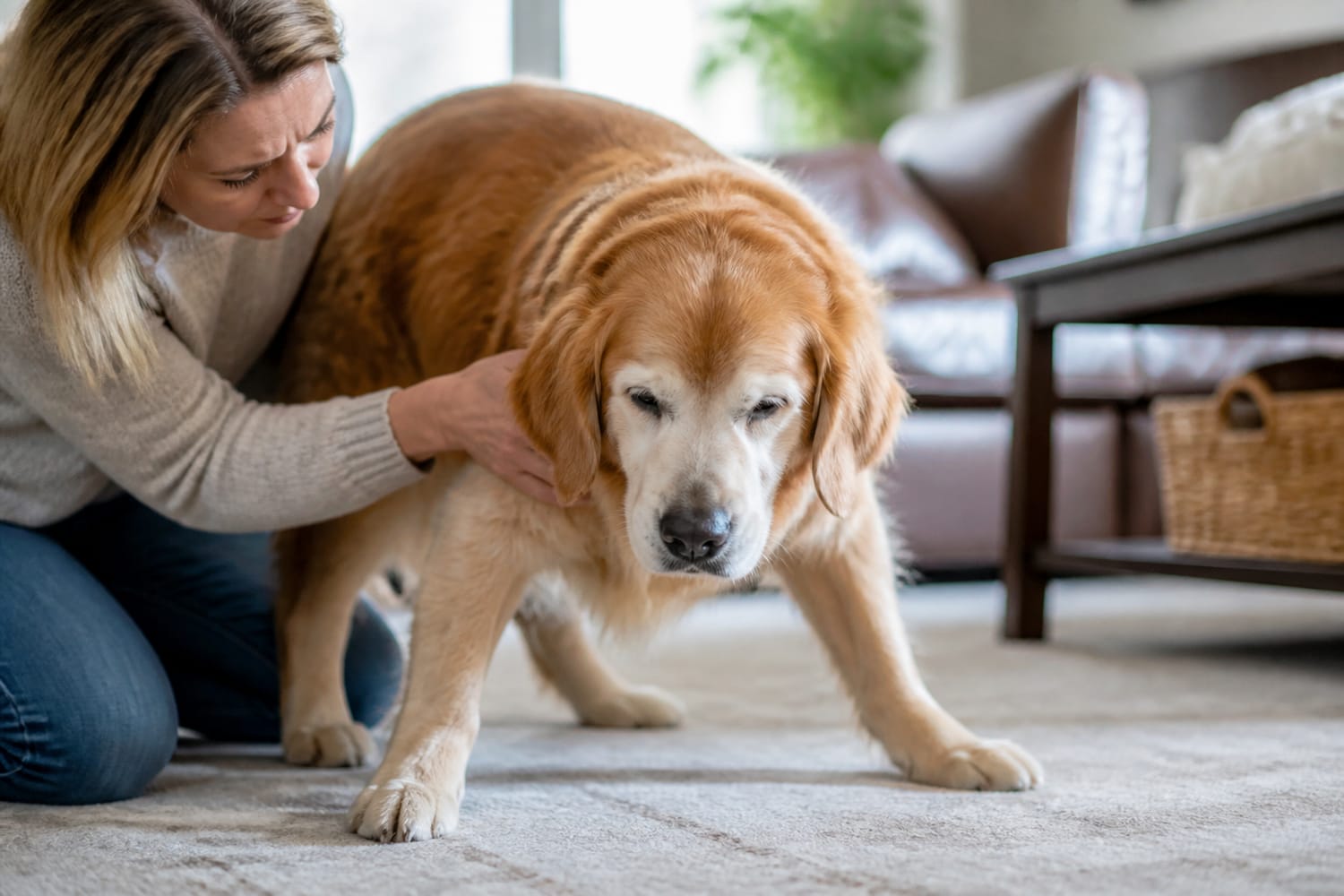
A Wobble That Deserves Your Attention
If your pet suddenly stumbles, tilts their head, or cannot stay upright, call a veterinarian promptly. Balance problems can come from the inner ear, brain, nerves, or an illness affecting the whole body. Some causes improve with treatment and supportive care; others are emergencies. The safest first step is to prevent a fall and get veterinary guidance rather than waiting to see whether the wobble passes.
It can be startling to watch a dog drift sideways on a familiar walk or see a sure-footed cat tumble while crossing the room. Take a breath. Your pet needs a calm helper, not a perfect diagnosis. Notice what you can, make their surroundings safe, and pick up the phone.
What Does “Losing Balance” Look Like?
Balance trouble is more than an awkward step. A pet might sway while standing, walk as though the floor is moving, circle repeatedly, lean to one side, or fall over. You may also notice a tilted head, eyes flicking rapidly from side to side, reluctance to move, or vomiting. These signs can appear quickly with a problem in the vestibular system, which helps the body sense its position and coordinate movement.
Not every pet who struggles to walk has a vestibular problem, though. Weakness, pain, an injured leg, or a spinal problem can change the way a pet moves. Tell your veterinarian whether your companion seems dizzy and disoriented, weak on their feet, or unwilling to put weight on a limb. You do not need to settle the distinction yourself—those observations simply help the veterinary team prepare.
Why Might It Happen Suddenly?
Inner-ear or vestibular problems are one possibility. An infection or another condition affecting the inner ear can disrupt balance. Some dogs and cats develop idiopathic vestibular syndrome: they show vestibular signs, but no specific cause is found. In dogs, this is often associated with older age. Its dramatic appearance does not mean you can safely diagnose it at home, because other conditions can look similar.
Injury or a problem involving the brain, spinal cord, or nerves can also affect coordination. A fall or other trauma may be obvious, but it is not always witnessed. Seizures may leave a pet temporarily confused or wobbly afterward, and some pets have subtle seizures that are easy to miss. If you saw shaking, a blank stare, or unusual movements before the stumbling began, tell the vet; our guide to seizures in dogs and cats can help you recognize what you observed.
Toxins, medications, and other illnesses belong on the list, too. Low blood sugar and other body-wide problems can cause unsteadiness, while exposure to certain substances can produce a wobbly gait alongside weakness, vomiting, tremors, or changes in alertness. A pet who takes medication may also need assessment for a possible drug-related effect. Do not assume that a wobble in a senior pet is “just old age,” or that a pet who ate something unusual will recover after a nap.
These possibilities call for different treatments. That is why the most useful question at home is not “Which diagnosis is it?” but “How quickly does my pet need help?”
When Should You Call the Vet?
Call your veterinarian as soon as you notice a new loss of balance, even if your pet is still able to walk. Describe when it started and whether it is getting worse. Your vet can advise whether to come in immediately or go to an emergency hospital. Cornell University’s veterinary emergency service includes loss of balance and difficulty walking among conditions that may require emergency assessment.
Go to an emergency veterinarian now—or call while you are getting ready to leave—if your pet:
- Cannot stand, repeatedly falls, or has suddenly lost the ability to walk.
- Has collapsed, is difficult to wake, is having a seizure, or seems profoundly weak.
- Is struggling to breathe or has pale, blue, or purple gums.
- Has suffered a fall, been struck by a vehicle, or may have another serious injury.
- May have swallowed a medication, household product, or other toxin.
- Is repeatedly vomiting, seems severely distressed, or is rapidly getting worse.
These signs should not wait for a routine appointment. Our broader guide to warning signs that warrant a call to the vet is useful to keep handy, but when your pet is in front of you and cannot stay upright, contact a veterinary professional directly.
If poisoning is possible, gather the package or a photo of its label if you can do so quickly. Call your veterinarian or an emergency clinic; the ASPCA’s guidance on suspected pet poisoning also explains how its Animal Poison Control Center can help. Do not wait for additional symptoms to appear.
What Can You Do While Help Is on the Way?
Keep your pet away from stairs, balconies, slippery floors, and furniture they might try to jump onto. A quiet, confined space can reduce the risk of another fall. For transport, a carrier can help protect a cat or small dog; support a larger dog gently and ask the veterinary team for advice if you are unsure how to move them safely, especially after an injury. Frightened or painful animals may bite or scratch, so take care with handling.
Note the time the signs began and any vomiting, head tilt, unusual eye movements, seizure-like activity, recent injury, new medication, or possible exposure to something toxic. Bring medication names and packaging when relevant. Do not give human medicine or leftover ear drops, and do not force food or water into a disoriented pet’s mouth. Wait for instructions tailored to your companion.
What Happens at the Veterinary Visit?
Your veterinarian will ask about the onset of symptoms and examine your pet’s movement, alertness, ears, and nervous system. Depending on what they find, they may recommend blood or urine tests, blood-pressure measurement, an ear examination, or imaging. The aim is to identify a treatable cause and check for serious problems that need prompt care—not to put every wobbly pet through every test.
Treatment depends on the diagnosis. A pet with nausea may need medication and help staying hydrated; an ear infection needs treatment directed at the infection. Some pets require hospital support until they can eat and move safely. If your veterinarian diagnoses idiopathic vestibular disease, they can explain what improvement to watch for and when to check back. Many affected dogs begin improving within days, but a pet who worsens or fails to improve needs further assessment.
A Steady Plan for an Unsteady Moment
Sudden balance loss is frightening because the pet you know so well may look unlike themselves in an instant. You do not have to solve the mystery alone. Keep them safe from falls, observe the details you can, and contact a veterinarian promptly—seeking emergency care for severe signs.
With the right assessment, many pets can receive comfort and support while their veterinary team works toward an answer. Being there for them starts with one steady, loving step: making the call.