
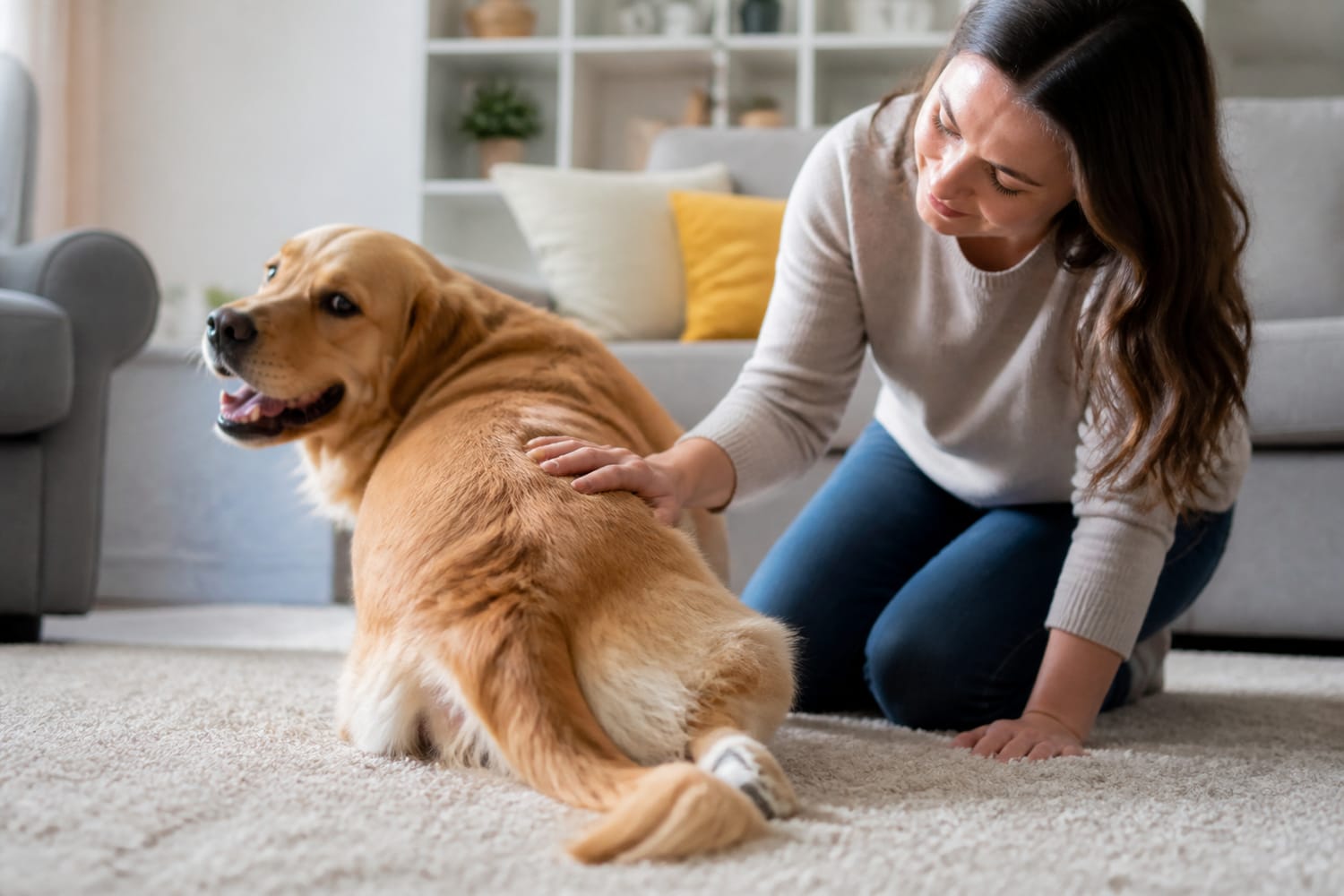
Why Is Your Dog Scooting?
A dog dragging their bottom across the rug can look funny, but scooting usually means something back there feels itchy, irritated, or painful. Anal sac trouble is a common cause; stuck-on stool, skin irritation, and tapeworms are other possibilities. One brief scoot may pass, but repeated scooting or signs of pain deserve a call to your veterinarian.
The helpful question isn’t “How do I stop the scooting?” It’s “What is my dog trying to tell me?” A gentle look and a few notes about what else has changed can help you decide what to do next—without turning your living room into an examination room.
Anal Sacs: A Common Source of Discomfort
Dogs have two small anal sacs beneath the skin, one on either side of the anus. They contain a strong-smelling fluid that normally releases when a dog passes stool. If the sacs don’t empty well, their contents can thicken and build up, making the area uncomfortable. The sacs can also become inflamed or infected; in more serious cases, an abscess can form and rupture.
Scooting isn’t the only clue. A dog with anal sac trouble may repeatedly lick or bite around their rear, smell unusually fishy, hold their tail down, or seem uncomfortable when passing stool. You might notice redness or swelling beside the anus. These signs suggest a problem, but they can’t tell you on their own exactly what it is.
Some dogs are more prone to anal sac problems than others. Cornell University’s College of Veterinary Medicine notes that smaller dogs are affected more often, and that chronic diarrhea, constipation, obesity, and allergic skin disease can contribute. Still, a large dog can have an anal sac problem, too.
Other Reasons Dogs Scoot
Something is irritating the skin
Sometimes the explanation is right on the surface: a little stool caught in the fur, a mat pulling at the skin, or irritation after a close trim. A dog who begins scooting after grooming may have sensitive skin around the rear. Check gently for visible debris, redness, or a small nick, but don’t assume grooming is the cause if the scooting continues.
Itching elsewhere can offer another clue. If your dog is also scratching their belly, chewing their paws, or licking around the tail, ask your vet whether a broader skin issue might be involved. Petspiration’s guide to common skin problems in dogs and cats explains why allergies and fleas deserve attention beyond one itchy spot.
Tapeworms are causing an itch
Tapeworms can make a dog scoot, although you won’t necessarily see a whole worm. Look instead for small, rice-like segments in stool, on the fur around the anus, or on bedding. The most common canine tapeworm spreads when a dog swallows an infected flea. If you spot segments, take a clear photo or save a sample for your vet; a routine fecal test can sometimes miss an active tapeworm infection. Cornell’s guide to tapeworms in dogs explains the signs and why flea control matters alongside treatment.
Changes in stool are part of the picture
Loose stool may not press against the anal sacs enough to help them empty normally. Constipation can be associated with anal sac trouble, too. If scooting has appeared alongside diarrhea, straining, or a noticeable change in your dog’s bathroom routine, mention both symptoms to your veterinarian. For more on what to observe during walks, see what your pet’s poop can tell you about their health.
Less commonly, a lump or another condition around the anus can cause similar discomfort. That’s one reason it’s worth having persistent scooting examined rather than guessing that every dog needs their anal sacs emptied.
What to Check at Home—Gently
If your dog seems comfortable with being handled, a quick outside-only check can give you useful information. Choose a calm moment, use good lighting, and stop if your dog pulls away, growls, or seems sore. You don’t need to press on the area or put anything inside it.
Notice these details:
- How often is it happening? Was it one scoot after a walk, or has your dog been doing it repeatedly?
- What does the area look like? Watch for stool caught in fur, redness, a mat, swelling, a lump, or blood or pus.
- What else is your dog doing? Look for repeated licking, reluctance to sit, a tucked tail, or discomfort while passing stool.
- Have bowel movements changed? Make a note of loose stool, constipation, or straining.
- Do you see rice-like pieces? Check stool, bedding, and the fur near the anus for possible tapeworm segments.
If a small amount of stool is stuck to the outside of the fur and your dog is comfortable, you can gently soften and wipe it away with a damp cloth. Don’t tug at a tight mat or force an inspection. A photo of anything unusual—or a short video of the scooting—may help your vet understand what you’re seeing.
When Should You Call the Vet?
Arrange a veterinary appointment if scooting keeps happening, returns after seeming to stop, or comes with repeated licking or a change in bowel movements. Even if your dog otherwise seems cheerful, ongoing irritation deserves an explanation. Your vet can check whether the problem involves the anal sacs, skin, parasites, or something else.
Call promptly if you notice swelling beside the anus, blood or pus, marked tenderness, or difficulty passing stool. An infected or abscessed anal sac can be painful and may rupture. If your dog seems severely distressed, cannot pass stool, or is otherwise acting very unwell, seek urgent veterinary advice rather than waiting for a routine appointment.
It’s tempting to look for a quick fix, especially when the carpet has become your dog’s preferred scratching spot. But avoid squeezing the anal sacs yourself unless your veterinarian has examined your dog and specifically taught you to do so. Many dogs don’t need routine manual expression, and scooting may have a cause that expression won’t address. Likewise, ask your vet before using creams, dewormers, or a new fiber supplement as a substitute for finding the cause.
What Happens at the Veterinary Visit?
Your veterinarian will ask about the scooting and your dog’s other symptoms, then examine the area. If anal sac disease is suspected, they may check the sacs with a rectal examination and empty them if they’re impacted. An infection or abscess can require additional care, which may include flushing, medication, drainage, or pain relief. The right treatment depends on what the examination finds.
If scooting keeps returning, the conversation may turn to the bigger picture: stool consistency, weight, allergies, and whether follow-up anal sac checks would help your dog. If tapeworms are the cause, treatment also needs to address flea exposure to reduce the chance of reinfection. These are manageable questions to work through with your vet, not reasons to blame yourself for missing something.
Listen to the Scoot, Then Look Beyond It
Dogs can’t point to an itch or explain that sitting feels uncomfortable. Scooting is one of the ways they show us that something needs attention. Sometimes the answer is a bit of debris in the fur; sometimes it takes a veterinary exam to uncover what’s wrong.
Stay curious, be gentle, and pay attention to the pattern. Helping your dog feel better begins with noticing the small things—and knowing when to bring in the person who can check what you can’t see.