
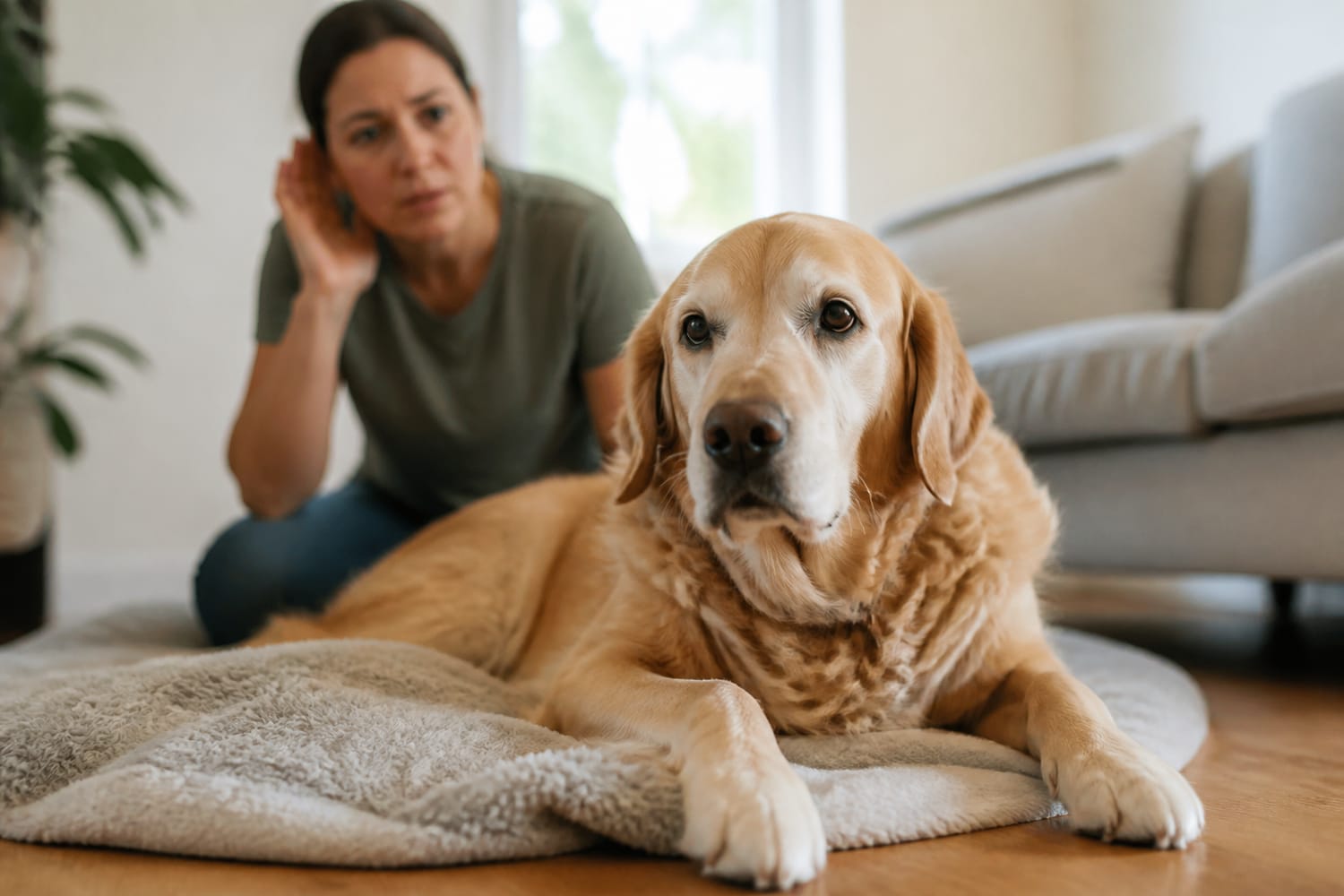
The Quiet Changes You Might Notice First
Your dog no longer appears when you call from the kitchen. Your cat sleeps through the sound of a treat bag opening. It is tempting to think they are simply relaxed—or, in your dog’s case, conveniently ignoring you. But a change in how a pet responds to familiar sounds can be an early clue that their hearing is fading.
Hearing loss in dogs and cats may develop gradually with age, occur alongside an ear problem, or have been present since birth. It can affect one ear or both. If you notice a change, book a veterinary visit rather than assuming it is “just old age.” Some causes can be treated, and even when hearing does not return, small adjustments can help your pet feel secure and connected.
Subtle Signs of Hearing Loss in Dogs and Cats
A pet who cannot hear well may still seem to respond when you speak. They might see you reach for a leash, feel your footsteps, or notice another animal racing toward dinner. That is why the best clue is often a pattern of change, not one missed call.
Watch for moments like these:
- Sleeping through sounds that once woke them, such as a door opening or a familiar voice.
- Responding only when they can see you, especially when you approach from behind.
- Seeming confused by verbal cues. A dog may stop coming when called but respond immediately to a hand gesture.
- Startling at an unexpected touch because they did not hear someone approach.
- Vocalizing differently or more often. Some dogs bark more; a cat’s meow may change.
- Showing less ear movement toward sounds, or seeming unsure where a sound came from.
These signs do not prove that a pet has hearing loss. A pet who seems less responsive might be distracted, uncomfortable, or dealing with another health change. Hearing loss in just one ear can be particularly difficult to spot without specialized testing. What matters is noticing what is different for your pet and telling your veterinarian.
Why Might a Pet’s Hearing Change?
Like people, some dogs and cats experience hearing loss as they grow older. It may happen so slowly that they adjust before the household notices. But age is only one possibility.
Inflammation or a blockage in the ear canal can interfere with sound reaching the inner ear. Ear infections, excess wax, middle- or inner-ear problems, and, in some cats, inflammatory growths may also play a part. Hearing can sometimes improve when the underlying problem is treated. Other causes—including certain injuries, loud-noise exposure, and damage to the inner ear—may lead to lasting loss. Your veterinarian can help distinguish among them.
Some pets are born deaf. Deafness is associated with certain inherited coat-color patterns in dogs and with white coats, particularly alongside blue eyes, in cats. Appearance is not a hearing test: a white cat or spotted dog is not necessarily deaf, and pets of other colors can have hearing difficulties too. If you are concerned about a puppy or kitten, ask your veterinarian how hearing can be assessed.
A useful question to ask yourself is whether your pet also seems uncomfortable. Frequent head shaking, scratching, odor, discharge, redness, or sensitivity around an ear may point toward an ear problem that needs attention. Petspiration’s guide to ear infections in dogs and cats explains those signs in more detail.
What to Do When You Suspect Hearing Loss
First, avoid testing your pet with a sudden loud noise close to their ears. It may frighten them, and a startled movement is not a reliable diagnosis. Instead, pay attention during ordinary routines. Does your cat notice you only after you enter their field of vision? Does your dog follow a familiar hand signal but miss the spoken version of the same cue?
Then arrange a veterinary appointment. Tell the clinic when you first noticed the change, whether it seemed sudden or gradual, and whether one side appears different from the other. Mention any ear symptoms, recent illness, injury, or medications. Do not put drops or cleaning solutions into a painful or abnormal-looking ear unless your veterinarian advises it; the right care depends on what is happening inside.
Your vet may examine the ears and look for treatable causes, such as inflammation or a blockage. When a more definite assessment is needed, they may discuss a BAER test—short for brainstem auditory evoked response. This test measures responses along the hearing pathway and can help identify deafness that everyday observation cannot, including loss in one ear. The Merck Veterinary Manual’s guide to deafness in dogs offers a helpful overview of signs, causes, and diagnosis.
When Should You Call Sooner?
A gradual change deserves a veterinary appointment, but do not wait for a routine visit if your pet suddenly seems unable to hear or also appears unwell. Call your veterinarian promptly if you notice ear pain, discharge, marked head shaking, or a sudden change in behavior.
A head tilt, loss of balance, circling, or unusual eye movements warrants urgent veterinary advice. These signs can occur with inner-ear disease or other serious problems and need an assessment—not an at-home hearing experiment. If you are unsure how urgently your pet needs help, call the clinic and describe exactly what you are seeing.
Helping a Pet Who Hears Less Feel Safe
Whether hearing returns or not, your pet can still enjoy familiar games, comforting routines, and plenty of affection. The goal is to make your communication easier to notice and your home easier to navigate.
Let your pet see you approach. Move into their line of sight before touching them, particularly when they are asleep. Teach children to do the same: a startled pet is not being unfriendly; they may simply have had no warning.
Use clear visual signals. Choose one easy hand gesture for “come” or “dinner,” then pair it with a reward when your pet looks at you and responds. Keep signals consistent across the family. The same patient, reward-based approach can make everyday communication enjoyable; VCA Animal Hospitals offers practical guidance on training a deaf or hard-of-hearing dog.
Make safety less dependent on sound. Keep a dog secured on walks and check fences carefully: they may not hear a vehicle or your call to return. For a cat with significant hearing loss, a safe indoor environment or supervised, leashed time outdoors reduces risks they may not hear approaching. Avoid relying on a shouted warning near doors, driveways, or streets.
Keep reassuring routines. Predictable mealtimes, familiar resting places, gentle play, and visual check-ins can all help a pet know what comes next. If your companion is also getting older, Petspiration has more ideas for making everyday life easier for senior pets.
Your Bond Is Bigger Than Sound
It can feel sad when a beloved dog no longer hears their name from across the yard or a cat no longer comes running at the first rustle of a treat bag. Yet hearing is only one part of how pets know us. They also watch our faces, learn our routines, enjoy our touch, and share the quiet pleasure of being nearby.
Noticing a change is an act of care. With a veterinary check, a few thoughtful safety habits, and new ways to say “I’m here,” you can keep meeting your pet where they are—and keep making happy memories together.