
A Calm Home Check Can Make a Big Difference
Our pets are wonderfully expressive—tail wags, happy purrs, bright eyes, zoomies, gentle nudges, and those unforgettable “feed me” stares. But when they feel unwell, they can also be surprisingly quiet about it. Dogs and cats often hide discomfort, and many small pets are even more subtle. That’s why learning how to check your pet’s vital signs at home is one of the most loving skills a pet owner can build.
Vital signs are simple clues about how your pet’s body is doing. Temperature, heart rate, breathing rate, gum color, hydration, and overall behavior can help you notice changes early and communicate clearly with your veterinarian.
This doesn’t mean you need to become your pet’s doctor. Home checks are not a replacement for veterinary care. But they can help you answer important questions: Is my pet breathing faster than usual? Are their gums pale? Do they feel unusually hot? Has their normal energy shifted?
The best time to learn these checks is when your pet is healthy and relaxed. That way, you’ll know what “normal” looks like for your own furry friend.
Before You Begin: Keep It Gentle, Safe, and Positive
Start with a calm environment. Choose a quiet room, speak softly, and use treats or praise if your pet enjoys them. If your pet becomes frightened, growls, hisses, struggles, or seems painful, stop. Safety matters for both of you.
It helps to keep a small “pet health kit” at home. Useful items include:
- A digital thermometer labeled for pet use only
- Water-based lubricant
- A watch or phone timer
- A notebook or pet health app
- A small flashlight
- Treats for positive reinforcement
- Your veterinarian’s phone number and the nearest emergency clinic information
Try checking vital signs when your pet is resting, not right after play, stress, a car ride, or a big meal. Excitement can temporarily raise heart rate and breathing rate.
Checking Your Pet’s Temperature
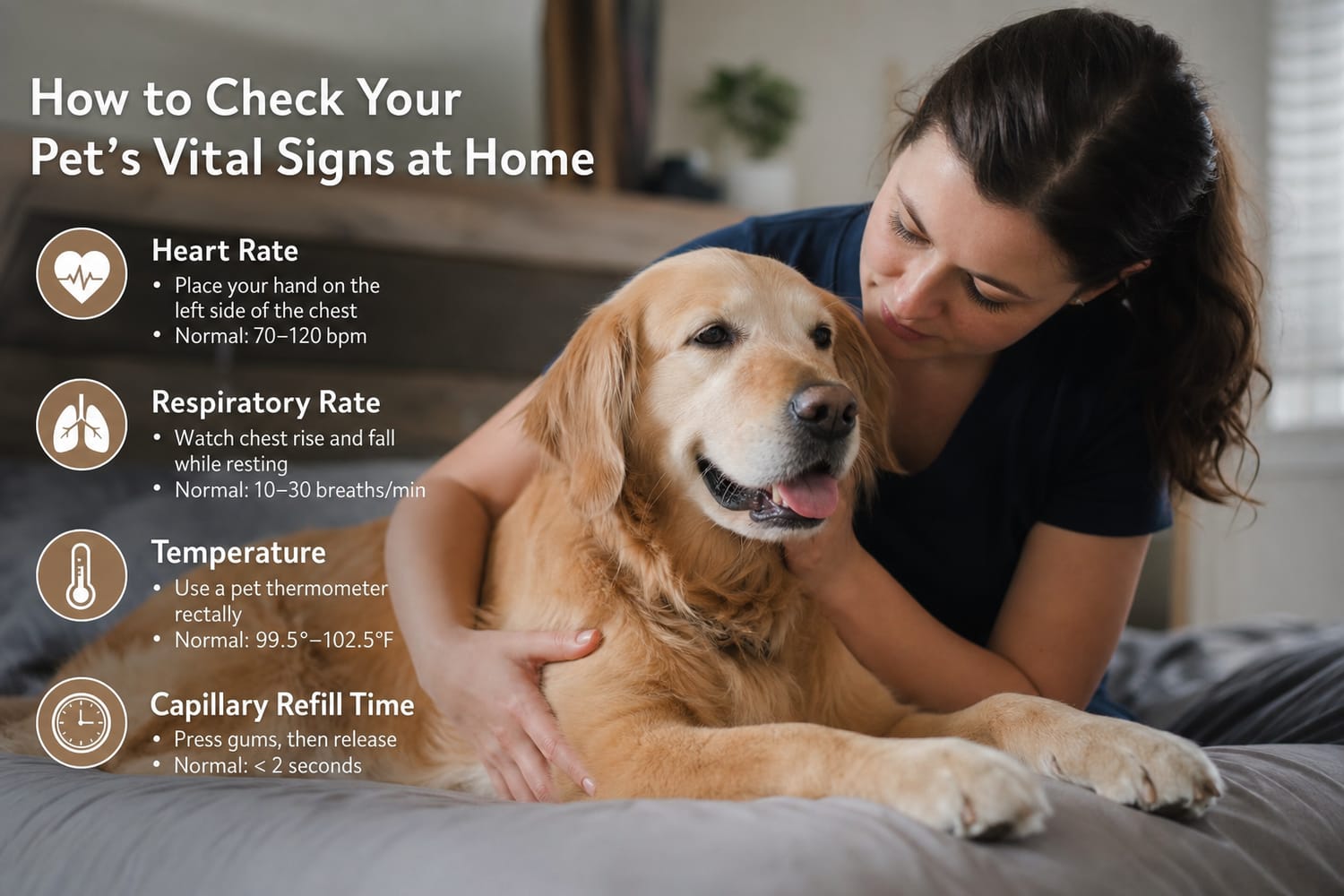
Body temperature is one of the clearest indicators that something may be wrong. For most healthy adult dogs and cats, normal body temperature is generally around 100°F to 102.5°F or 37.8°C to 39.2°C.
A temperature above or below this range can be concerning, especially if your pet is acting sick. A very high temperature can occur with heatstroke, infection, severe stress, or inflammation. A low temperature may happen with shock, exposure to cold, serious illness, or in very young animals.
The most accurate at-home method is usually a digital rectal thermometer. Ear and forehead thermometers made for people are often less reliable for pets.
To take a rectal temperature:
- Lubricate the thermometer tip with a water-based lubricant.
- Have another calm person help hold your pet if needed.
- Gently lift the tail and insert the thermometer about 1 inch for cats and small dogs, or slightly farther for large dogs.
- Wait for the beep, then remove and clean the thermometer.
- Praise your pet and offer a reward.
Never force the thermometer. If your pet resists strongly, seems painful, or you feel unsure, skip it and call your veterinarian.
Call your vet promptly if your dog or cat’s temperature is above 103°F, below 99°F, or paired with symptoms like vomiting, collapse, confusion, heavy panting, weakness, or extreme lethargy. A temperature of 104°F or higher is urgent, and heatstroke can become life-threatening quickly.
Measuring Heart Rate and Pulse
Your pet’s heart rate tells you how many times the heart beats per minute. It can rise with exercise, stress, pain, fever, dehydration, or heart and breathing problems. It can also vary by species, size, age, and fitness.
Typical resting ranges include:
- Dogs: about 60 to 140 beats per minute, with small dogs often higher and large athletic dogs often lower
- Cats: about 140 to 220 beats per minute
- Puppies and kittens: often faster than adults
To check heart rate, place your hand on the left side of your pet’s chest, just behind the front leg. You may feel the heartbeat best when your pet is lying or standing calmly.
You can also check the pulse at the femoral artery, located on the inside of the back leg near the groin. Use your fingers, not your thumb, because your thumb has its own pulse.
Count beats for 15 seconds and multiply by 4, or count for 30 seconds and multiply by 2. If the rhythm feels irregular, very weak, racing, or unusually slow, contact your veterinarian.
A slightly fast heart rate after play or excitement is normal. A fast heart rate while resting, especially with weakness, pale gums, coughing, difficult breathing, or collapse, should be taken seriously.
Watching the Breath: Respiratory Rate and Effort
Breathing is one of the easiest and most valuable vital signs to monitor at home. The best time to check is when your pet is asleep or resting quietly.
For many healthy dogs and cats, a normal resting respiratory rate is around 10 to 30 breaths per minute. Some cats may sit closer to the higher end. What matters most is your pet’s usual pattern and whether the breathing looks comfortable.
To count breaths:
- Watch your pet’s chest or belly rise and fall.
- One rise and one fall equals one breath.
- Count for 30 seconds and multiply by 2.
Also notice breathing effort. Normal breathing should look smooth and easy. Warning signs include:
- Breathing with the mouth open, especially in cats
- Using the belly muscles to breathe
- Neck stretched out while breathing
- Blue, gray, or very pale gums
- Persistent coughing or choking sounds
- Resting respiratory rate repeatedly above 40 breaths per minute
- Noisy, labored, or distressed breathing
Breathing trouble is always urgent. If your pet is struggling to breathe, do not spend time trying to complete a full home exam. Call an emergency veterinary clinic and go immediately.
Checking Gum Color and Capillary Refill Time
Your pet’s gums can offer a quick look at circulation and oxygenation. In many dogs and cats, healthy gums are bubblegum pink and moist. Some pets naturally have black or spotted gums, which can make this check harder. In that case, look at an unpigmented area if available, such as the inner lip or tongue.
Gum colors that may indicate trouble include:
- Pale or white: possible shock, anemia, blood loss, or poor circulation
- Blue or gray: possible oxygen emergency
- Bright red: heatstroke, inflammation, toxin exposure, or high blood pressure concerns
- Yellow: possible liver or red blood cell problems
You can also check capillary refill time, often called CRT. Gently press a pink area of the gum until it blanches, then release. The color should return in about 1 to 2 seconds. If it takes longer than 2 seconds, or if the gums feel dry and sticky, your pet may need veterinary attention.
Be careful when checking the mouth. Even gentle pets may bite if they feel scared or painful. If your pet resists, don’t force it.
Looking for Hydration Clues
Hydration affects energy, circulation, digestion, and overall comfort. Pets can become dehydrated from vomiting, diarrhea, fever, heat, poor appetite, kidney disease, or not drinking enough.
A simple home check is the skin tent test. Gently lift the skin over your pet’s shoulders and release it. In a well-hydrated pet, the skin usually springs back quickly. If it returns slowly or stays tented, dehydration may be present.
However, this test is not perfect. Older pets, very thin pets, and some breeds naturally have looser skin. That’s why you should also look for:
- Dry or sticky gums
- Sunken-looking eyes
- Lethargy
- Loss of appetite
- Thick saliva
- Reduced urination
- Panting or weakness
If your pet has repeated vomiting or diarrhea, cannot keep water down, refuses water, or seems weak, contact your veterinarian. Dehydration can worsen quickly, especially in kittens, puppies, seniors, and small pets.
Don’t Forget the “Quiet” Vital Sign: Behavior
Numbers are helpful, but behavior is often the first sign that something has changed. Pet lovers are usually excellent observers because we know the little things: the usual breakfast dance, the favorite sleeping spot, the happy greeting at the door, the normal meow, the way our dog carries their toy.
Pay attention to changes such as:
- Hiding or unusual clinginess
- Restlessness or inability to get comfortable
- Sudden aggression or sensitivity to touch
- Limping or stiffness
- Refusing food
- Drinking much more or less than usual
- Changes in litter box or bathroom habits
- Excessive panting, drooling, or vocalizing
- Confusion or disorientation
A pet who “just isn’t themselves” deserves attention, even if the vital signs look normal. You know your companion’s personality better than anyone. That bond is powerful.
What About Rabbits, Birds, and Other Small Pets?
Dogs and cats are the most common household pets, but many families love rabbits, guinea pigs, ferrets, birds, reptiles, and other companions. These animals have different normal vital signs and often hide illness extremely well.
For example, rabbits normally have much faster heart and breathing rates than dogs. Birds can become critically ill before obvious symptoms appear. Reptile health depends strongly on proper temperature, humidity, lighting, and habitat conditions.
If you share life with an exotic pet, ask an experienced exotic-animal veterinarian to show you what to monitor at home. For many small pets, appetite, droppings, posture, breathing effort, and activity level are especially important clues.
When to Call the Veterinarian
Home vital-sign checks are meant to support veterinary care, not replace it. When in doubt, call your vet. It is always better to ask early than wait until a problem becomes serious.
Seek urgent veterinary help if your pet has:
- Difficulty breathing
- Collapse, seizures, or extreme weakness
- Blue, gray, white, or yellow gums
- Temperature above 104°F or below 99°F
- Suspected heatstroke
- Repeated vomiting or diarrhea
- Bloated or painful abdomen
- Inability to urinate
- Severe injury, bleeding, or poisoning concern
- Sudden paralysis or inability to walk
- Major behavior change with signs of distress
Never give human medication unless your veterinarian specifically tells you to. Many common medicines, including some pain relievers, can be dangerous or deadly to pets.
Building a Loving Routine
Checking your pet’s vital signs is not about worrying over every sneeze or sleepy afternoon. It’s about becoming more connected, more observant, and more confident as a caregiver.
Once a month, when your pet is relaxed, try recording:
- Temperature, if your pet tolerates it
- Resting heart rate
- Resting respiratory rate
- Gum color and moisture
- Weight
- Appetite, energy, and bathroom habits
Bring these notes to wellness visits. They can help your veterinarian spot trends and understand what is normal for your pet at home.
Most of all, keep the experience positive. Offer treats, praise, gentle handling, and patience. Our pets give us trust every day. Learning to notice their quiet signals is one more way we can return that love.
A calm hand, a kind voice, and a watchful heart can make all the difference.